Lava Beds: Rocks, Rocks, and More Rocks

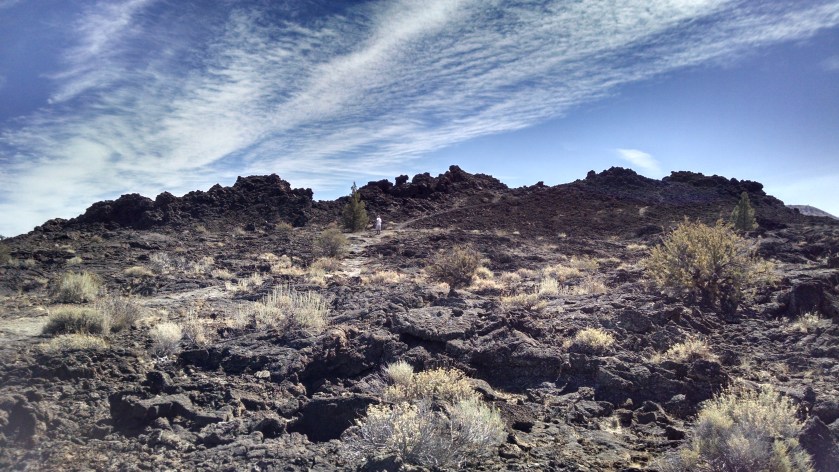
img_20160908_120106597_hdrOnce upon a time in another life, I married a geologist. On our honeymoon, we traveled north from San Jose, California to Calgary, Alberta in a white VW bus, camping and exploring along the way. Being a geologist, my first husband liked rocks. I like rocks, too, but not to the point of obsession. Somewhere near the California-Oregon border, I proclaimed that I did not want to hear another word about one more damned rock. I think it may have have happened at the Lava Beds National Monument, my last stop on my vacation last month. I know there was a cave; it was cold inside. I know there was black lava rock. I know we probably didn’t have a flashlight. But that was another life. Husband number two preferred to tour wineries.

img_20160908_130459223If I had had any idea how long it would take to get from Klamath Falls to the Lava Beds National Monument, perhaps I would have skipped this stop, but once I had made the turn off I-97 onto Route 161, immediately south of the Oregon-California border, I was sure I’d be seeing lava any minute. The road ran along the Klamath Basin National Wildlife Refuge. Miles and miles of open grassland gave way to more miles of farmland and Tule Lake. Lovely, but I was starting to get hungry. No worries. I’d take care of that when I got to the Lava Beds visitor center any minute. Maybe a hot dog and onion rings, something totally off the diet . . . A beer maybe?

Two hours later, I found the park and the lava. I paid my admission fee to a ranger in a booth. She handed me a map and told me the visitor’s center was quite a few miles up the road. Seriously?

The road curved upward. Every half mile or so, parking areas and paths led to trails through the lava, up mounds of the black stuff and down into caves. I parked, I hiked, I climbed, I took pictures, I sweat. It was cooler in the caves, but my flashlight fizzled out.

For the most part, I was alone. Tourist season past, I ran into one young Asian woman also traveling by herself and an older couple from California, who took turns on the trails while one of them stayed in the car with their dog. I could imagine this place crawling with kids in the summer.

Starving, I ate my last apimg_20160908_115633988ple from home and my last granola bar, washing them down with water. Where the heck was the visitor’s center? Finally, finally, I came to it. No restaurant, no snack bar, just bags of trail mix in the gift shop area, where you could rent or buy flashlights and helmets for the caves, along with books, hats and T-shirts. Another room offered a video telling the story of the caves. I collapsed on the couch there to watch stories of flowing lava, the Modoc Indian war, and the adventures to be had in the park.

As soon as I could pick myself up again, I asked the ranger at the desk if there was a quicker way to get back on the road to I-5 south. “What kind of car do you have?” she asked. She explained that part of the alternate route is not paved and gets pretty gnarly. It would take two hours either way. Sigh. I took the road more traveled.

One of the main attractions of the Lava Beds National Monument is the caves that lie along a loop road beyond the visitors’ center. Hard hats, flashlights and jackets are recommended. I would add that good knees are a plus. Also a love of small dark places, which I lack. I skipped most of the caves, needing to move on. But one could spend several days there, hiking and spelunking in this fascinating area. The trails and steps down into the caves are well-signed and well-maintained. Bring food, and expect to spend all day. It’s not a quick jaunt off the freeway.

img_20160908_135305247There’s a great deal of human and geological history here. Indians hid in these caves during their battles with the settlers who insisted on taking their land. Not too far away, 18,000 Japanese Americans were housed at the Tule Lake Internment Camp during World War II. Some of the buildings are still there. What a stark, remote place it is. How horrible to take people’s lives away like that. I said a prayer that we Americans never be that stupid again.

Hours later, I took I-97 into Weed, looking forward to food and relaxation and ran right into cars stopped for miles due to road work. Welcome to civilization. Following orange detour signs, I wound up on I-5 going the wrong way. No sense of direction. Eventually, I took a room at the spendy Best Western Plus Treehouse Motel in Mt. Shasta and treated myself to dinner at the Black Bear Diner next door. From here it was a straight shot to Dad’s house.

To my ex, were he ever to read this, I’d say: I’m sorry. Rocks are pretty fun. But it was our honeymoon!

Story and photos copyright 2016 Sue Fagalde Lick

Klamath Falls not like Dad remembers it

dscn4052Many years ago, my parents visited Klamath Falls, Oregon. Dad wanted to check out the place where his mother, Clara, started her teaching career around 1912. He had heard stories of the one-room schoolhouse, of Native Americans coming to the door, of the farm family she lived with, of students who were bigger than she was and nearly as old. My father asked around and was given directions to the school. He and Mom visited the vacant schoolhouse and talked to a neighbor who shared lots of information about it. Dad tells this like it was last week, but it may have been 50 years ago. Klamath Falls has changed a bit.

I rolled into Klamath Falls around 2 p.m. after my explorations along Highway 58, detailed in Monday’s post. The rain had stopped, and the sun was out. I had traveled the last few miles along Upper Klamath Lake and looked forward to communing with nature in a smallish town. Uh, no. With more than 20,000 residents, it’s plenty big. Taking the downtown exit, I found myself in the midst of brick buildings, traffic and one-way streets. The 12-block Main Street gave way to newer buildings and an area that looked just like every other strip-mall-laden city of any size in the west. McDonald’s? Check. Dollar Tree? Check. Staples? Yep. Bi-Mart, Sizzler, Elmer’s, Dairy Queen? All there. Thick traffic with cars turning and darting in front of each other? Check. Holiday Inn Express up ahead. I checked in.

dscn4061On my two days in Klamath Falls, originally named Linkville when it was founded in 1867, I felt a duty to report to my dad what I saw. I toured the old downtown on foot, taking pictures. Except for the modern courthouse and city hall, most of the buildings were old, dates from the late 1800s and early 1900s etched in the brick and stucco above establishments that now housed thrift shops, lawyer’s offices, art galleries, etc. Quite a few buildings were vacant. The shops were trendy, but I saw plenty of pickups and local men in cowboy hats. Or, as the booklet from the visitor and convention bureau put it: “While there’s a flair for the Western in Klamath Falls, a whole new urban vibe is visibly underfoot.”

I guess I’m an urban vibe-er because one of my favorite stops was the coffee shop, A Leap of Taste, where I stopped to listen to music by a band of three guys and a woman about my age playing folk music. I drank designer tea and ate the best gluten-free oatmeal-raspberry pastry I ever tasted.  Around me, tattooed teens stared at their tablets and laptops, ignoring the musicians, and a young couple on the sofa bounced their baby to the beat.

img_20160907_161757732_hdrOther highlights: the Klamath County Museum—not your mother’s boring lineup of black and white photos but a fascinating collection of old appliances, cars, gas pumps, clothing, dioramas depicting the Indian wars and the Japanese internment at nearby Tulelake, and more, more, more. One wall showed pictures of the area’s old schools, including the one where Grandma Clara taught.

Down the road, I also stopped at the Favel Museum of Western Art and Native American Artifacts. Also wonderful. One of the featured artists, Michael Gibbons, is a friend who goes to my church. Small world.

Beyond that, I discovered Lake Ewauna and a bird sanctuary with herons, egrets, gulls and pelicans. Ah, nature. A large park there provides places to sit, sprawl, and relax. Just watch for the bird doody.

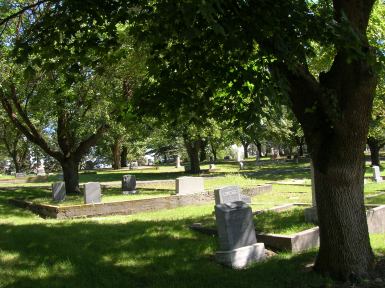
img_20160907_160903749_hdrI toured the Linkville Pioneer Cemetery. I love walking among old graves, imagining the lives of the people buried there. This cemetery is the resting place for lots of soldiers who fought in past wars. I had a heck of time finding the cemetery. I did the downtown loop five times, constantly fighting one-way streets that went the wrong way, before I rechecked the map and learned I was going the wrong way. I swear if I were Lewis and Clark, I would have ended up in Portugal.

In the new section of town, I skipped the chain stores and visited Basin Book Trader, a massive collection of used books for which locals trade their own used books. I scored three titles I would never have been able to afford or probably even find anywhere else.

Another delightful find: Nibbley’s Café. Bright and sunny, waitresses friendly, food delicious and served in huge portions. Many of the diners were seriously overweight. No wonder. Good thing I only had time to eat there once.

I don’t do the stuff the tourist guides boast about. I didn’t need to visit the Kla-Mo-Ya casino or one of the four golf courses in the area. I had already been to Crater Lake. I was definitely not zip-lining. But it’s all there for folks who like it. Drinking tea and listening to music is more my speed. But hey, in October, they have the Klamath Basin Potato Festival. I might be interested in that.

Soon my two days were up, and it was time to think seriously about heading south toward San Jose. Highway 58 turns into I-97 at Klamath Falls. Driving south, that would take me to Weed, California, where I could jump onto I-5 and take my usual route to Dad’s house, where I would tell him what I had seen in Klamath Falls. He would continue to see it the way he remembers it from many years ago.

Before San Jose, I had one more stop: Lava Beds National Monument, which I’ll talk about next time.

Ever been to Klamath Falls? Tell us about it.

Highway 58 detour worth every mile

img_20160906_101219591For 20 years, I’ve been driving back and forth from my home on the Oregon coast to San Jose, California, where my family lives. I usually take I-5, a straight shot inland, or, if there’s snow in the mountains, I take Highway 101 along the coast. See the same things, stop at the same places, no time for side trips, tempting as they are. It takes me about 13 hours.
This time was different. I scheduled in extra time for a vacation. Just outside Eugene, I left I-5 and headed southeast on Oregon Highway 58. I wanted to see some of the sights I’d seen in the winter on the train and take a little time for myself.  I wanted to see waterfalls and lakes. I wanted to hike in the high country. I wanted to sit by a river and write poetry. I wanted to see the tiny towns along the way and end up in Klamath Falls where my grandmother started her teaching career a little over a hundred years ago. So I did.

Everything published about Highway 58 emphasizes that it leads to Crater Lake, and yes, you can get there that way, but I had already seen Crater Lake several times. I was seeking new territory. Over the next few posts, I plan to share some of that country with you. Did it bother me to be a woman traveling alone? Maybe it should have, but no. I enjoyed my freedom.

Things didn’t start off great as I left home on Labor Day. It killed me to leave Annie, who is not a good traveler. Assuring her she’d have a great time with her dog sitter, “Auntie Jo,” did not keep her from following me around with her tail hanging low. Then I discovered the restaurant where I had my heart set on eating lunch–Eats & Treats in Philomath, so good–is not open on Mondays. So I forged on, taking a different route to Eugene, only to get miserably lost. Thank God for GPS. I ended up eating lunch at the kind of diner where they vacuum around your feet while the waitress hollers, “Whatcha gonna have?” The chicken tortilla soup with two chunks of chicken and four tortilla squares floating on top set my stomach on fire.

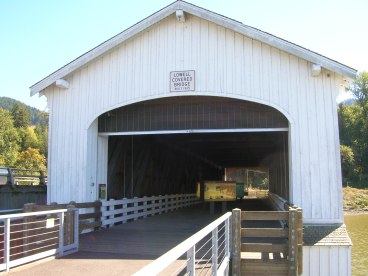
dscn4040But then I got out of the city and encountered the first of two covered bridges on this route. The Lowell Covered Bridge is located at the Dexter Reservoir. Ah! Water, trees, blue sky. Also a restroom. I took pictures of the bridge and sank onto a bench to stare at the lake. Now we were on vacation.

Down the road, I came to the Office Bridge. It has openings for both cars and pedestrians. Walk or drive through into a big park with covered picnic areas and hiking trails. I could have sat there and stared at the Willamette River flowing below forever. Note that the directions I got online were wrong. I kept looking for West Road. I think it was a typo. Simply take the Westfir exit off 58 and follow the signs for three miles. There’s a store and a resort there for those who want to stay a while.

img_20160905_154516584Having gotten a late start and gotten lost a couple times, I hadn’t really gotten far from Eugene, but that wasn’t the point. I spent the night in Oakridge, population 3,200. I toured the “downtown business district.” It was pretty quiet on the holiday. Everything was coated in dust from months of no rain. Relaxing at the Best Western (yes, they have one), I noticed the phone book: six yellow pages for business, 32 pages total. The phone book is published by the local newspaper, the Dead Mountain Echo, not a bad local weekly. Why would anybody stay here, I thought. But I learned it’s a hub for mountain bikers, of which there were plenty, and folks also make beer there. They even have a Keg and Cask festival in August. Being only two hours from Eugene if you don’t mess around, Oakridge has a small-town feel with access to big-city amenities.

At dinnertime, I was surprised to find a Mazatlan Mexican restaurant in town and even more surprised that the food was fabulous. Shame on me for stereotyping small towns.

In the morning, surprise! It was raining. What? I had all these hiking plans and this list of stops: hot spring, waterfalls, trails, lakes. Rain? The guy at the gas station was deliriously happy to see water coming out of the sky and hoped for lots more. Sure, but today? I get plenty of rain at home. Never mind, we Oregonians carry on.

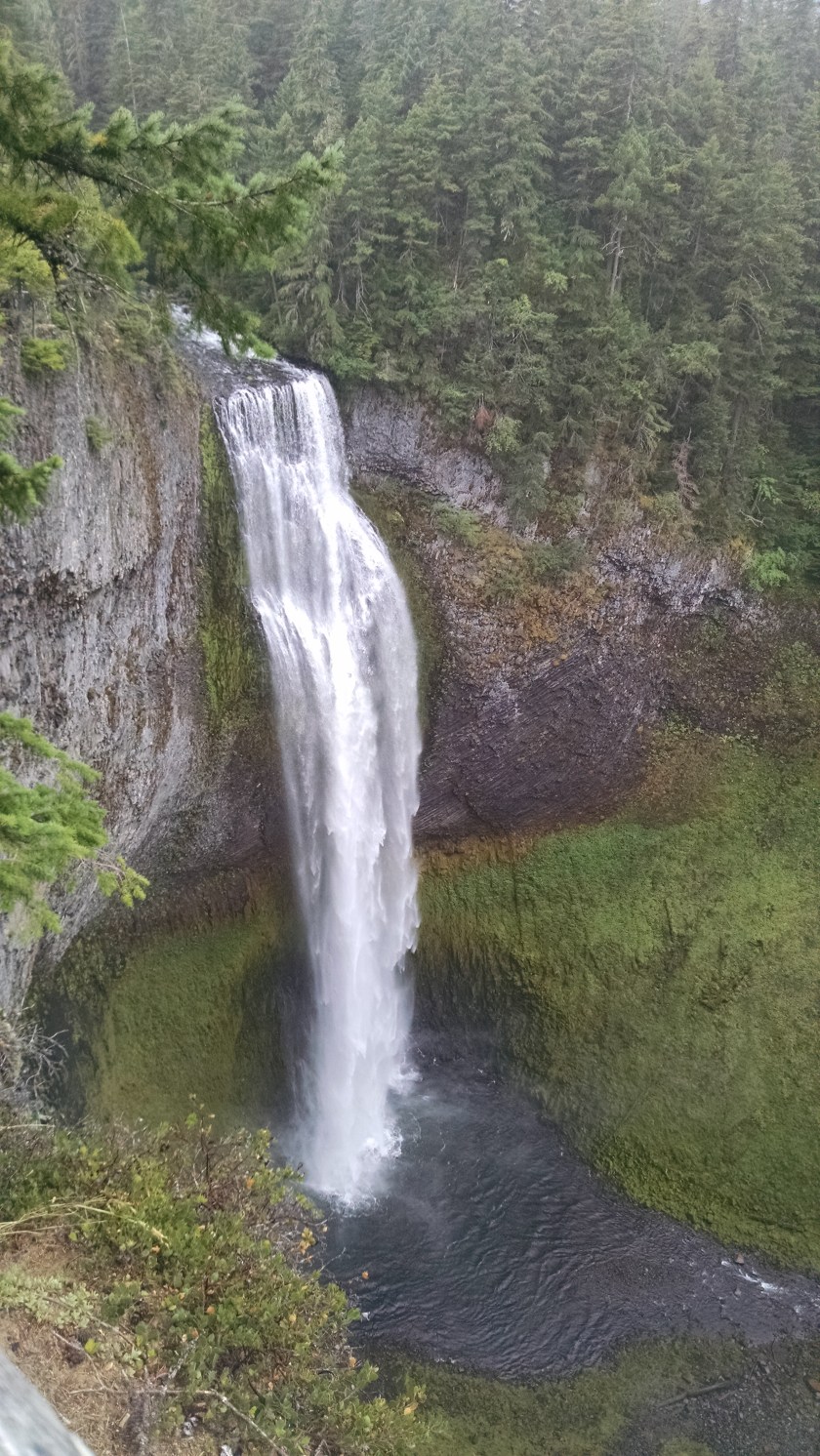
Somehow I missed the McCreadie Hot Springs–darned online directions again–but I found the biggest waterfall. Cascading 286 feet, Salt Creek Falls is the second highest waterfall in Oregon, Multnomah being the highest. It was worth the wet walk. Oh my gosh. The trail took me along the creek until it suddenly fell off a ledge and there were the falls, so big, so white, falling deep into a canyon below. My camera can’t portray the way it made me feel. Deep breath.

From the waterfall, I started off on one of the many trails, but it was just too wet, and I feared I would slip and fall into the creek. Nobody knew where I was. Bad idea. Back on the road. Waldo Lake, Diamond Peak, the Willamette Pass Ski Resort, Crescent Lake, Odell Lake, the turnoff to Crater Lake, and finally Klamath Falls, where I pigged out on a Reuben sandwich at Elmer’s and checked into the Holiday Inn Express. Back in civilization again. But that’s another story. If you’re in the mood to wander, check out Highway 58. There are lots of trains, more waterfalls to see, campgrounds and picnic areas, and places to ski. (Bring chains in the winter.The Willamette Pass is over 5,000 feet.)

BTW, I hear truckers take it south to California because it’s faster than I-5. Not the way I did it.


I’m eleven bears from my dad’s house

black-bear-2We call it “The Bear.” Stop and let your imagination wander for a minute. No, it’s a restaurant. The Black Bear Diner. Twenty years ago, it was started in 1999 in Mt. Shasta by Bruce “Sugar Bear” Dean and Bob “Papa Bear” Manley. Now the list of Black Bear diners fills a whole page—64 locations in eight states. We could measure trips in Black Bears. Eleven bears from my house on the Oregon coast to Dad’s house in San Jose, California.

What do they serve? Nuts and berries? Well, that, too. I’d rather eat one of their giant bear claw pastries. They’re as big as a baseball mitt but a lot tastier. They have the usual diner food: omelets, biscuits and gravy, Black Bear Benedicts, Mama Bear and Papa Bear burgers, Bigfoot chicken fried steak, etc. The kids’ menu is for Cubs. Naturally. There are even bear footprints on the plates and pictures of bears on the coffee mugs.

The Black Bear diners play on the idea that bears are cute and cuddly while those of us who live in bear country know bears are enormous animals with extremely long claws that they’re not afraid to use. Their long fur is probably not nearly as soft or as clean as it looks from afar.

Giant wooden bears carved by chainsaw artist Ray Schultz greet customers at the door of the Black Bear restaurants. Mom, Dad, baby bear. Sometimes there’s one on all fours that children (and childish adults like me) can sit on.

Signs continue the bear theme: Caution: Mama bear on duty. Bear with us—Please wait to be seated. Welcome to Camp Grin and Bear It. The menus are printed inside old-fashioned newspaper pages with actual stories from a long-ago year—I got 1937 last week. You can keep the menus if you want.

Bears eat big. Even the so-called smaller orders are huge. My meat loaf at the original Black Bear diner in Mt. Shasta last week would have lasted me three days at home. And my Reuben sandwich down the road in Willows was so big I needed a couple of those bears to help me eat it. It’s all good. Not spectacular but dependable, down-home comfort food served by friendly people in Black Bear tee shirts and suspenders who might just call you Sweetie or Honey.

The Bear is always crowded. Expect to wait in line for the little bear’s room while singing along to oldies playing over the speakers. In Willows, I found myself belting out “Aquarius” with the Fifth Dimension, then looked around and realized all the others in line were too young to remember that song and were probably thinking I was a little crazy. Too bad. Mama Bear can sing whatever she wants.

Don’t forget to hit the gift shop for a bear mug, T-shirt, water bottle or even a wooden bear to keep you company until next time.

No, the bears didn’t pay me to write this, but I couldn’t resist.

My father offers stories for dessert

img_20160914_1740485941Meals with my dad, Ed Fagalde, are a slow process. It takes him forever to get ready to sit down, and if I’m not careful I’m halfway through eating before he’s finished adding condiments. Slow down, mustn’t rush, I tell myself. We’re going to be sitting here for a while. While I’m itching to check my phone or read a book, now it’s time to listen. Even at breakfast, when I’m still waking up, he stirs Sweet n Low into his coffee, clears his throat, and begins to talk. He’s still talking 12 hours later over ice cream at The Country Inn restaurant and a few hours after that, standing in my doorway while I’m getting ready for bed.

I believe part of the reason I’m a writer is the fact that my father and his father before him were storytellers. While the stories go on, you don’t take notes; the teller would become self-conscious. No, you listen. You nod and react and ask the occasional question while the words flow like a waterfall that never runs out.

Some stories are of modern times, tales of a frustrating visit to the bank or a friend dropping by. With these, Dad gets times and places mixed up, forgets names, and does not understand the computer-based modern world, but the stories of the past are unmarred by his 94 years. Usually, I’ve heard them before, but there are always new details. For example, the ranch house where Dad grew up was not always on the spot where I remember it. The house was moved from another location, with a new room and a porch added. I had no idea.

He’s surprised that I remember that house. I was 9 in 1961 when  Grandpa retired as foreman of the Dorrance ranch and moved to Seacliff Beach. I’m amazed to realize I’m now almost the age that he was then.

I remember the  barn, the house, the patio, the fish pond, the chickens, the smell of prunes in the dehydrator. I feel as if I remember so much more because of Dad’s stories: the rabbit pens, the blackberries, the acres of prune, cherry and apricot trees, the multi-national crews who worked in the trees and the packing sheds, the horses that waited for Dad to come home from school and feed them the peelings from his mom’s apple pies.

I can’t remember all that. I was just a little girl in mary janes and ruffled socks sitting politely in the living room while the grownups talked. I remember a wood stove, an upright piano, lots of clocks, Dad’s stepmother Rachel’s dachshund Gretchen. I don’t remember my dad’s mother, Clara, at all, but her spirit was still in that house. Last week while visiting Dad, I learned that she never had a washing machine. She washed everything by hand with a scrub board until she got sick and started sending the clothes out to be laundered. Imagine how dirty those work clothes must have been.

I learned that my grandfather, Clarence, decided to retire because the ranch owners had started selling off chunks of land to housing developers and he could see the whole thing disappearing soon, like so many ranches in what was to become Silicon Valley. When my brother came to visit last weekend, we took a drive down Dry Creek Road past where the house used to be. Now there’s a million-dollar house on the site next to many other million-dollar houses, all beige and decorator-furnished. Dad still recognizes the winding road between Bascom and Meridian roads and the giant Sycamore that marks the site of the old driveway. In his mind, he can still see the orchards, the irrigation ditches, the tractors and the packing shed, but I just see these houses and a tree that sparks my imagination more than my memory.

Dad tells about the boxes piled up on the dry ground that became infested with bees. When Grandpa tried to move them, he suddenly ran to the water trough where they dipped the prunes and dove in, covered with bee stings. He swelled up all over, but healed without going to a doctor.

There were so many other stories: going to the “fights” with his dad, riding the water wagon with his grandfather in the days when men sprinkled the dirt roads to keep the dust down, riding his grandfather’s horses bareback down what became Meridian Road, dancing at the Balconades ballroom to the music of the Tony Passarelli Band.

He tells of signing up for the Army Air Corps, of training to be an airplane mechanic, of preparing to go overseas but not knowing where they’d be landing, of making an airstrip out of a road in Manila, of crashing at Leyte, of the guys he kept in touch with after the war. He tells the whole story of his career as an electrician, the different shops for which he worked, the jobs that stick in his mind, his long friendships with co-workers, his decision to retire.

He talks about his Fagalde grandparents, who owned a gas station and store at their home on Almaden Road near Branham Lane, along Almaden Creek. Grandma Lou, handy with a gun, always wanting to go shooting, Uncle Louie starting a business hauling gravel from the creek, Uncle Lloyd getting drunk and beat up, Grandpa Joe training his horses to come when he called their names.

My father talks and talks, as if he has to get it all out, has to tell me everything while he still has time. After he goes to bed, I make notes, trying to remember the details.

The stories go on and on. I feel like a bobble-head doll nodding as I listen. My eyes grow heavy with sleep and sometimes I nod off. When my brain screams stop, I push back my chair and start clearing the dishes. The talk temporarily peters out, but as soon as I sit down again, it continues. I fear the day when it stops for good. Meanwhile I do my best to soak it all in. I know what an important gift it is.

**************

Sorry I missed posting the last two weeks. No Wi-Fi at Dad’s house. But I had some adventures while I was gone and will share them in upcoming posts.

Do or did your parents share their stories with you? If they’re still around, ask questions. See what happens.


Enough with the charity calendars!

IMG_20160829_110205540[1]The pink invoice means my payment is late. But wait, it’s OPB, and I never promised to pay them anything. And no, another decal or membership card is not going to make me pay up.

It’s just one of many ways non-profits and charities try to get my money. Most of them send gifts, such as:

  • Calendars, so many calendars, with pictures of birds, dogs, Oregon scenery, flowers, famous paintings, and random photographs. Big calendars, little calendars, tiny ones for my purse. Nobody needs 20 calendars, and I’d like to choose my own.
  • Mailing labels, millions of them, never quite as I would like my name and address to be printed but often with cute pictures so I use them.
  • Notepads. I don’t need any more notepads, and I feel guilty throwing unused paper away. Stop!
  • Decals I have no use for. Since the crash of 2015, my car is decal-free, and the filing cabinet on which I stick such things is full.
  • Greeting cards. I have more than anyone could ever use. These days, I send more animated e-cards than the paper kind. I keep promising myself I’ll start sending notes and cards, but it’s not happening.
  • Datebooks, calculators, flashlights, magnifying glasses, key fobs and pens, all from the National Federation of the Blind. Most of these are great, but now I have multiples which I can neither sell nor give away.

Although the law says we are under no obligation to fill the envelope that is always enclosed, the charities make it look like we owe them. They send notices that say, “Did you receive your calendar? Please respond with payment,” or “We still have not received payment for the greeting cards we sent you.” They’re counting on guilt to make us pay up, and sometimes it works.

Oh, and then there are pleas to hurry up and send a payment before this campaign or this matching opportunity ends. The Alzheimer’s and cancer people use this tactic a lot. The more they push, the less likely I am to give.

I do send checks sometimes if the “gift” is particularly enjoyable or I’m feeling generous. It’s not that I don’t care. But I’d much rather they stop sending crap I don’t need and spend that money on their charities. How many blind people could the federation help with the money they spent sending out that cool light-up magnifier last month? Stop sending junk, especially non-recyclable junk that’s going to end up in the landfill.

I worry about people like my dad. He doesn’t always understand that he doesn’t have to pay for this stuff. Confused at why he’s getting a bill, he will send letters, make phone calls and even visit in person trying to figure out how he suddenly owes them money. He will lose sleep and possibly cash. People shouldn’t have to figure out what’s real and what’s not.

When I receive mail in my mailbox or my post office box, I hope for something real, a letter, good news, a book I ordered, but mostly what I get is charity mail. I am not a wealthy philanthropist. When we get down to the end of the month and I’m calculating whether or not I can afford groceries, I’m not paying for a puppy calendar.

Maybe I should start my own charity, Poor Poets of America. (They always have “national” or “America” in the name.) I’ll send people poems with envelopes enclosed for payment. I’ll send membership cards and mailing labels with pictures of poets who committed suicide. Yeah. Want to join me? I can’t wait for the cash to start rolling in.

What kind of junk mail do you get? Tell us about it in the comments.

Save

The Magic of Tidying Up (aka The Satisfaction of Throwing Shit Out)

IMG_20160822_095957009[1]Tidy up your house and you tidy up your life. That’s the thesis of the book I’m reading now, The Life Changing Magic of Tidying Up by Marie Kondo. At a writing workshop recently, the teacher made fun of the book, but I felt it calling to me at the bookstore, so I bought it.

Kondo is Japanese and young. The book has been translated into English. There are cultural differences and concepts I just cannot buy. I don’t think she understands how big a modern American house can be and how much stuff is in it. And how rarely Americans use the word “tidy.” But never mind. I like the idea of simplifying my space by keeping only what “sparks joy” and storing it so I’m not looking at my junk everywhere I turn.

She talks to her things, thanking them for their service, urging them to rest when she puts them in the drawer. She asks her house where things should go. My house doesn’t seem to have an opinion.

Kondo’s way of tidying up is radical. It amounts to discarding at least half of your possessions. You must do it all at once, not a little at a time, or you will never get done. (I’ve noticed). You must pull everything out, handle each item, and ask if it sparks joy. If it does not, get rid of it. Not just if it’s useful or still good, but do you love it?

Only when you have discarded everything you don’t need should you think about how to store what’s left. Kondo says, “Putting things away creates the illusion that the clutter problem has been solved.” Oh, how I know that. I have moved many times. As soon I pull everything out, I begin to realize just how much I have. Oh for the days when I could fit everything in a pickup truck.

Reading this book, I couldn’t wait to start tidying up. I began with my socks, a big mismatched mess. I threw away socks without partners, socks in bad shape, socks that I just hated and never wore. On Kondo’s direction, I rolled the rest like sushi rolls and set them in my drawer. I love it. Now I can find my blue socks, brown socks, and black socks easily. There are no loser socks anymore.

Moving on, I sorted and rolled up my underwear and my stockings, making a satisfying display. It got harder with nightgowns. If you never wear them, Kondo says they have to go. But wait, that one’s so pretty; if I ever have a gentleman companion again, I’d want to wear it. And that one’s so cute. . . .

If Kondo were here in my house, we’d end up screaming at each other. I was raised to use things up, to keep them if they were good, even if I didn’t love them. Never to waste anything. So now to say if it doesn’t spark joy, I need to throw it away? It cost money. It’s still good. I might use it.

It gets worse. Kondo prescribes getting rid of all paper. I repeat: ALL paper. Credit card statements, owners’ manuals, books you’ve already read—out with all of them. You don’t need them. But . . . .

Keepsakes? Keep the memories, get rid of the mug, the tote bag, the photograph, the ash tray your child made in first grade. Greeting cards? Out. It’s the only way you can process your past, she says. Hold on, Marie Kondo.

I like a tidy, uncluttered space. I have been trying to winnow down my possessions, knowing that someday I will probably move to a smaller home and will have to “downsize.” I know that after I die, somebody will get stuck with my stuff. But right now, I like my stuff. It’s easy to get rid of loser socks, but the last Christmas card with my mother’s signature? My wedding gown? Fred’s aquarium jacket with all his badges still attached? My financial records and notes for my books? Not yet.

It’s crazy that we’ve reached a point where we have acquired so much stuff we need a best-selling book to tell us how to sort it out so we can breathe in our own homes. And yet we keep buying more.

This book has more than 10,000 reviews, most of them five stars, on Amazon.com. On Goodreads, a site for booklovers, the reviews aren’t as good. As one writer says, “This book does not spark joy.” Okay, it’s goofy with its talking to things, and it assumes we can all afford to throw stuff away because we don’t love it, that we can always buy another one. But there’s a lot of wisdom in there, too.

My mother would agree with most of what Kondo says. She did not hold on to things. She was always after me to clean up my room, especially my closet. She threatened to throw it all out if I didn’t. But hey, I’m a grownup now, and this is my shit. Hands off. Don’t mess with my joy.

How about you? Are you ready to purge? Where do you get stuck?

There’s nothing like the love of a dog

Annie Feb14C

This week, I have decided to share a poem with you. The left side of the loveseat is mine. The rest belongs to Annie. Enjoy.

On the Green Love Seat

Come into the circle of my arms.

Lay your head upon my lap.

I will rub your belly and whisper

into your floppy velvet ears

that you’re my one true love.


Stretch your paw across my arm,

lick my fingers with your long pink tongue,

sniff me with your moist black nose,

fix your amber eyes on mine.

You are my one true love.


Let your nails chafe the worn upholstery,

your tan fur coat my clothes,

your fleas walk across my bathrobe.

I will hold you anyway

for you are my one true love.


When you whimper in your dreams,

I will hold you closer still,

safe in the circle of my arms

in the endless spinning of the earth.

You, dear friend, are my one true love.


Photos and text copyright 2016 Sue Fagalde Lick

Bad back: rest, ice, yoga, beans?

Rest.

Ice.

Heat.

Yoga.

Rest.

Chiropractor.

NO chiropractor.

Drugs.

Walk.

Rest.

Lie on a bag of beans.

What?

Everybody’s got advice for the person with the hurting back. That last suggestion came from my dad, who said Grandpa believed in the bean cure. Well, at least that wouldn’t give me indigestion, I responded. Anyway, I don’t have a bag of beans.

Back issues run in the family. My parents went to a chiropractor named Dr. Roy. I think he was about a hundred years old by the time he retired, and God knows what methods he used back in the olden days. I was in my 20s the first time my back went out. It happened after I lifted an enormous amplifier out of the back of my VW bug. I began a long acquaintance with Dr. Birdsong.

The last week has been a real bag of beans, thanks to my wonky back going full-out ballistic. I’m writing this standing, with my laptop on a file cabinet. Wait, my legs are tired. Now I’m sitting on a stool. Soon, I’ll be lying down. On my back. On my side. On the other side. There is no perfect position. Finishing this, I’ll be back at my desk, feeling my thighs go numb. And yes, this is an ergonomic chair! Back to Dr. Schones in two hours.

What did you do, everybody asks. I don’t know. Dr. S. says I waited too long to come in for an adjustment, making me ripe for this grand subluxation (where the bones shift out of alignment). I do know that most days the week before, I sat scrunched up at my desk for hours, fascinated by the project I was working on. Come the weekend, I cleaned house on Saturday and went on a yard-work binge on Sunday. Mowed, trimmed, cut, raked, swept, watered. I was so proud of myself. Monday morning I could not move.

In the worst of it, I had a hard time standing, especially from a sitting position. Ask my dog. I hollered every time at the red-hot pain of trying to unlock the muscles and bones that kept me from straightening up. Suddenly all those sit-coms where a character suddenly can’t move were not the least bit funny. I tried going sideways. I tried coming up from my knees. I tried sliding from a high seat to my feet.

Watching me get dressed would make a fun video. I sympathized with my dad, who had me putting on his socks and shoes after his hip replacement and who still can’t bend all the way down. A week earlier, I was doing yoga, but now I could not bend down or lift my feet up. I considered going barefoot, opted for flip-flops. These are the times that make living alone a challenge. If only Fred were still here to help me with my shoes, lift me up when I needed to stand, and say, “Oh, Babe,” when the pain brought tears to my eyes.

I canceled most activities. I watched far too much of the political conventions and the incessant TV conversations about Trump vs. Clinton. I read, I wrote, and I snuggled with my dog. I penned poems about the fragility of the human body. I prayed for healing.

I am healing. I have been going to the chiropractor. I have been icing my back. I have been trying to keep moving so that I don’t freeze up. It still hurts.I worry that it will never be right again, but Dr. S. assures me I just need to get everything in alignment and let the muscles and tendons get stronger. After today’s adjustment, I’ll feel the raw pain again, I’m sure. But every time I can freely move from sitting to standing, I celebrate. I have been through this before, and I’m sure it will happen again. It’s in the genes. Grandpa lay on beans. Dad went to Dr. Roy. My favorite thing is to lie on my back on the deck with my legs right-angled over the hot tub cover. Takes the pressure off my back. But it’s hard to type that way.

Have you heard the warnings about sitting too long? Google it, and scare yourself. We are a sedentary culture. We don’t move enough, and we pay for it. I see far too many young people limping along with hurting backs. Writers and other computer workers try various options. Standing desks. Kneeling desks. Treadmill desks. Timers to make them get up at regular intervals. Perching on an exercise ball. I love to write and revise. I love getting so involved I forget about time. But my body is paying for it.

Annie is enjoying my lazy life. Wherever I settle, she collapses next to me. It’s very comforting. Until she pretzels herself and licks her bottom. Nothing wrong with her back. She only sits when she wants me to give her food. And she nags me when it’s time for a walk. Dogs are definitely smarter than we are.

If you’re sitting right now, get up and be grateful that you can. If you can’t, I sympathize. I’ll share my hot tub with you.

Just hold the beans.


Celebrating Twenty Years in Paradise

Annie at South Beach 22315C

We are gathered here today to ponder me being in Oregon for 20 years.

On July 26, 1996, Fred and I left our home in San Jose, California to start a new life in Oregon. He drove a Ryder rental truck, and I followed in the Honda with the dog, my guitars and my Chatty Cathy doll in the back seat. We had no idea what we were getting into.

I had never lived more than an hour away from my family. I had never lived in a small town. I had never lived where it rains 80 inches a year. If we had not moved, I would never have known that the whole world is not like San Jose. Attention suburbanites: There’s a whole other world out there.

For years, we had vacationed on the Oregon Coast and batted around the idea of moving here. After Fred retired from the city and his youngest son graduated from high school, it seemed like we were free to go.

It happened so quickly we didn’t have time for second thoughts until it was too late. Our house sold in five days. We’d expected it to take months. Suddenly we were quitting our jobs, packing and saying goodbye. If I had to do it again, I probably wouldn’t. Certainly if I had known everything that would happen—my mother’s death, Fred’s long illness and death, me ending up alone—I would have stayed on Safari Drive amid the smog, gangs and traffic roaring right behind us on Santa Teresa Boulevard.

I loved my newspaper job and our house. I loved the music groups I belonged to and the church where I played guitar every Sunday. I had finished my term as president at California Writers and had just been elected vice president of the Santa Clara County chapter of the National League of American Pen Women. Life was pretty good. But the money we made at our various jobs wasn’t enough and the Oregon coast called to us. Up here, we could live by the beach in a more affordable house. I could write and play music. Fred could volunteer at the aquarium. As for the rain, we’d buy raincoats.

So, 20 years. Nearly one-third of my life. If we divide it up, the first third was growing up, the second being a young professional, and the third starting over in Oregon.

Let me toss out a few more numbers:

We lived in Lincoln City one year, Newport one year, and South Beach 18 years. I have been walking dogs along Thiel Creek for 18 years. Six days a week, 1.5 miles a day, times 18 years=2,496 walks and 3,744 miles or all the way across the U.S. and partway back. Add the miles we walked in Newport and Lincoln City, and we’re at least back to Utah.

I have made approximately 50 trips back to San Jose, mostly by car. At 1,400 miles a trip, say 45 trips, that’s 63,000 miles and about 90 overnight stays at the Best Western Miner’s Inn in Yreka, California. I should get a gold plaque or something.

I was 44 when we arrived. Fred was 59, younger than I am now. Later this year, I have to sign up for Medicare. What???

Oregon has given me a lot. Six published books. My MFA degree in creative writing. Twenty years as a church musician. I get to spend my days writing and playing music, which has always been my dream. I have a house with a large, private yard only a block and a half from the Pacific Ocean. I can go to the beach or walk in the woods whenever I want. The air is clean, the traffic is minimal, and the temperature rarely gets over 70 degrees. Of course, we don’t have a shopping mall, serious medical issues require a trip to Corvallis or Portland, and full-time jobs are hard to find, but there’s online shopping, I don’t mind a trip to the valley, and I don’t need a full-time job. I’m already working full-time at work that I love. In other words, we got what we came for.

A week ago Sunday, I attended a concert at Newport’s Performing Arts Center. Walking through the lobby, I kept running into friends from music, writing and church. Lots of smiles, lots of hugs. We knew just about everybody on stage as well as in the seats. I have spent many hours in that auditorium, in the audience and on the stage. I felt this huge sense of belonging as my friend Pat and I settled into our seats. I would not get that kind of feeling in San Jose in a massive venue where everyone was strangers.

Fred and I lived together here for almost 13 years. He spent two years in nursing homes and died five years ago. He absolutely loved Oregon, never had a moment of regret. Over the years, we have lost many family members, including my mother, both of Fred’s parents, Aunt Edna, cousin Jerry, cousin Candi, cousin Dale, Cousin Irene, Uncle Bob, and more. We have also welcomed Candace, Courtney, Riley, Peyton, Keira, Clarabelinda, Kai and Kaleo, Eddie and Wyatt, and more. The cycle of life includes our four-legged loved ones. We lost our dog Sadie in 2007. We gained Chico and Annie in 2009, then I lost Chico in 2010.

My dad, now 94, has survived heart surgery, a broken wrist and a broken hip. My biggest regret of this Oregon journey is not being close to him all the time instead of just a few days or weeks when I visit. When he complains about crime, traffic and heat in San Jose, I encourage him to join me up here, but he is firmly rooted in the city where he was born.

Over the years, I have thought about going home. I miss my family. I get tired of the endless cold, gray winter days. Why am I in this big house alone now that Fred is gone? Most widows seem to move close to their families, usually their children.

But I stay. Why? The opportunities for connections with writers and musicians are huge here. I am allowed to play, sing and lead the choir every week at church even though I have no music degree and I am not a concert pianist. Yes, there are more opportunities in big cities, but you’re one of a crowd.

I might have better luck finding a new man (do I want one?) somewhere else, but when I sit writing on my deck with the dog sleeping at my side, warm sun on my face and a light breeze tousling my hair, I don’t want to leave. It’s peaceful here.

Lots of other people have moved to the Oregon coast since Fred and I came. I’m an old-timer now. California retirees are still falling in love with the place and moving in. But we are unlikely to see our population grow to the point that it’s a problem. Our weather is too challenging, and there’s no easy way to get to the rest of the world–tough roads, minimal bus service, no plane or train service. Also, jobs and housing are scarce. Good. Keeps the riff-raff out.

I like this place where I know lots of people, where the rain has dirt to sink into, where strangers wave at me and Annie as they drive by in their pickup trucks, where I hear the ocean at night instead of freeway noise and sirens, where I can slip away to the beach in five minutes if I feel like it or doze on my loveseat with the dog sleeping beside me. Driving over the Yaquina Bridge into Newport, I look down at the blue waters of the bay, the white boats bobbing there, and the green hills around it and am still awed by how beautiful it is.

On our anniversaries, Fred and I used to ask each other if we were willing to stay together another year. We’d click our wine glasses and pledge not just a year, but forever. It’s time to ask myself that about Oregon and this house. I can’t pledge forever or even a year. Things happen. But for now, I’m staying. It’s home.

***

You can read the story of our journey to Oregon and what followed in my book Shoes Full of Sand. Follow this blog to continue the story.