Finding solace amid daily tragedies

Sky 11914

Dear friends,

The world is going crazy. Every day, the headlines scream of another mass killing. Orland, Dallas, Nice, Baton Rouge. And yet, here in my little patch of coastal forest where the main aggravation is moles tearing up my lawn, I can almost feel safe. Almost. Today I offer a poem I wrote after the killings in Dallas. There have been so many since then I can no longer tell which loss the flags are flying at half staff for. Let us all pray for peace.

MASSACRE DU JOUR

On TV, in Dallas, a black woman

with turquoise hair fights tears

amid the blood and bullet shells.


Three days after Fourth of July,

they thought it was fireworks, late

celebrations by boisterous youths.


When the cops fell, the protestors ran,

one picked off by the sniper hiding

in a community college parking garage.


Twelve cops shot, five of them dead,

the suspect, a soldier still carrying guns

blown into ash when he wouldn’t give up.


The blue-haired lady offers prayers

for the blacks, for the whites, for her kids

who worry that they might be killed, too.


President sends his condolences,

lowers the flags to half staff,

rails about gun laws again.


Freeways blockaded in Oakland,

subways stopped in New York,

Texans marching with signs.


Orlando, Nice and Baton Rouge.

Another crisis every day,

more breaking news for CNN.


Talking heads talk on and on,

speculate about why and how.

Ads hawk cars and sleeping pills.


My dog leads me out to the trees,

away from the scenes on TV.

A light rain is starting to fall.


Drops tickle my face and my hands

as sun warms the bones in my back.

Around me, the pine trees stand guard.


Robins trade tunes with the doves,

the Pacific whispers in and out.

In the distance, I hear guns.

**********************************

[Copyright Sue Fagalde Lick 2016]


Not the hands! Musicians’ greatest fear

IMG_20160711_091241546_HDR[1]One minute I was deadheading my roses and nudging the compost cart along. The next I was on the ground staring at my throbbing fingers. The open cart had become unbalanced and fallen toward me. I fell in among peach parts and chicken bones. I know I hollered as I went down. Only the trees heard, and they said: “What do you want us to do, we’re stuck in the ground?” If a woman hollers in the forest where no humans can hear her, does she make a sound?

Anyway. I landed with my left-hand fingers first, specifically the middle, ring and pinkie fingers. Yes, I’m left-handed. I also banged my left knee and whacked my ribs pretty hard on the rim of the cart, but all I cared about, once I determined I was still alive, was my fingers. I needed them to hold down the frets on the guitar and play the bass notes on the piano. Everything else I could figure out with one hand. I’ve done it before.

As a musician, I always worry about the fingers first. Once upon a time in Lincoln City, OR, I fell down the stairs of our rental house. I still wince at the memory. My injuries were relatively minor but worrisome. My sideways-pointing big toe was the doctor’s main concern, but I kept whining about my fingers, two of which were swelling rapidly, and hey, I had a performance in three days. I didn’t need my big toe, but I definitely needed my fingers.

This turned out to be not that bad. Nothing broken, just bruised and slightly swollen. After a few days of ice and rest, they’re almost like new, sore and a little purple but workable. I played all weekend. Why did I put my hands out to stop my fall? It’s instinct. Better hands than head, our body says, throwing the hands down before we have a chance to think about it.

A couple days later, I was chopping berry vines at the side of the house, my hands protected with leather gloves. My late husband Fred had left behind this pole saw thing that I had never used, but I just had to get those high vines that were leaning on my house. So I studied the thing, hung it on a branch, pulled the cord, and it cut! Excited, I started cutting everything in sight. However, in my enthusiasm, I pulled down too hard right above the chain link fence and whacked the heel of my right hand on the upward-pointing wires hard enough to bruise it. It was at that point I thought maybe klutzy musicians should not do their own gardening. But then yesterday I pinched a finger in my keyboard stand. Another bruise. Fingers are in for it no matter what we do.

Fingers are so vulnerable. They stick out at the end of our hands with no protection. Without them, it’s hard to play guitar or piano or most other instruments—although I do know two talented men who play well despite missing their left index fingers. It doesn’t take much to put you out of business. A paper cut in the wrong place, a mashed fingernail, a mosquito bite. When people shake my hand too hard, I think: Careful! The fingers!

An injury to one little finger can put us out of business. It seems like we should sit with our hands in our laps and do nothing. But we can’t do that. We have to live our lives. I’ve had sprained wrists, torn shoulder ligaments, golfer’s elbow and tendonitis from my shoulders to my fingertips. I’ve worn slings, splints, and braces. I’ve applied “liquid skin” to torn calluses. Most of the time, I played anyway. I have seen guitar players bleed on their strings from cuts that didn’t have time to heal. Life is dangerous. We take our chances and thank God every time we get to play again, even if it hurts.

It’s not just musicians and fingers. Think about the body parts people use to do their work: the artist’s eyes, the pitcher’s throwing arm, the dancer’s feet, the perfumer’s nose. And you would not believe how paranoid I am about my vocal cords. I can’t get sick! I’m a singer. But that’s a whole other blog.

I’m typing this post with all 10 fingers. The keyboard seems to be a safe place, but you never know. There’s always carpal tunnel syndrome.

Worst case, I’ll play my harmonica. No fingers needed.

Comments? Do you have any finger-hurting memories to share?

News flash: widow lady sets up tent

Tent_7216D[1]I’m sitting in my tent. In my back yard. It’s a green dome tent, and it took me three years plus two hours to figure out how to put it up. It’s cozy in here, protected from the wind, comfy with my lounge cushion to lie on. I’ve got my notebook and pen, a book of poems to read, a cold Heineken, and my phone. Every now and then the dog looks in to make sure I’m still here, but she doesn’t stay. Something about the crackly-sounding floor, I think. I lie here thinking about where I will go with my tent. I could go anywhere.

When I was newly widowed, I bought this tent thinking I’d like to go camping. I enjoyed camping with my family as a kid and with my first husband. (Second husband Fred thought camping was a hotel without HBO and room service.) I could set up my tent by a river or in a wooded park and enjoy nature all by myself. Maybe I’d even go fishing.

Sure. When I first bought it, I tried setting up that tent in my front yard. The instructions baffled me. Short pole, long pole—they all looked long to me. It was like Starbucks’ drink sizes where the “tall” is the smallest size. J-hooks, ring fasteners, slip knots, what’s this Velcro thing for? Yes, the pockets for the poles were color-coded. Yes, the instructions said you could put up this tent in minutes. But no. The poles would not sit still, would not arch. I’d get one end in, and the other would pop out. I tried until my back gave out. Then I wadded up the whole thing and stuffed it onto a shelf in the garage.

Tent_7216B[1]Lately I’ve been cleaning out my garage. (Anybody want a TV vintage 1965?) I still had that tent, along with all the stuff I didn’t sell at my October 2014 garage sale, the day of the monsoon rain. It was use it or get rid of it time. Maybe camping wasn’t meant for me.

I assembled my tent parts in the back yard this go-round, to keep my humiliation private. Once again the poles would not stay put. One end in, the other flopped out. Where were these alleged hooks? Okay, the poles crossed and then what? Clearly the people who wrote these directions assumed I was an engineer or someone who had set up tents before. I hadn’t. I never went to camp as a kid. My parents camped in RVs. My first husband was Mr. Nature Guy, but he did the tent-wrangling. I handled the food. I think I hammered in a few stakes, but how the rest of the tent went up, I had no idea.

But darn it, I could picture this tent set up and me inside it being total nature woman. I didn’t want to give it to charity because I was too stupid to set it up.

A couple hours in, my back was screaming again from all the bending and getting up and down. I was ready to quit again when I decided to try one more thing. Bingo. Why couldn’t the directions just tell me or show me that I was supposed insert the end of the little key things attached to the rings into the ends of the poles? I kept putting the poles in the rings and they slid all over the place. Stop laughing at me, experienced tenters. I had no clue. Once I did that, the poles stayed in place, I got them to arch, and the limp pile of “Dry-tanium” fabric turned into a tent. Once it was upright, I was able to figure out the rest—the rain flap, the stakes, the s-hooks. Okay, it looks a little lumpy, like my cakes, and I seem to have three stakes and a rain flap pole left over, but here I am, camping in my back yard.Tent_7216I[1]

It funny how I have a whole house, but I’m more comfortable in here, writing in the green glow, drinking from the green bottle. Life simplified.

It’s cloudy outside. The ocean is loud. The neighbor’s rooster crows. The yellow dog stands guard. This tent is labeled as a two-person tent. I don’t think so. It’s not big enough, and that’s fine with me. Maybe one woman and a guitar. I have decided to stay here all day, leaving only for food and bathroom trips. Errands canceled.

Now where will I go? Am I afraid to go camping alone? Yes. Should I do it anyway? Definitely. Can I put this thing up again in much less time? I think so. I can’t leave it up in the back yard forever, although I’m tempted to make it my new office . . . .

It’s two days later. I took my tent down for fear the dog would start chewing on the ropes and pulling out stakes. She has done such things before. I followed the disassembly instructions step by step and managed to fold the whole thing small enough to fit in the handy green bag. My back is killing me, but I am so proud of myself.

That’s just part of what I did on my Fourth of July weekend. I also learned how to make S’mores. How about you?


[All contents copyright Sue Fagalde Lick. Republish this without permission, and I will sic my dog Annie on you, and she chews on logs for fun and can destroy an indestructible Kong in minutes.]

Can you find one square inch of quiet?

I’m spoiled. The place where I live is quiet. Sitting in my back yard, I hear mostly birds and the wind. Occasionally a plane or helicopter flies over from the small airport a half mile south, and sometimes I hear a truck gearing up on Highway 101. Sometimes the ocean whispers and sometimes it roars, but overall it feels quiet. Or maybe it’s just that I don’t hear as well as I used to. As noted in earlier posts, I have a measurable hearing loss typical of people my age. But in my yard, I can almost hear the quiet.

Gordon Hempton, author of a wonderful book called One Square Inch of Silence, would disagree. He would say it’s pretty good, but it’s not truly quiet here in South Beach. If he measured the sound levels here, he’d probably come up with about 35 decibels coming from cars, waves, and miscellaneous mechanical sounds that I don’t notice. When a helicopter passes over, it would go up to about 90. Wherever we live, we become accustomed to a certain level of noise: cars, lawnmowers, TVs, appliances, dogs barking, people talking, and so much more. Some of us even become uncomfortable if it’s too quiet. We reach for our iPods or turn on the TV. I confess that sometimes I sleep with the radio on.

Gordon Hempton specializes in sounds. He makes his living mostly from making and selling recordings of birds, beaches, and train whistles. But his favorite sound is no sound at all. He prefers quiet, quiet enough to hear your own footsteps or the chorus of birds that greets the new day. But quiet is hard to find. Even places billed as quiet are filled with the noise of cars, planes, trains, and people. He’s on a mission to set aside one square inch of silence in Washington’s Olympic National Park, making it a place where people don’t speak and planes don’t fly over. As part of that mission, he drove across the country to Washington, D.C. in a VW bus, measuring sounds in cities, parks and wilderness areas. His book is the story of that journey. I found the book fascinating and enjoyed the way the science is folded into an engaging story. I also learned a great deal about sound.

Did you ever think about the fact that our hearing is designed to keep us safe, that most animals depend on their ability to hear predators coming so they can react to protect themselves. Animals won’t nest where it’s too noisy because they can’t hear, Hempton says. For us people, that might mean hearing a car coming so we don’t get run over, hearing a rattlesnake before we step on it, or hearing someone knocking on the door. We need to be able to hear a baby cry or a loved one shout for help. We need to hear each other in order to communicate. Hempton says we don’t have “ear lids” because we need to be able to hear all the time.

But it’s getting to be so noisy we can’t be sure we’ll hear anything. On his travels, Hempton visited a symphony hall, the Indianapolis speedway, and a basketball game. All were so loud it was nearly impossible to converse and the sound levels were high enough to cause damage to people’s hearing. Even in many of the restaurants he visited, it was too loud to talk. The roar of conversation, kitchen noises and Muzak added up to an audio attack. Even in places where people assured him it would be quiet, places like national parks and areas deep in the wilderness, Hempton found planes flying overhead every few minutes and power plants roaring 24/7.

All of this makes me glad to live where it is relatively quiet. Of course, there’s a price to pay. Mid-morning on my street, I’m the only human around. It gets lonely. At my desk, I hear a hum from the refrigerator, I hear my computer keys clacking, I just heard a fly bounce off the window. If I pay attention, I can hear myself breathing. But as soon as I get in my car, I turn on the radio as I ease into a world of noise, a world where quiet is becoming harder every day to find.

Find out more about Gordon Hempton’s One Square Inch of Silence campaign and watch a video at his website, onesquareinch.org.

I found a free app for my phone that measures sound. It rates the sound here in my office right now as a whisper. Is it quiet where you are? What kind of noises surround you? Do you notice them most of the time? Let’s talk about it in the comments. Quietly.

Portuguese-American novel lives again

AD new cover 6816 bigSummer 2016 is becoming the summer of revisiting and revising past writing projects. First I did a new edition of Stories Grandma Never Told: Portuguese Women in California. Now I have a new edition of my Portuguese-American novel Azorean Dreams. This is the novel I wrote while I was still trying to sell the Grandma book. One of the women I interviewed, who had published her own book, convinced me that a novel would sell better than nonfiction. I no longer believe that’s true, but since nothing was happening with “Grandma,” I started writing a novel. Some of the people, places and events came directly from my experiences researching Stories Grandma Never Told. Others stem from things that were happening in the late 1990s in San Jose, California. And a lot of it is from my imagination.

My protagonist, Chelsea Faust, is a newspaper reporter working for a local weekly but with ambitions to move up in the business. She’ll do anything to prove herself as a great reporter. Although her mother’s side of the family is Portuguese, with roots in the Azores Islands, she doesn’t know or care much about her heritage. Then an assignment sends her into Little Portugal, and she meets the handsome Simão Freitas, who has not been in the U.S. very long. Romance blooms, but they disagree on many things, plus an incident from Simão’s past threatens to ruin everything.

I never imagined anyone real could have the name Chelsea Faust, but there is a real Chelsea Faust, with whom I connected online. She’s okay with her name being in the book. I have not met a real Simão (sim-OW) Freitas, but there probably are several men with that name because it’s pretty common.

Anyway, my Portuguese-American mother got a chance to read Azorean Dreams before she passed away, and she loved it. For that alone, I’m glad I published it when I did. The first time, I went through a company called iUniverse, that offers “print-on-demand” publishing, meaning when an order comes in, they print a book. There are not boxes of printed books sitting around somewhere. You pay for the service and—here’s the catch with these companies—you pay for copies of your own book. Their designers decide what the book will look like. They also determine the retail price.

To be honest, I never liked the look, the size or the price of the iUniverse version. I have seen the same cover art photo used in advertisements for several products. The background is not even the Azores. I’m pretty sure it’s Italy. The print inside is huge, making the book itself huge. And they charged $20.95 a copy. Who would pay that much for a paperback novel by an unknown writer? Judging by my sales, almost nobody. But I had signed a contract and thought I couldn’t get out of it. I was wrong. As of last month, I am free from iUniverse. They’re not all bad, but it didn’t work for me.

A few years ago, I revised Azorean Dreams a bit and published it as a Kindle e-book. Same stupid cover. But now I have a new cover for both the e-book ($2.99) and the new paperback version. I used Amazon.com’s CreateSpace program, which allowed me to design the whole book myself, so now I love the way it looks. It’s a more reasonable size and price, $14.95. I feel so much better about it, and maybe a few new readers will take a look.

Now I’m immersed in another project that I will tell you about soon. Happy summer, everyone. Get some books and start reading.


Finding peace and beauty at Oregon’s Cape Perpetua

IMG_20160612_112710756[1]In light of current events, I think we could all use a little peace and beauty. Yesterday I ran away to Cape Perpetua Scenic Area, a wonderful park about 25 miles south of my home. The sun was shining, although the cool breeze made me glad I was wearing my sweatshirt. I took a trail and then another and then . . . realized I’d never get back to my car if I kept walking, so I backtracked and sat overlooking the incredible ocean view with my journal.I breathed in the quiet and relaxed. A sparrow kept me company.  My photos only hint at the gorgeousness of this place. Admission is $5 for day use, but there’s a great campground for those who want to stay longer. The visitors center offers lots of information, frequent nature talks, movies, and books. I found out the names of the flowers I’d been seeing and learned which of them I can eat. Salmonberries, yes. Foxglove, no! If you find yourself on the Oregon coast, definitely stop at Cape Perpetua. Meanwhile, enjoy the pictures.

IMG_20160612_112857642_HDR[1]
After starting on the Whispering Spruce trail, I came upon this rock shelter. Note guitar in opening on the right. Inside, a young musician was posing for a photo shoot.
IMG_20160612_110119638[1]

IMG_20160612_110927911[1]
The path wasn’t always smooth like this. Along the Amanda trail, I encountered steep ups and downs and some pretty gnarly roots, along with this tree, below, that looked like a chair.
IMG_20160612_111556422[1]

IMG_20160612_105943801[1]
World getting you down? Turn off the Internet, find a path, and go.

All contents copyright Sue Fagalde Lick 2016. Publish without permission, and my dog Annie will eat you for lunch.


Portuguese grandma book lives on and on

Stories_Grandma_Neve_Cover_for_KindleStories Grandma Never Told was conceived one day more than 25 years ago when I was hiding out in my parents’ vacation trailer making random notes in the wake of publishing my first book, The Iberian Americans. That book was an overview of the experiences of immigrants from Portugal, Spain and the Basque Country. My roots lead back to all of those places.

What about the Portuguese women, I asked myself. What has been passed down from my great grandmother to my grandmother to my mother to me that makes me who I am? The eyes, the nose, the body, yes, but what else? Who were these women? The few books about Portuguese immigrants that I had found focused on the men, as if the women didn’t come at all. There were stories to be shared.

The result was my next published book, Stories Grandma Never Told: Portuguese Women in California. The title is slightly misleading because the book does not include my grandmother’s stories. I never heard them. Instead, I looked up “Portuguese” in the phone book (pre-Google) and started interviewing women: family, friends, people who were active in the Portuguese community and the people they insisted I speak to. I had never been exposed to much of the Portuguese culture. A few words, a few foods, but not much more. My parents’ generation insisted on being as American as possible. Forget the old country. But I got involved, I learned, and I wrote.

It took almost a decade to get this book published. We had already moved to Oregon when I finally got the letter (pre-email!) from Malcolm Margolin of Heyday Books offering to publish Stories Grandma Never Told. It was released at The Dia de Portugal celebration in San Jose in June 1998. That was one of the best days of my life. My family was there, and the books sold like crazy.

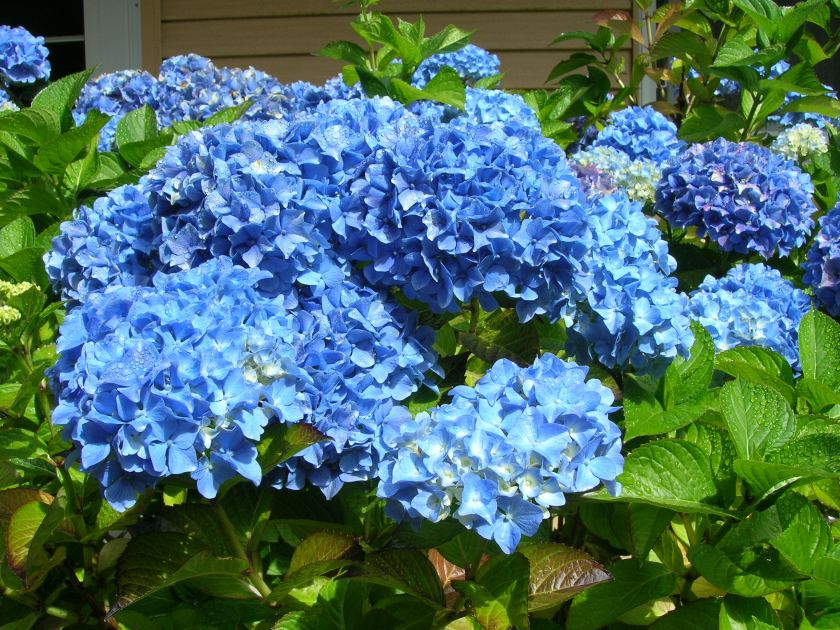
Eighteen years later, the book is still selling, but not in the same way. After nine years doing a fantastic job with my book through three printings, the people at Heyday decided it wasn’t selling enough to be worth doing another printing. But it was still selling, and I wasn’t ready to let it go, so I started my own publishing company, Blue Hydrangea Productions, hooked up with a local printshop, Lazerquick in Newport, and produced my own edition with a gorgeous new cover photo of my grandmother, Anne Avina, on her wedding day.Stories Grandma Never Told_justified text.pmd

That first Blue Hydrangea edition kept selling. I went through three printings, and I’m still getting orders. I’m out of envelopes and almost out of books, but Stories Grandma Never Told lives on. I am releasing a new edition this month through Amazon’s CreateSpace print-on-demand program. You can order it online right now. Again, we have a new cover. This one features my great grandmother, Anna Souza. Why go through Amazon this time? Cost and efficiency. It costs me nothing, saving me a big printing bill and allowing me to charge less for the book. I can also offer it as a Kindle ebook for the first time ever. Plus, since most of my orders come from Amazon, they won’t have to get the books from me, meaning readers can get copies more quickly. I will still get paid and should make more money than before.

Why self-publish? These days, it’s a big question in publishing. It’s so hard to get accepted by traditional publishers, although I have done it several times and expect to do it again. Some self-published books are poorly written and badly edited, but many respected authors are taking control of their own careers by publishing their own books. We have the technology now sitting on our desks. Why depend on someone else?

“Grandma” was originally edited and formatted by the best at Heyday Books. I’m just keeping their work going. Why? Because the readers still want the book, and they don’t care how it came to be. I marvel at this, that I wrote something people want to buy and share with their mothers, daughters and friends. How could I let it die?

Grandma Souza, who died in 1954, would be shocked to find her face on the front of a book. She never learned to read in either Portuguese or English. But here she is, digitized in 2016 and being written about in a “blog.” As she might have said, “Ay, Jesus.”


TV finales leave me with PTSD

I’m traumatized. In the last week, I have gone through so much: gunshots, car accidents, falling in love, breaking up, rape, beatings, standing ovations, singing with Elton John, a C-section without anesthesia, getting hired, getting fired, dancing with the stars, and having sex—so much sex. I have traveled by plane, train, car, bicycle, and on foot. I’ve spent a lot of time in New York, but I have also gotten soaked in the rain in Seattle, sung on a stage in Nashville, and ridden with cops through the streets of Chicago. I have said goodbye to so many friends this week, and I have cried an ocean of tears.

And that’s just on TV. Season finale week, oy.

No wonder I can’t get up in the morning. I have been through so much. I need that kind old lady in the book I’m reading to bring me some of her blueberry muffins and give me a hug. I need her to tuck me in and tell me everything will be all right. Where is she? And where is the best friend who always appears on the TV shows?

I watch a lot of prime time TV, probably too much. Last week, I watched the series finales of “Castle,” “Nashville” and “Mike and Molly.” I watched the season finales of “Grey’s Anatomy” and “Mom.” Oh, and last week with “Madame Secretary,” I almost got fired and we almost had a war and . . . it never stops. On the cop shows, someone gets murdered every episode. Once an hour, we see some hapless man or woman get stabbed, shot, strangled, beaten or poisoned. On the last “Castle,” they burned a guy up in the trunk of a car. And they shot both Castle and Beckett.

How can I sleep after that? How can I wake up and go on with my life?

I have been through so much.

Now, I know this is all fiction, but I’m starting to wonder how much this affects the viewer. How much stays in one’s mind and body as if it happened to them personally? Do we suffer PTSD from all this fictional trauma? Can one’s subconscious distinguish between real events and fictional ones?

God knows, I have cried after happy movies where true love wins when I look around and discover that my husband is still dead and I’m still living alone and I don’t look half as pretty as the heroine in the movie. I’ll never be young, beautiful, uber talented and famous like Scarlett on “Nashville.” My books will never sell like Castle’s. I will never be able to eat ice cream from the carton or drink gallons of booze like the women on “Grey’s Anatomy” and not gain weight. My phone does not ring with amazing opportunities every two minutes. Handsome men are not pursuing me. Reality does not match up.

So I bury myself in my shows. But I go through so much. And now, as soon as the show is over, I go online to read the reviews and recaps and watch clips of the most dramatic moments because I don’t want to let them go. Living on the West Coast, I can read what the columnists have already written based on the East Coast showings. After the “Castle” finale, I had to know: Did Beckett and Castle die? After “Nashville” ended, I needed someone to sum it all up for me because so much happened. Poor Rayna and Deacon. Poor Scarlett. What was Juliette thinking sleeping with the “Dancing with the Stars” guy? And thank God Cole wasn’t killed. It just a concussion. I mean, so much.

Now that the season finales have happened, what will I do every night? How will I live until September? Am I the only one who is this nuts? Please comment. Tell me I’m not alone. Be gentle. I have been through so much.

The Hydrangea Nearly Won

DSCN2510

Last week I was whining about the dead hydrangea bush I was having a hard time removing. Actually “hard time” is putting it too mildly. I dug and chopped and pulled at that thing for weeks. I kept coming back to it like a dog trying to get at a rat under the house, digging and pushing and bending, nicking up my piano-playing hands. It was thoroughly dead, its branches turned to bamboo. I blame the freeze of 2014, plus the blackberries that grew up around it and choked it to death. I had given it two whole seasons to recover, but it didn’t.

IMG_20160412_110723903[1].jpgTwo weeks ago, I saw that this job was getting too big for me and contacted a gardener. After a week, he had not responded, and it was bugging me, so I dug and chopped and tugged some more as my good shoes got crusted with mud. The branches that were too thick to cut kept scratching me. I went at it with a hatchet. The branches laughed. I tried to cut it with my loppers. Nyah, nyah, they said.  I gave up for a while, but I’m not one to quit on things. I did a search on YouTube and watched a guy named Bob demonstrate the proper technique. Okay, I can do this, I thought. I didn’t own the fancy spade that he had, but I did own a spade.

It was working. Then I got down to the last mega roots, thick as parsnips. I chopped with my hatchet. I dug with my spade. I grabbed and pulled with all my might. I could hear roots popping. Progress. But then with one of those mighty heave-hos, I heard my back popping, too, and thought, uh-oh. Time out.

I threw myself on the grass in a sweaty savasana and let it go. It was hard. I knew I was close. I also knew I didn’t want to end up in the hospital.

The gardeners finally contacted me on Monday. They would charge $40 to get the plant out. Fine. Late Wednesday afternoon, they came. Three guys, two speaking mostly Spanish. One of them grabbed my rusty spade that was still leaning up against the wall. He shoved it down into the ground hard about three times, pulled on the plant and it came out, roots and all. Just like that. He carried the corpse to the truck. They smoothed the dirt, and they were done.

I was so close! I almost had it. Just a little more upper body strength and it would have been my victory. It should have been. After all, I am the founder and CEO of Blue Hydrangea Productions. That was my glorious standard for my company. I loved it when it was blooming and I should have been the one to perform the final rites. But no. Because I’m a freaking girl. I thought they would bring fancy equipment to dig and cut. Wrong. They used my rusty old spade that I found in the shed after I watched the YouTube video. Not fair!

Two minutes! They should have paid me for doing all the prep work. I should have had Annie help me. If that dog can bite through an allegedly indestructible Kong or a log from the woodpile, why can’t she take down a dead hydrangea?

Everybody says I should have called them in the first place. They also say I need to hire a gardener. Mowing the lawns kills me. My lawn is like a golf course. Huge. But there’s wonderful satisfaction in watching that lawn get neater with each row I cut. So, not yet.

Any day now, I’ll be planting a new blue hydrangea, all by myself. And I took down a dying rosebush yesterday in five minutes. Thank you, YouTube.

Why I don’t move back to San Jose

Last week in Newport, it was “Dine Out for Samaritan House” day. Once a month, a local restaurant offers a percentage of its proceeds to support the local homeless shelter. That shelter was founded and is maintained by people I know, mostly from my church. Years ago, I even did a story about it for the local newspaper.

This month’s restaurant was Nana’s Irish Pub in Nye Beach. I had a hankering to try bangers and mash, so I invited my friend Pat to join me for dinner after her shift at Samaritan House. When I walked in the door and paused by the bar to scan the crowded tables, I realized half the people in there were people I knew. It soon turned into a party, complete with beer and Irish music in the background. We talked, gossiped about our priest, and compared Irish dishes. I don’t have a Celtic palate—more Mexican and Italian—but my bangers and mash were good and Pat nearly swooned over her bread pudding.

I had already been to Nana’s the previous week for the church ladies’ monthly lunch. Best Reuben sandwich anywhere.

The same thing happens at Georgie’s Beachside Grill every Sunday when friends fill the tables after church. Party time. That simply does not happen back in San Jose. People commune with their phones.

Newport has 10,000 people, fewer than fill the average professional sports stadium. Everywhere I go, I meet people I know, and that makes my life as a childless widow a lot less lonely. For example:

* I go to the hospital for minor surgery. The anesthesiologist is a music friend. The nurse goes to my church. All of my friends have the same doctor.

* When I visit one friend at the local rehab facility, another friend is just down the hall, and I pass yet another just leaving.

* When I shop at Fred Meyer, I meet at least one and more likely a half dozen friends as I peruse the vegetables and stock up on dog food.

* I go to see a play. I know the guy handing out programs and most of the cast members. One is my hair stylist; another is a writer. And I know the performing arts center so well it feels like home. I have been on stage, backstage, in the dressing rooms, and in every section of the seating area. I have sung in the lobby and in both theaters. Unlike the enormous airport-like facilities in big cities, there is no way I can get lost here.

* When Annie and I go hiking, we wave at the drivers of every vehicle that passes us, and they wave back.

* I not only know where everything is at the J.C. Market, I know what the J and C stand for: Jim and Cleo.

* My neighbors have promised to take care of me should the mega-earthquake and tsunami come. I know they will. They have already helped me plenty, feeding Annie when I go away, fixing my gutters, power-washing my house, and sharing halibut and elk from their fishing and hunting trips. My dog Annie and their dog Harley are in love.

Also:

* My mortgage for a four-bedroom house on a massive lot near the beach is a third of what people are paying to rent apartments in San Jose.

* I get paid to play piano and sing solos at church, even though I don’t have a music degree.

* We don’t have black widow spiders, yellow jackets, poisonous snakes, or poison oak.

* I can run four or five different errands in a half hour because everything is close, and there are no crowds. I can even renew my driver’s license in a half hour.

* We complain about the traffic if we have to wait for three cars to pass.

*“Nature” is right outside my door. I don’t have to drive for hours to get to it.

* I am still awed by the beauty I see in every direction. Not concrete and cars, but the ocean, hills, forests, and wildflowers.

Some of my relatives don’t understand why I stay here. Sometimes I do want to go home. I miss my family so bad it hurts, and the rain gets tiresome when it comes day after day. I’m not fond of ice and snow. It gets frustrating when I have to drive for hours to the airport or major stores. What I wouldn’t give for an Olive Garden restaurant. And I’d kill for an electric or gas heating system to replace the pellet stove. But I don’t miss the traffic, the smog, or the crowds in which everyone is anonymous. My father doesn’t even know most of his neighbors. When he goes out, he almost never meets anyone he knows, and no one gives way for an old man with a cane.

We born-again Oregonians don’t want lots more people to move here. With luck, the weather and the lack of jobs will keep out the crowds. Maybe I can claim some rights to Oregon soil. My Fagalde great grandparents settled in Oregon back in the 1800s. If only I could visit them on their ranch and talk to them.

This summer I will have been here 20 years. Fred and I lived together on the Oregon coast longer than we lived together in San Jose, and I have stayed five years since he passed away. Someday I may have to go back to California to help my dad or deal with his house. Maybe I will need the kind of health care I can’t get here. But not today. This is where I live. Like the dead hydrangea I have spent the past week trying to dig out of the ground, I have put down thick roots that would be nearly impossible to cut.


P.S. Somebody help me get this stupid plant out of the ground. I have company coming this week, and it looks awful. Anybody got a chain saw?