I could blame having four books published in one year and all the effort that has taken. I have also edited a poetry book for AlzAuthors and contributed to three different anthologies coming out this year.
But the real reason is that I have taken a lot of my creative energy into a new endeavor, a Substack column titled “Can I Do It Alone?” which addresses the challenges for people living alone, particularly those in their senior years. This is a subject that is so important to me I can’t stop writing about it. Maybe it will become a book someday. But right now, I’m putting out two posts a week and can’t wait to post the next one. The response has been huge. Maybe it’s the Substack platform. Maybe it’s the subject. Maybe it’s a little of both. But that’s where I have been.
The river of words is flowing. It has just changed direction for a while.
I’m starting to think about compiling my Unleashed posts into a followup to the first Unleashed in Oregon book. Sales have not been great, but those who have read it really enjoyed it, and I like having my posts preserved in a book. We’ll see.
Meanwhile, I’m still playing music, I’m thinking about getting another dog, and I have all these home improvement projects I want to do . . .
P.S. What are the four books? I’m shirking my publicity duties if I don’t mention them. Between the Bridgesis the third novel in my Up Beaver Creek series. Find out what PD and her friends are up to now. Blue Chip Stamp Guitar is a poetry chapbook about my lifelong love of my guitar, and Dining Al Fresco with My Dogoffers poems about life with Annie here in the forest on the Oregon coast. No Way Out of Thisis a memoirabout the journey with my husband through our marriage and Alzheimer’s disease. You can find them all on Amazon or at your favorite bookstore.
I may not post here for a while, but you never know when inspiration will strike. Have a great summer. Read a book or two.
PD is walking up Beaver Creek Road with her dog Rocky when he runs off into the trees. She splashes over the mud and across the creek calling for him, but the big, dopey golden retriever doesn’t come. She has never been in this part of the forest before and worries about getting lost. Then she hears singing. Singing out here? She follows the sound and finds her dog making friends with a woman people call The Witch.
Thus begins Between the Bridges, the newest book in my Up Beaver Creek series featuring the adventures of PD Soares and her friends. They went through so much in the last two books. What else could possibly happen? Well, it’s early 2020, the beginning of a year none of us will soon forget.
After a fun year of writing, many (!) revisions, and a good going-over by my wonderful Beta readers, Between the Bridges is close to publication. On New Year’s Eve, I finished the final rewrite. Now, I’m in what I call “formatting hell,” worrying over spacing, page numbers, copyright notices, and such. My cover designer is working on the cover. I’m hoping to release the ebook on Feb. 1 and the paperback soon after. You will be able to order it not only from Amazon but from all your favorite booksellers through Ingram, the distributor used by most bookstores.
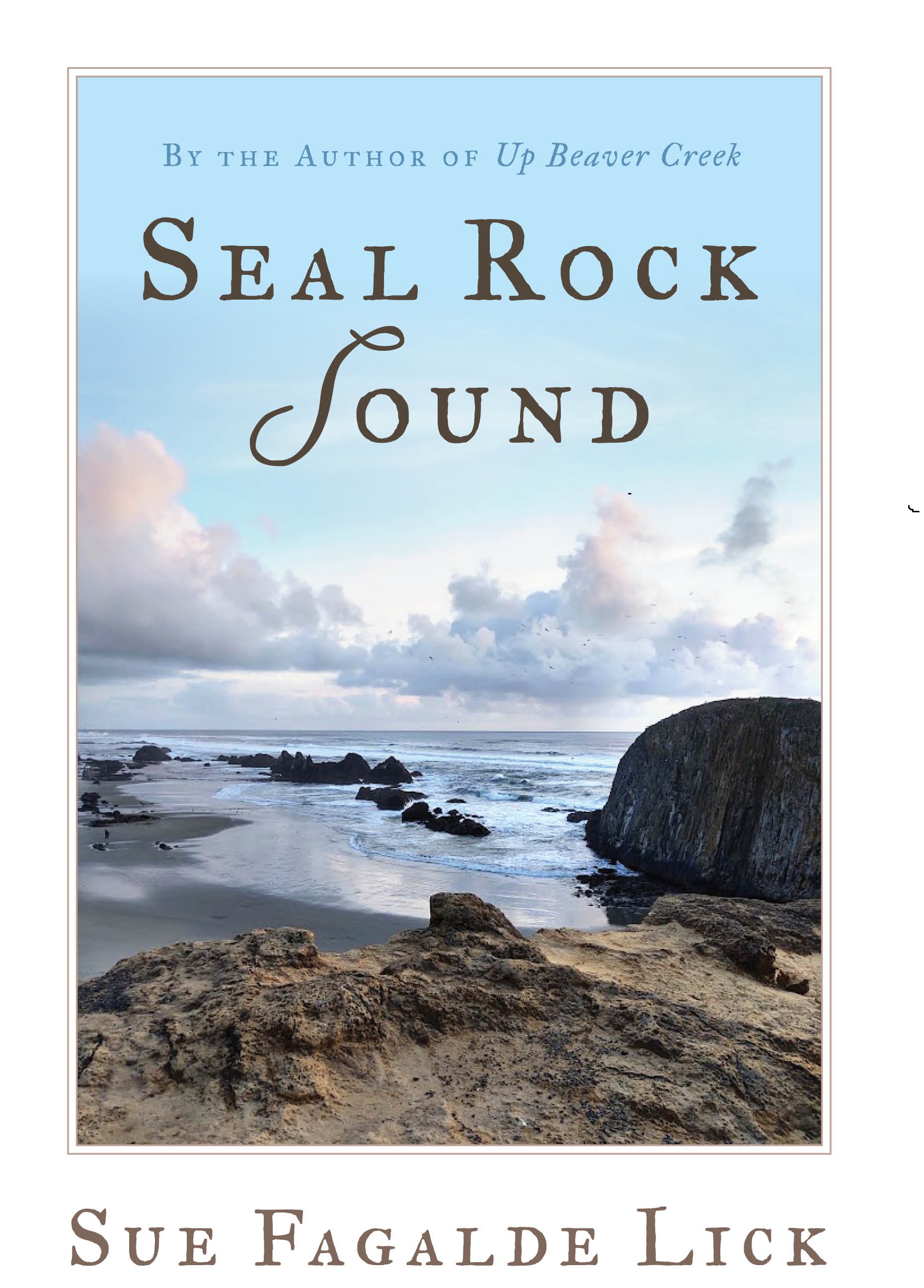
It has been 11 years since I started the first book, Up Beaver Creek, which I fully intended to be just one book, not a series. I spent years on that book, writing, rewriting, and trying to sell it to an agent or traditional publisher. Finally, I decided that since nonfiction was my main career focus, I would self-publish my fiction as the fun thing I did for myself. Readers liked the first book so much I published a sequel, Seal Rock Sound, in 2022.
Self-publishing these days does not mean paying a printer and storing hundreds of books at your house. Print-on-demand technology means we can write and format the books online and have copies printed when orders come in. We can use the power of social media, Goodreads, Amazon and many other online venues to sell our books.
Anyone can self-publish a book these days. Doing it through Amazon’s KDP program is free, and the royalties are higher than most traditional publishers offer. The trick is to publish a book that is just as good as those put out by traditional publishers. Books that are poorly written, edited, and designed make self-publishing look bad for all of us. Books that we don’t promote like crazy go nowhere.
Doing it yourself is not easy, but it does have advantages. You can write the book you want to write without worrying about whether it will sell. You can release the book on your own schedule. The average traditionally published book takes two years from acceptance to publication.
The publisher has the final say on editing and cover design. By self-publishing, you make all the creative decisions. You’re also responsible for the creative mistakes. That’s why revising, having other people edit and proofread, and hiring a skilled cover designer are so important. I have a whole talk I could give on that subject, but let’s move on.
PD and her friends are as real to me as anyone reading this blog. I have to keep reminding myself that I cannot drive up Beaver Creek Road (shown in the photo) and see the Rainbow House and Donovan’s cabin on the right because they aren’t really there. I realized with a shock last night that I’m older than every character in the book and would not fit into their world, not in reality. But in my imagination, I’m 43, just like PD, singing harmony with her and Janey.
I don’t know if I can let them go after this book. PD’s stories have been well-received, and I already have ideas for another sequel. It might be different, perhaps from another’s character’s point of view, but there will be troubles, there will be love, and there will be laughs.
As soon as Between the Bridges becomes available, I will share the cover and links for purchase. Stay tuned for news about launch events and readings. Meanwhile, I have to check the page numbers and margins again.
Thank you to Pat, Samantha, Bonnie, Nancy, Stacy, and Kathryn for your eagle-eyed examination of the Between the Bridges manuscript. I’d be lost without you.
Happy New Year! May God bless us all in 2024.
Processing…
Success! You're on the list.
Whoops! There was an error and we couldn't process your subscription. Please reload the page and try again.
My mind is filled with fire today. Actual fire. Wildfire. I just finished reading Fire in Paradise: An American Tragedy, which is about the blaze that destroyed the town of Paradise, California in 2018. Authors Alistair Gee and Dani Anguiano have done an amazing job of weaving together research and interviews to take us right into the fire.
Imagine being trapped in an endless line of unmoving cars while flames rise only a few feet or maybe inches away. Imagine the car doors are scorching and the tires are melting. It’s morning but black as night. There’s nowhere to go that isn’t on fire.
Searchers found charred bodies sitting in their cars or their living rooms or on their front porches, caught before they could get out. Eighty-five people died in the Paradise fire, and thousands lost everything they had. The town had an emergency plan, but the fire was too big for it to work.
As temperatures rise, wildfires, always a part of nature, are becoming more frequent and more disastrous. We used to think the coast was safe. It’s so damp, we said. But lately, it has been warmer and drier. We got a taste of fire in the north end of Lincoln County where the 2020 Echo Mountain wildfire struck the town of Otis and part of Lincoln City. In all, 1,241 structures were destroyed. Homes, business, churches, everything was wiped out.
For those who say, well, that couldn’t happen here, look around. It could. Wherever you are. Whether you live in a forest like me or in a city. This year, fireworks sparked a beach-side blaze in Waldport—just 11 miles down the road from me—that could have been disastrous. Luckily firefighters stopped it before it reached any homes, but residents were evacuated and Highway 101 was closed for hours. It definitely put the fear of God in everybody around there.
It doesn’t take much to start a fire in dry, windy conditions. Fireworks, a debris fire gone out of control, a cigarette, or a spark from a vehicle that falls on brittle leaves and pine needles. The Paradise fire was blamed on malfunctioning power equipment. Pacific Gas and Electric, which provides electricity to that area, was sued for millions of dollars, but they can’t keep up with maintaining all their lines and connections and the trees and shrubs that surround them. The best they can do is shut off the power when conditions are ripe for fire. People have been left without electricity for days, and that’s not a good solution.
Fire has always been a natural part of woodland life, but there didn’t used to be people and buildings in the way. Where my brother lives near Yosemite, he and his family have been ordered to evacuate twice. One time, fire came right to the gate of his housing development. The area all around was scorched. Several years later, it still has that sepia-toned look that comes over burnt land. My brother has cleared all plant life away from the house, a massive but necessary job when fire is so much a part of the landscape. As one fire expert said recently on NPR, they have five seasons now: winter, spring, summer, fall, and fire.
I look out my office window at spruce and alder trees, laurel, sword ferns, and blackberry vines. It’s green and beautiful but vulnerable. When the dog came in a while ago soaking wet from a brief rain shower, I was grateful. We haven’t seen rain in a while, and it was getting awfully dry.
Why am I obsessing over fire lately? It’s research. I’m working hard on the third book of the Up Beaver Creek series about PD and her friends, and a fire is just one of the challenges they face in this book. I can’t tell you any more yet, but the book is coming. If you haven’t read Up Beaver Creekand its sequel Seal Rock Sound, well, why not?
Meanwhile, if I was told to evacuate, I’d grab Annie, a guitar, my laptop, and my purse, along with the pills, clothing, and snacks already in my “go bag.” Have you got a bag packed? What would you take if there was no time to think about it?
Let us know in the comments.
Processing…
Success! You're on the list.
Whoops! There was an error and we couldn't process your subscription. Please reload the page and try again.
At St. Anthony’s in Waldport, Oregon, the choir sang in 2020 to pictures in the pews when people had to stay home due to COVID. Masses were shared online. Standing is Red, our altar server.
Remember 2020? Sure, COVID. But there was more.
I have been rereading my journals from that year. I think we have forgotten what an insane time it was. Trump was being impeached. I was glued to the radio. The presidential campaign was in full swing, Bernie vs. Joe vs. Elizabeth against Trump and a bunch of other guys who dropped out before the primary came to Oregon. Police killings of young black men caused riots in the streets. People chanted Black Lives Matter. Anger and tear gas filled the air. Fires ripped through the West and destroyed hundreds of homes. The air was filled with smoke for weeks.
I was grieving the loss of my father and my childhood home, which was demolished by the new owners. The husbands of two of my closest friends died.
It wasn’t all bad. I also got my ears pierced and bought my first hearing aids. I had two poetry chapbooks published and was working hard on another book about childlessness, Love or Children: When You Can’t Have both.
The second week of March 2020, COVID roared and the world shut down. No travel, no getting together, sports, no concerts, no going to restaurants, bowling alleys, movies, or stores. You could go to the supermarket, but good luck finding what you need. Wear a mask, sanitize your hands, and pray you don’t catch anything.
Things weren’t so bad here on the Oregon coast at first. Cases in the single digits, no deaths, despite what was going on elsewhere. It didn’t really hit us until late May when tourists jammed the coast. Pandemic, what pandemic? In June, over a hundred workers at Pacific Seafood got COVID, and it spread like wildfire. Because many of the workers and their families also worked in local restaurants or hotels, they had to shut down, too. People started dying here.
It hit a nursing home in Newport, where 16 patients and 12 staff tested positive and more were expected to get it. Six died.
Even as the numbers, top of the news every morning, continued to rise, President Trump insisted it was not that bad and everything would reopen in a couple weeks. Dr. Anthony Fauci, the nation’s infectious disease guru, on TV seemingly every day, said it could be a couple years.
After all, this was a new virus for which there was no vaccine and no cure.
We learned to use a program called Zoom on our computers to talk to each other. Soon we were having meetings, workshops, readings and more on Zoom. We visited our doctors via “tele-med” if we could get an appointment. Kids went to school on their computers while their parents went to work on theirs—if they could. Churches offered services online, musicians performed on Facebook Live, and families talked by Zoom, Facetime, or Skype because they could not meet in person.
The death toll climbed. 100,000, 200,000, a million around the world, over half a million in the U.S. by 2021, a million by May 2022, 1.1 million last month. We lined up to get our shots in 2021, but COVID didn’t go away.
My dog Annie got dreadfully sick on Christmas Day 2020. She was in the hospital for two weeks, and I couldn’t see her or even go into the building. I sat in the parking lot for hours while rain and wind pounded my car. All around me, other people were doing the same thing. Thank God Annie survived, but it would be another year before I could go into the vet’s office with her.
It’s all over now, right? We’re going to work, eating out, having holidays together again, and even hugging each other. We’ve had our shots, and most of us have set our masks aside. But people are still getting COVID. I got it last Thanksgiving. Thanks to the vaccine, it wasn’t bad, but it wasn’t fun either. I was lucky. Many people are still suffering from the after-effects. The disease will remain with us, new variants appearing regularly. As with the flu, we will need to keep getting our shots.
Why read all these journals, you ask? Especially when my handwriting has gotten so bad even I can’t read it. I’m doing research for the third novel in the Beaver Creek series (Up Beaver Creek, Seal Rock Sound). I had already forgotten many details from that time: the footprint decals at the post office to mark where we should stand for “social distancing,” the jeweled face shield the receptionist was wearing at Les Schwab when I went to get my tire fixed, and how the church hall stayed dark and empty for over a year.
Some things we can’t forget. The Plexiglas barriers are still up at the pharmacy and the grocery store. We are still videotaping and Zooming Masses every weekend at St. Anthony’s because people are still watching from home–and not just in Waldport. Virtual gatherings, talks, and webinars have become a way of life.
Writer friends have told me nobody wants to read about the pandemic, but we can’t ignore such a big chunk of our lives. Besides, there’s a lot of drama to be harvested there. How will my characters deal with the pandemic? Will any of them die? Will they go stir-crazy and turn on each other and end up in a heap of dead bodies like the cast of Hamlet? Probably not. I have some other ideas that I think you’ll enjoy reading. Stay tuned.
Processing…
Success! You're on the list.
Whoops! There was an error and we couldn't process your subscription. Please reload the page and try again.
If you had a theme song, what would it be? What makes you, you? Authors are forever being preached to about “platform,” that combination of achievements and media attention that makes everybody know who they are—or at least everybody in their chosen field. Stephen King, for example. His brand? Horror fiction. In Catholic music right now, Sarah Hart is known for sweet singable songs for liturgy and beyond. Football? Tom Brady. Hell of a quarterback at an age when most players are retired. Even I know that.
I have been attending an online workshop called The Writers Bridge. Leader Allison K. Williams preaches that a platform is where someone stands and yells while a bridge is where you make a connection. She and her co-host Sharla Yates offer useful information for writers and other creatives trying to be heard over the noise. We’ve talked about websites, newsletters, Instagram, tiktok, Twitter, Facebook, etc. and so much more. The monthly sessions, which are recorded, are free and open to all.
What am I doing with all this information? I’m looking for a way to blend the different types of books I have written and the ones that are coming into one distinctive brand. People always ask, “What do you write?” Saying, “Oh, lots of things” doesn’t get me anywhere. I have published fiction, nonfiction, and poetry, journalistic articles, blogs, and social media posts, written about Portuguese Americans, living in Oregon, being childless, being a dog mom, and being a widow. But what seems to tie it all together is being a childless widow. What makes me stand out in every story is that I am solo in a world of families and likely to stay that way. In fact, we could boil it down to one word: Alone. Theme song: “All by Myself.”
Twenty years ago, in grad school, one of our professors asked each of us to name our “theme.” At that time, I had no idea. Now I would say “Alone.” It shows in my books, whether it’s the narrator of Childless by Marriage, my protagonist PD Soares in Up Beaver Creek or the church pianist in my poetry chapbook Widow at the Piano. Did you know 27 percent of American households are occupied by just one person? Calling out the theme helps us loners find each other.
So what is your brand, your theme? Even if you’re not selling anything, can you describe yourself in one word or phrase? What’s your song? I’d like to hear it.
Processing…
Success! You're on the list.
Whoops! There was an error and we couldn't process your subscription. Please reload the page and try again.
What songs would PD play? That’s the question I kept coming up against in my novels Up Beaver Creek and Seal Rock Sound, featuring piano player-singer PD Soares. Recently widowed, she has left her home in Montana and headed west, determined to be more than a church choir singer.
Although she does have a day job, PD’s music career is moving along. She’s singing and playing with a band called Seal Rock Sound that includes her roommate Janie and several other friends. Their repertoire includes everything from Chuck Berry to Bob Dylan to Willie Nelson, with a little Grateful Dead thrown in. At a rehearsal in Chapter 5, they go from “Ripple” to “Blue Skies” to “Peaceful Easy Feelin.’ ” Plus some songs that I had to find online because I am not PD. I am considerably older and tend toward country, bluegrass, gospel, and some new age piano stuff. That’s not going to work for PD and her band. She likes jazz, blues and rock. Her audiences are not going to go for “Your Cheatin’ Heart.”
When a friend throwing herself a pre-chemo party demands “hair” songs, PD and Janie come up with a list. Who knew there were so many songs about hair?
I had a blast writing the hair party chapter. If you want to know what happened, pick up a copy of Seal Rock Sound at Amazon.com or order it from your favorite bookseller.
PD Soares survived the death of her husband, relocation to Oregon, and the disasters that occurred shortly after her arrival at her new home up Beaver Creek Road. Now she can relax and pursue her music career and maybe even a little romance, right?
Wrong. New challenges are coming like sneaker waves. Can you love a man who doesn’t love himself? What is wrong with her mother? And how do you recover when the town that calls itself “the friendliest” proves not so friendly after all? Our red-haired, piano-playing heroine is tough, but is she tough enough?
Of course she is, but it won’t be easy.
I’m already making notes for the third book in the series because I just can’t let these people go.
This is my 12th book. Does it get easier to produce a book?
No.
That’s probably not what you want to hear. “Oh, sure I just pop them out like pancakes.” Maybe not pancakes. My pancakes are always burnt or half raw. Let’s say muffins. I’m good with muffins.
Here’s the thing. With each book, I am more aware of the mistakes I need to avoid, more conscious of the pitfalls of careless editing or shallow research. With a sequel, it’s even trickier because every detail has to be consistent with what I said in the previous book. Were Donovan’s eyes blue or green? Which one of Janey’s boyfriends helped her move? Did the house PD and Janey shared have a fireplace, wood stove or radiator? Conflicting details can destroy a good story.
My years of newspaper writing make me a faster writer than many. I don’t agonize over every word or spend an hour writing and rewriting one sentence. I spent too many years knowing I just had to get the story finished by deadline. There was no time for angst or perfection. Now I’m learning to break that habit.
I used Allison K. Williams’ book Seven Draftsthis time, and I think I will use it with every prose project from now on. Because I did the seven drafts, this may be the best writing I have ever turned out.
Each draft asks the writer to look at ONE aspect in depth. For example, one draft is devoted to making sure the story makes sense in the order it is written. Does every chapter serve a purpose? Is something missing? Is this chapter too short or two long? Does this scene belong in this chapter or another one or do you need it at all? Do the beginnings and endings of each chapter grab the reader’s attention and make her read on?
Another draft is devoted to characters. Are they all necessary? Who are they? What do they want? What conflicts are they dealing with?
We move on to setting. Can a reader who has never been there see it clearly? Does the time and place play a role in the story? Oregon coast winters are wet and windy. How does that affect what happens to PD and her friends?
After dealing with the larger issues, the drafts get down to unnecessary words, vague language, and words we tend to overuse. This is where we make the writing sing.
All these drafts take a long time, but they pay off.
Once the writing and rewriting are done, production begins: formatting, layout, cover design, drafts, proofreading. It is amazing how the human eye works. Several people proofread this book, and we all found different typos.
Finally the moment comes when you click “publish” and order author copies. You pray this book baby has all its fingers and toes, that the pages aren’t upside down and the cover looks as good in person as it looks on the screen, that the page numbers are where they’re supposed to be, and you don’t see any big ugly mistakes. When your first copies arrive and you see that your book is all right, you hold it to your bosom and weep.
You’re done now, right? Wrong. Now you have to sell it. And that’s a whole other chapter.
Next time you pick up a book, whether it’s in a bookstore, at the library, or in a bin at the thrift shop, consider what it took to turn an idea into this product you hold in your hand. If you’re a writer, don’t let that stop you. Just take it one step at a time.
You can order both Up Beaver Creek and Seal Rock Soundin paperback at your favorite bookstore through Ingram, the distributor used by most booksellers, or in paperback or ebook formats at Amazon.com. I am available for readings and talks live or online. Tell your friends.
Processing…
Success! You're on the list.
Whoops! There was an error and we couldn't process your subscription. Please reload the page and try again.
Hey, those are my books! The familiar covers stood out among the new arrivals at the humane society’s Pick of the Litter thrift store in Newport. Stories Grandma Never Told and Childless by Marriage, the two books I’m most proud of, now sat among the other titles discarded for one reason or another. They didn’t look as if anyone had read them. Did the people who had them before not even bother to look inside? Were the books brought in by family members after a loved one died? Did they somehow gravitate from the local bookstore that closed without paying me for the books it had on consignment?
Once $18.95 and $15.95, they could now be had for $1.50 each. In perfect condition. Ouch. Maybe I should buy them and sell them again. On the other hand, maybe someone who couldn’t afford them before will buy them now. Maybe I should sneak in an autograph. Or would that be too pitiful?
Our books are our babies. We spend years writing them, and then someone reads them in a day. Or doesn’t read them at all. Once your manuscript is published, you cannot control how it is received.You aim as carefully as possible, but an unseen wind may blow them to someone who doesn’t want them, someone who takes them to Goodwill or the thrift store or, God forbid, throws them in the trash. Some people don’t even read books. The Pew Research Center says roughly a quarter of Americans have not read a book in the past year. That’s hard for me to imagine, but it’s true.
Getting people, even avid readers, to read your book is a challenge. More than one million books are published every year in the United States alone. Why should they read yours? The trick is making sure someone hears about your book and knows where to get a copy. Which is why it sometimes feels as if we spend a little time writing and a lot of time marketing.
Pre-Covid, I spent many hours at tables and booths hawking my books. Sometimes I sold quite a few copies, but sometimes sales were slow. Sometimes people stood there for 20 minutes reading parts of a book, then set it down and walked away.
But maybe when they got home they thought, shoot, I should have bought that book. Maybe they told a friend, hey, I saw this book the other day I think you would like.
What’s the secret to book sales? Being famous helps. When Tom Hanks spoke in Portland a few years ago, the audience bought hundreds of copies of his book of short stories, Uncommon Type. I never saw so many copies of one book in one place, and they rapidly disappeared because the author was Tom Hanks. It’s a good book, but even if it wasn’t, they were buying it because he was a famous movie star.
If you’re not Tom Hanks, you tell as many people as you can about your book, hope they spread the word, and let it go. Yes, it hurts to spend years writing a book and have people reject it with barely a glance or to find it among the books at Pick of the Litter. But you know what? Every famous author’s books eventually wind up at a secondhand store priced at almost nothing. I have purchased many a beloved book cheap that I might not have bought when they were new. They might have been a little wrinkled, but they were still good. It’s the story that counts.
I can take comfort in my recent trip to the Nye Beach Book House where I was piling up used books by John Grisham and Maeve Binchy when a man said, “Hey, that’s you.” I whipped around to see he was holding a copy of my novel, Up Beaver Creek, looking from the photo on the back cover to me.
“Yes, it is,” I said.
“What’s it about?”
I told him. The bookstore owner overheard us and started raving about my book. The man, visiting from Alaska, bought that copy of my book and took it home.
I remember being thrilled to find my books on Portuguese Americans in the New Bedford, Massachusetts library when we visited there. And I was surprised when an excerpt from Stories Grandma Never Told was translated into Portuguese and published in a magazine from Portugal. I know people in Australia, India and the UK have purchased copies of my books. And people right here in Newport will buy them at Pick of the Litter.
You can’t control where the physical book will go once you send it out into the world. So I pat my books at Pick of the Litter, say, “Good luck, friends,” and move on to see what other treasures are there for me to buy.
If you’re local and get to Pick of the Litter soon enough, you may be able to get these books cheap. If you really want them, I’ll give you copies for free. I just want my babies to find good homes.
Do you buy used books? After you have read them, do you donate books to thrift stores or pass them around to your friends? Do you think less of a book when you find it on sale at a secondhand store or do you think hooray, I have always meant to read this?
Writing books is a crazy way to earn a living, but I keep doing it. A sequel toUp Beaver Creek is coming soon. Meanwhile, visit https://www.suelick.com to see a list of my published books and download my Blue Hydrangea Productions catalog.
Processing…
Success! You're on the list.
Whoops! There was an error and we couldn't process your subscription. Please reload the page and try again.
It’s the last day of January. The holidays are already a fuzzy memory. What did I do for Christmas? New Years? Um . . .
So far, 2022, despite the mellifluous sound of its numbers, has been a rotten SOB.
Storms, storms, storms, with wind damage, roads collapsing, landslides and a lot of wet feet and wiping off the soggy dog. See earlier post.
Much worse storms elsewhere in the country causing destruction from which it may take years to recover.
Insane Covid numbers and some people still refusing to get vaccinated.
My brother-in-law died. My friend’s sister died. My sister-in-law’s uncle died of Covid after that branch of the family’s Christmas celebration sent him and two others to the hospital. The others are okay now.
Eight writing submissions have been rejected. (But two were accepted, so maybe that’s okay).
A tumor on my dog’s hip was diagnosed as cancer and then not and then maybe. After a month of blood and ooze from the ugliest-looking bump ever–think blood sausage–it was surgically removed. Her heart nearly stopped under the anesthesia, but the doctor was able to bring her back to a safe pulse rate. Now she has a huge, oozy incision with drains and smaller cuts around it. She has been wearing the big collar, aka cone of shame, for over a month and will continue for at least two more weeks. We are $3,000 into this now, but she’s worth it. Annie will be 14 on Feb. 16. That’s 98 in dog years.
My hot tub cover slipped while I was closing it one icy night and clobbered me in the head, giving me a headache and a two-inch cut from my hairline to my nose that just missed my eye. This led me into all kinds of dark thoughts about the danger of living alone.
My annual doctor visit resulted in another pill to take and referrals to three different specialists. None of it is life-threatening, but it is all annoying and takes away from my writing time. Getting older is a drag, but there are still so many great things to do that I am not ready for the alternative.
So January has sucked, BUT there are good things.
The cut on my forehead is healed and fading away. I did NOT get badly hurt by the hot tub cover. Since that incident, I have taken steps to make the cover much safer to deal with.
Post-surgery, Annie and I may finally see the end of this oozy mess and get rid of the cone of shame.
I have not gotten Covid. So far. With all my shots, if I do get it, I believe it won’t be too bad.
My new air fryer arrived on Thursday and I’m having fun trying new things in it. It’s pretty slick. I welcome your recipes and suggestions.
I am making great progress on my new novel, the sequel to Up Beaver Creek. Dare I confess that I love this book? I think you will, too.
The bulbs are sprouting in my garden, which means spring is coming.
I have wonderful friends, in-person and online. Annie does, too. She has more Facebook fans than I do, with over 100 reactions to my post about her surgery.
The tsunami that drifted over from Tonga Jan. 15 did not damage the Oregon Coast.
I’m still here, writing by the fireplace, dog at my side, guitar and piano nearby, forest out the window. Two hummingbirds just hovered at the window. God is good.
Enough of me and mine. How has January been for you?
Processing…
Success! You're on the list.
Whoops! There was an error and we couldn't process your subscription. Please reload the page and try again.
It’s November, known to some of us as NaNoWriMo, National Novel Writing Month. Hordes of writers commit to writing 50,000 or more words of fiction between November 1 and Nov. 30. That’s 1,667 words or the equivalent of about seven double-spaced pages every day, including weekends. I have started several times and pooped out, but in 2019, I spewed out more than 50,000 words for a sequel to my previous novel Up Beaver Creek. I didn’t finish the book. I had a bunch of pieces that didn’t quite go together. Then came COVID and a lot of other complications, including a nonfiction book that I did finish, so the sequel sat in a pile. Until now. This November I’m determined to pull it all together into a real novel. I’m not counting words. I find that doesn’t work for me. Sometimes an hour of thinking is more important than an hour of spewing random typing. But I am putting in the time.
I bring this up because one of the early chapters, written before any of us had heard the word COVID or had any inkling we’d find grocery store shelves empty of things like toilet paper and flour, turned out to be eerily prescient. In Up Beaver Creek, the long-predicted tsunami hit the Oregon coast, causing heavy damage and many deaths. Now we’re in the aftermath. Electricity is spotty, and supplies are low. When our heroine PD goes to the grocery store, this is what she finds. (No insult to J.C. Market, where I have been shopping for years. All is well there as far as I know, except they are missing a few items . . . )
The roar of a generator greets me as I get out of my car at the J.C. Market at 101 and Olive Street. Keeping the refrigerators and freezers going, I suppose. Since the Thanksgiving earthquake and tsunami, we have not had electricity, at least not that we could count on.
I open the door to dim lights and silence. No music coming through the speakers. Half the shelves are empty. Getting supplies is chancy these days. When something is in stock, we all want to grab a lot of it. But then somebody else would have to do without. We’re all learning to share. PD does not like sharing.
I pull out a cart, wincing at the noise as it separates from the others, and start down the vegetable aisle. Geez, not much there, hard to stay on my healthy-PD diet. Shriveled grapefruit, bruised apples, some artichokes I am sure have been there for a month. Pineapples, lumpy cantaloupes, potatoes, red onions, mushrooms someone probably gathered in the local forests—well, I could make something out of that. Meat? Brown-looking hamburger, questionable chicken, and a few whole salmon at $25 a pound. That’s the other thing. Prices are high. Supply and demand. When you really want an apple and you’re not sure you’ll see another one anytime soon, you’ll pay $4 for it.
Some enterprising folks have started braving the trip to less-damaged places in the Willamette Valley to pick up merchandise and sell it out of their trucks and car trunks. People line up to buy their wares. I’ve done it a time or two.
I toss a pound of ground beef and a sack of beans into the cart and hold my breath as I turn toward the paper aisle. Oh, thank God. TP. Not my favorite brand, just little four-packs of single ply, but hallelujah. $10? Whatever. At least I have a job to pay for it. Lots of people’s jobs got washed away with the tide.
It’s like that with everything. You can get something but not your favorite brand or flavor. Except for batteries. They haven’t had any of those in months.
And then she runs into a man who invites her to watch the sunrise with him . . .
Again, I had no idea a pandemic would hit us. I was just imagining what it would be like after a disaster. Who knew a whole different kind of tsunami was coming?
What do you think? Have you seen shortages where you shop? Do you expect things to get better or worse?
Have you read Up Beaver Creek? Books make good Christmas presents.
P.S. I’m getting my booster shot tomorrow. I tend to react badly. Wish me luck.




 Unleashed in Oregon