I’ll Bet You’re Wondering Where I’ve Been

My poor Unleashed readers, I have neglected you.

I could blame having four books published in one year and all the effort that has taken. I have also edited a poetry book for AlzAuthors and contributed to three different anthologies coming out this year.

But the real reason is that I have taken a lot of my creative energy into a new endeavor, a Substack column titled “Can I Do It Alone?” which addresses the challenges for people living alone, particularly those in their senior years. This is a subject that is so important to me I can’t stop writing about it. Maybe it will become a book someday. But right now, I’m putting out two posts a week and can’t wait to post the next one. The response has been huge. Maybe it’s the Substack platform. Maybe it’s the subject. Maybe it’s a little of both. But that’s where I have been.

I’m still posting at my Childless by Marriage blog, writing new poems and essays, and hope to plunge into a fourth Beaver Creek novel for National Novel Writing Month in November.

The river of words is flowing. It has just changed direction for a while.

I’m starting to think about compiling my Unleashed posts into a followup to the first Unleashed in Oregon book. Sales have not been great, but those who have read it really enjoyed it, and I like having my posts preserved in a book. We’ll see.

Meanwhile, I’m still playing music, I’m thinking about getting another dog, and I have all these home improvement projects I want to do . . .

Stay tuned. Visit the substack at https://suelick.substack.com, my website at https://www.suelick.com, or my Facebook page at https://www.facebook.com/suefagaldelick.

P.S. What are the four books? I’m shirking my publicity duties if I don’t mention them. Between the Bridges is the third novel in my Up Beaver Creek series. Find out what PD and her friends are up to now. Blue Chip Stamp Guitar is a poetry chapbook about my lifelong love of my guitar, and Dining Al Fresco with My Dog offers poems about life with Annie here in the forest on the Oregon coast. No Way Out of This is a memoir about the journey with my husband through our marriage and Alzheimer’s disease. You can find them all on Amazon or at your favorite bookstore.

I may not post here for a while, but you never know when inspiration will strike. Have a great summer. Read a book or two.
Dipping My Toe in the Audiobook Stream

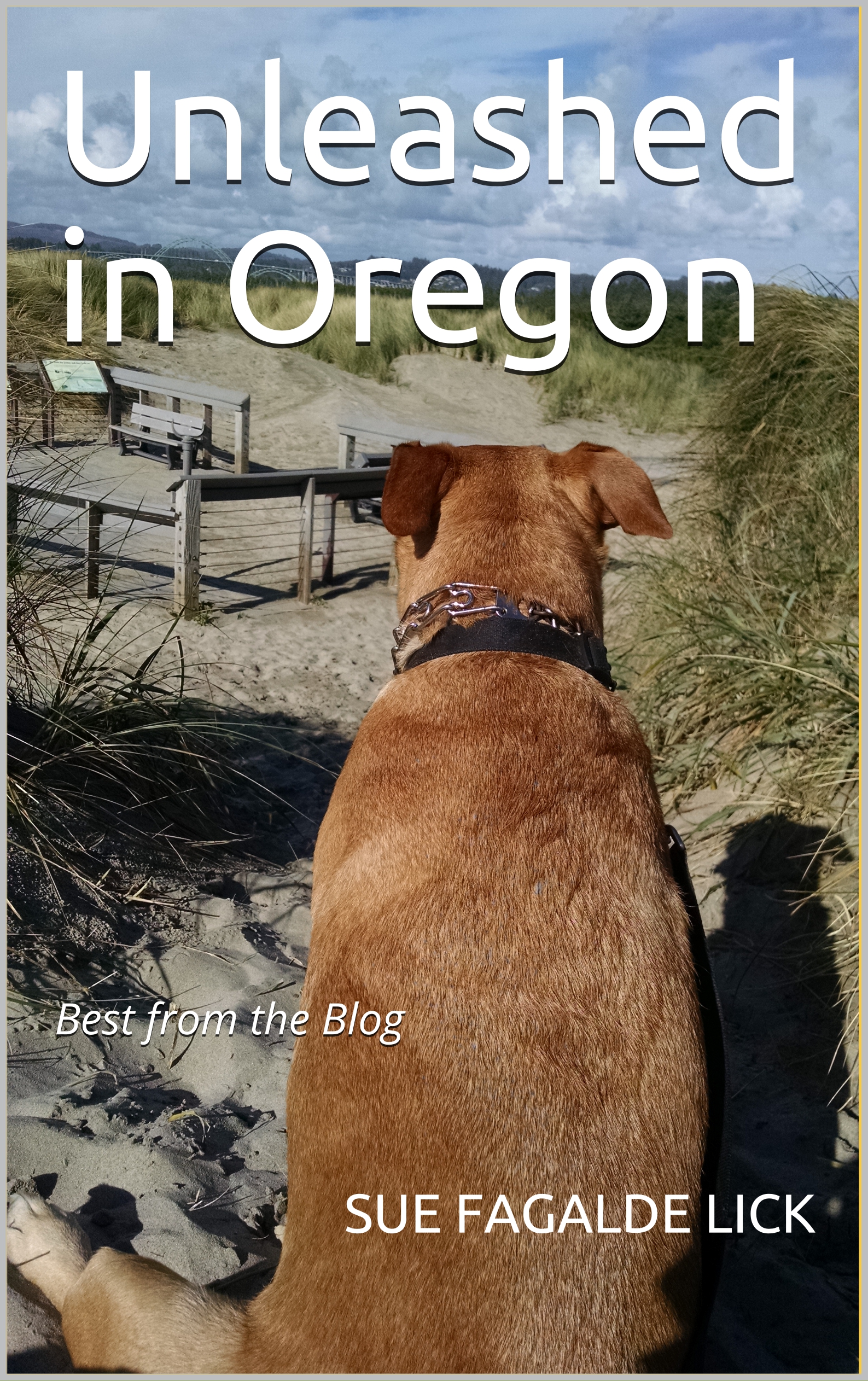
Photo is book cover. Title: Unleashed in Oregon. Author: Sue Fagalde Lick. Image is a reddish-gold Labrador retriever at the beach.

Everyone says audiobooks are the thing. You gotta do an audiobook. I don’t listen to recorded books myself. They put me to sleep. Maybe that’s conditioning from falling asleep while being read to as a child. Also, I just don’t have time to listen. When I go for a walk or exercise, I want a break from all the words.

But I have two friends who are legally blind and can’t read anymore, and I know a lot of people who prefer audiobooks. They have no time to read, but they’ll listen. Plus, I was curious about how it would work.

I worried about the technology, having visions of hunkering in a closet speaking into an expensive mic and hoping the sound was good enough. Tech is not my jam, although I can usually figure it out in a couple dozen tries. Finding and paying a professional studio to record a book takes time and money I wasn’t ready to spend.

But then Amazon’s KDP—Kindle Direct Publishing—program, which I have used for several of my books, offered to convert any of my ebooks for free if I would try their beta audiobook program. I decided to try it out with Unleashed in Oregon: Best of the Blog, published in 2017.

KDP provided an assortment of virtual voices, male and female, with and without accents. I tried each one and ended up with a woman’s voice I’m going to call Kate. She sounded so real I let her read the whole book. Now and then I needed to stop her to correct pronunciation—my name, the name of the bridge just north of here (Yaquina), wind as in a breeze not wind as in winding up a toy—but she got most of it right, even words I would struggle with. Her voice never tired. She never had to stop to cough or clear her throat.

In the process of listening to all nine hours and seven minutes, typos were revealed, errors I had not noticed in earlier versions. I marked all the mistakes and made some other changes, based on what I have learned in the last seven years. Shouldn’t I say Native American instead of Indian? Do I really need that line that sounds so whiny? Maybe that photo isn’t worth the space. Those margins should be wider and the type bigger.

I also discovered I really like this book, and I love the way the stories sound when Kate reads them.

It took a week of intense work—I logged 15 hours last Tuesday—but Unleashed in Oregon in its new spiffed-up version is now available at Amazon in print, ebook, and audio formats, and I would love for more people to read it. I may even put together another blog collection next year, just to preserve my stories.

I am not an advocate of using artificial intelligence to do our writing for us, nor do I want to put professional actors out of business, but wow, these virtual voices can do what no human can do as well. “Kate” was not as expressive in some places as I might be, and I think I should use my own voice on my novels and my upcoming memoir. I would never let a computer voice read my poetry. But as a quick way to produce an audiobook for people who are unable to read a book on paper or a screen, this is pretty fantastic. That mellifluous voice reading my words is just computer coding at a whole new level, but it blows my mind.

Where do we draw the line with AI? We have been using it for years, long before it became the latest buzzword. What about Alexa, autocorrect, or the voice in our GPS? Will technology take over? I hope we don’t become people who don’t know the difference, but it is fun to play with.

I don’t know the future of Amazon’s new beta program that uses virtual voices. For years, they have offered ACX–Audiobook Creation Exchange–which links authors with professional studios to record their books. Amazon is not the only company or the best company producing audiobooks. Findaway Voices, Author’s Republic, and SpeechKi are a few. Having not tried them, I am not endorsing any of these, but they are out there. You can also do it all yourself and upload your books to Audible, YouTube, Spotify, etc. Now that I have done one, I’m eager to make audio versions of all my books.

Tell me. Do you read audiobooks? If you’re a writer, have you published an audiobook? Do you think it’s okay to let a computerized voice do the reading? What about using AI for writing or other tasks? I would love to hear your comments.

Meanwhile, Unleashed in Oregon is now available in print, ebook, and audio formats.

Happy spring, happy Easter, happy reading/listening.  

Processing…
Success! You're on the list.

New Beaver Creek Novel Almost Here

Beaver Creek Road. Photo shows a gravel road leading into trees that hang over the road like a canopy. There's a long narrow shadow from a signpost.

PD is walking up Beaver Creek Road with her dog Rocky when he runs off into the trees. She splashes over the mud and across the creek calling for him, but the big, dopey golden retriever doesn’t come. She has never been in this part of the forest before and worries about getting lost. Then she hears singing. Singing out here? She follows the sound and finds her dog making friends with a woman people call The Witch.

Thus begins Between the Bridges, the newest book in my Up Beaver Creek series featuring the adventures of PD Soares and her friends. They went through so much in the last two books. What else could possibly happen? Well, it’s early 2020, the beginning of a year none of us will soon forget.

After a fun year of writing, many (!) revisions, and a good going-over by my wonderful Beta readers, Between the Bridges is close to publication. On New Year’s Eve, I finished the final rewrite. Now, I’m in what I call “formatting hell,” worrying over spacing, page numbers, copyright notices, and such. My cover designer is working on the cover. I’m hoping to release the ebook on Feb. 1 and the paperback soon after. You will be able to order it not only from Amazon but from all your favorite booksellers through Ingram, the distributor used by most bookstores.

It has been 11 years since I started the first book, Up Beaver Creek, which I fully intended to be just one book, not a series. I spent years on that book, writing, rewriting, and trying to sell it to an agent or traditional publisher. Finally, I decided that since nonfiction was my main career focus, I would self-publish my fiction as the fun thing I did for myself. Readers liked the first book so much I published a sequel, Seal Rock Sound, in 2022.

Self-publishing these days does not mean paying a printer and storing hundreds of books at your house. Print-on-demand technology means we can write and format the books online and have copies printed when orders come in. We can use the power of social media, Goodreads, Amazon and many other online venues to sell our books.

Anyone can self-publish a book these days. Doing it through Amazon’s KDP program is free, and the royalties are higher than most traditional publishers offer. The trick is to publish a book that is just as good as those put out by traditional publishers. Books that are poorly written, edited, and designed make self-publishing look bad for all of us. Books that we don’t promote like crazy go nowhere.

Doing it yourself is not easy, but it does have advantages. You can write the book you want to write without worrying about whether it will sell. You can release the book on your own schedule. The average traditionally published book takes two years from acceptance to publication.

The publisher has the final say on editing and cover design. By self-publishing, you make all the creative decisions. You’re also responsible for the creative mistakes. That’s why revising, having other people edit and proofread, and hiring a skilled cover designer are so important. I have a whole talk I could give on that subject, but let’s move on.

PD and her friends are as real to me as anyone reading this blog. I have to keep reminding myself that I cannot drive up Beaver Creek Road (shown in the photo) and see the Rainbow House and Donovan’s cabin on the right because they aren’t really there. I realized with a shock last night that I’m older than every character in the book and would not fit into their world, not in reality. But in my imagination, I’m 43, just like PD, singing harmony with her and Janey.

I don’t know if I can let them go after this book. PD’s stories have been well-received, and I already have ideas for another sequel. It might be different, perhaps from another’s character’s point of view, but there will be troubles, there will be love, and there will be laughs.

As soon as Between the Bridges becomes available, I will share the cover and links for purchase. Stay tuned for news about launch events and readings. Meanwhile, I have to check the page numbers and margins again.

Thank you to Pat, Samantha, Bonnie, Nancy, Stacy, and Kathryn for your eagle-eyed examination of the Between the Bridges manuscript. I’d be lost without you.

Happy New Year! May God bless us all in 2024.

Processing…
Success! You're on the list.

Book nerds gather at Wordstock

img_20161105_134332574_hdr1You know all those socially-challenged people who would rather read a book—or write a book—than anything? Well, about 8,000 of them gathered in Portland, Oregon Saturday for the mega-event known as Wordstock. Unlike at the famous rock concert with the similar name, folks at Wordstock were stoned on books instead of drugs. The stage performances were all about words instead of music, and the only naked people were the sculptures at the art museum. Still, it was pretty mind-boggling. Alice Hoffman over here, Sherman Alexie over there, Richard Russo across the street, workshops all day, books to buy everywhere, oh my God.

img_20161105_122427661_hdr1Wordstock’s hub was the Portland Art Museum, but within easy walking distance, other events happened at seven other venues on the South Park blocks, including the Arlene Schnitzer concert hall, the glorious First Congregational United Church of Christ, and the Oregon Historical Society. Red Wordstock signs appeared everywhere. The people I met leaving the parking garage were also going to Wordstock. Of course. Everyone was going to Wordstock. Well, there was that guy yelling in Spanish at a mannequin in a store window. But everybody else.

I was a Wordstock virgin, compelled to go this year not only because I always wanted to but because I’m now co-coordinator of our Willamette Writers chapter in Newport. We had a table at the Wordstock book fair. If I volunteered a couple hours, I could sell my books.

Portland is a long drive from here. Three hours each way if I’m lucky. Much of it was in the dark, and it was raining the whole time. Blinded by the deluge, I prayed my way home and still can’t believe I survived. I also can’t believe the guys in pickups who passed me going 75 mph on Highway 20. God watch over the people in their path.

So, as a newbie, I had a lot to learn about Wordstock. For example:

* Once you pay your $15 (do it in advance online) and get your red wristband, you can attend any of the talks in any of the many buildings. Just walk in. This blows my mind. I thought you needed to pay more for an extra ticket. Nope.

* Get the program online at Literary Arts or in the Willamette Week newspaper and plan ahead. There is way too much to see and do. Picture a massive buffet at which everything looks delicious, but you can only choose one plate-full. Which do you want more, the lobster or the raviolis?

* Don’t open that door to the stage balcony between shows. I decided I wanted to sneak a peek at one of the theaters and got locked in. Locked double doors on each end of a concrete-floored hallway. Luckily there were stairs. Eventually I wound up in an alley. As the doors shut behind me—locked—I gazed at the wrought iron gates that separated me from the street. What if they’re locked, too? I pictured myself gripping the bars like a prisoner and hollering for help. But they opened.

* Expect to get wet. It’s November in Oregon. You will get wet walking between buildings. You will get wet acquiring food from the food carts. You will get wet trying to find a place to eat that food. Wear your raincoat; think about bringing an umbrella. And don’t even think about complaining about the rain.

* It will be crowded. Did I mention there were 8,000 people there? That’s almost the whole population of Newport. Most of these people are too busy gazing at books, authors, their programs or their phones to watch where they’re going. If you try to take an alternate route, a red-shirted volunteer will herd you back into the stampede. Note that many of the attendees are kids, who get in free.

* If you live far away, stay overnight so you can start Wordstocking the minute it opens and stay to the end. None of this sneaking out to beat the traffic and the darkness, neither of which is actually possible.

* You’re in an art museum. Take time to enjoy the art, too. Featured this year was the work of pop artist Andy Warhol, famous for his Campbell’s Soup Cans and prints of famous people. Wild and colorful stuff.

It’s all pretty amazing and a little daunting for this small-town author who skipped her church bazaar to attend Wordstock (which my phone keeps autocorrecting to Woodstock). Of course I spent more money than I made selling books. I thought I was going to die on the road. But will I go next year? As long as Literary Arts keeps putting it on, I plan to be there. Unless it’s snowing. Maybe even then.

Tucson Festival a Writer’s Dream

IMG_20160315_125049522

Books, books, book. Miles and miles of books. That was the Tucson Festival of Books, held at the University of Arizona campus March 12 and 13. Sun so bright we grabbed hand lotion and free visors at a dermatology booth. I never saw so many booths dedicated to books and authors. It was like a state fair that was all books instead of cows, quilts, corn dogs, and food processors. Oh, there were booths for community organizations and lots of food you could eat in a big tent where a woman with boots and a cowboy hat and frilly dress sang Patsy Cline songs and yodeled. But it was mostly books. Readings here, talks there, services for authors and books to buy everywhere. Nothing I’ve seen in Oregon is that big.

IMG_20160315_153659695_HDR
Workshop leaders David Gessner, Luis Alberto Urrea, Bryn Chancellor, Joshua Mohr, and Lynn Cullen

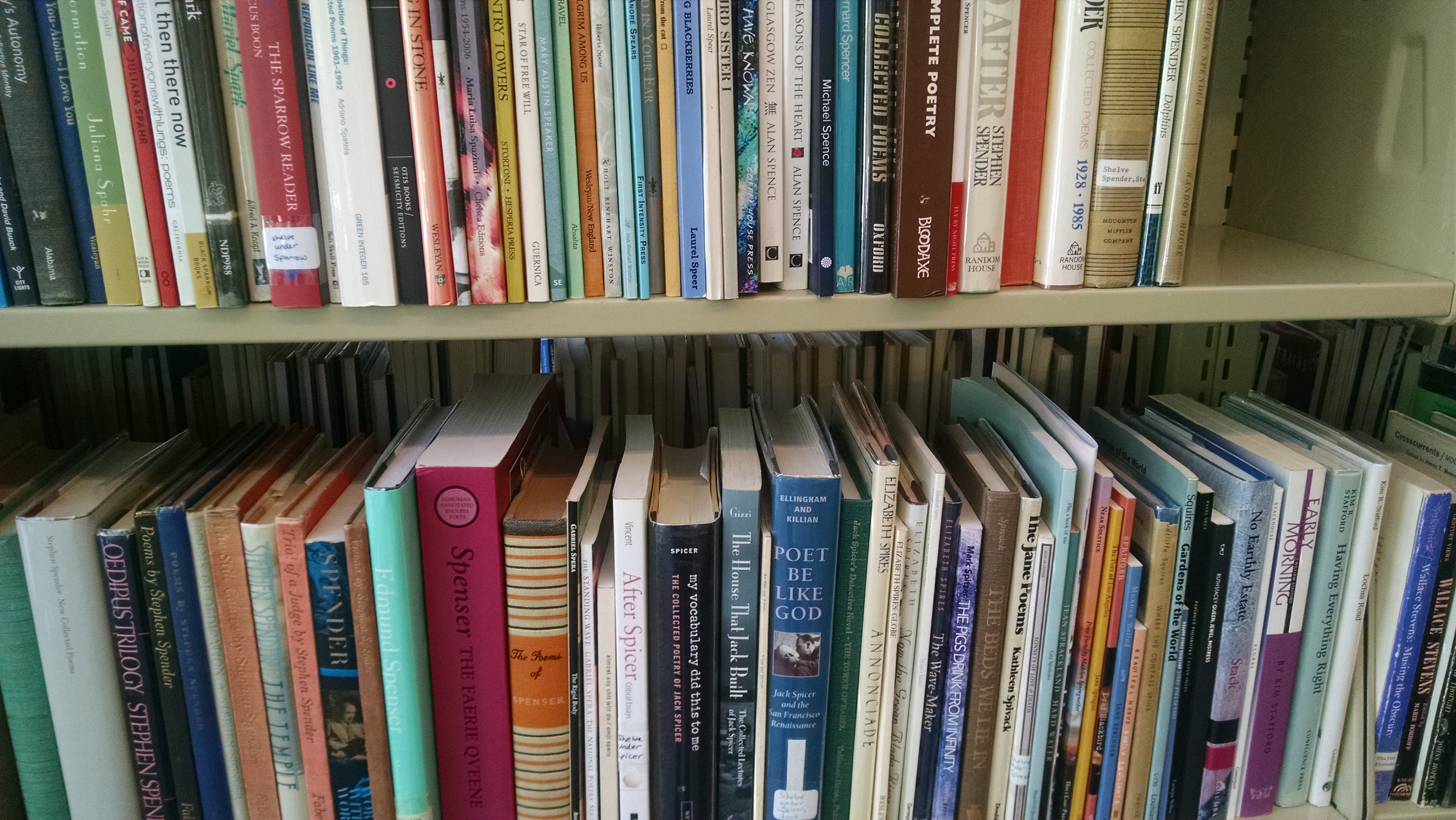
I was in Arizona last week because an essay I entered in a contest won me a place in the master’s workshop attached to the festival. Two full days of lectures, workshops and readings, of bonding with my little nonfiction group and our leader, author David Gessner. It was held in a place on campus called the Poetry Center. A poetry center? Yes. A whole library full of poetry books and books about poetry and poets, a breezeway where we ate the most delicious sandwiches at lunchtime, a comfortable auditorium where we heard readings and talks, and classrooms where we hashed over each others’ manuscripts.

The University of Arizona Poetry Center, housed in the Helen S. Schaefer Building, includes a rare book room, a children’s program called Poetry Joeys, a collection of recordings made by visiting poets, and a Poet’s Cottage where visiting writers can stay. The center hosts readings and lectures, poetry discussions, workshops, and more. When I walked into that place, I thought, “If I could work here, I would gladly live in Tucson.” I’m not moving, but wow. I found a place where everybody speaks my language.

Most people I meet don’t “get” poetry. If it doesn’t rhyme, it isn’t poetry, right? Read poetry for fun? Are you crazy? You’re a poet? What does that mean? Bookstores and libraries rarely allot more than a shelf or two to poetry, but there is so much more.

Why is my MFA in creative nonfiction if I’m so fond of poetry? I wrote poetry first, but a girl has to make a living. I think essays and poetry live on the same spectrum of storytelling. Some essays are poetic and some poems feel like little essays. They’re all magic to me.

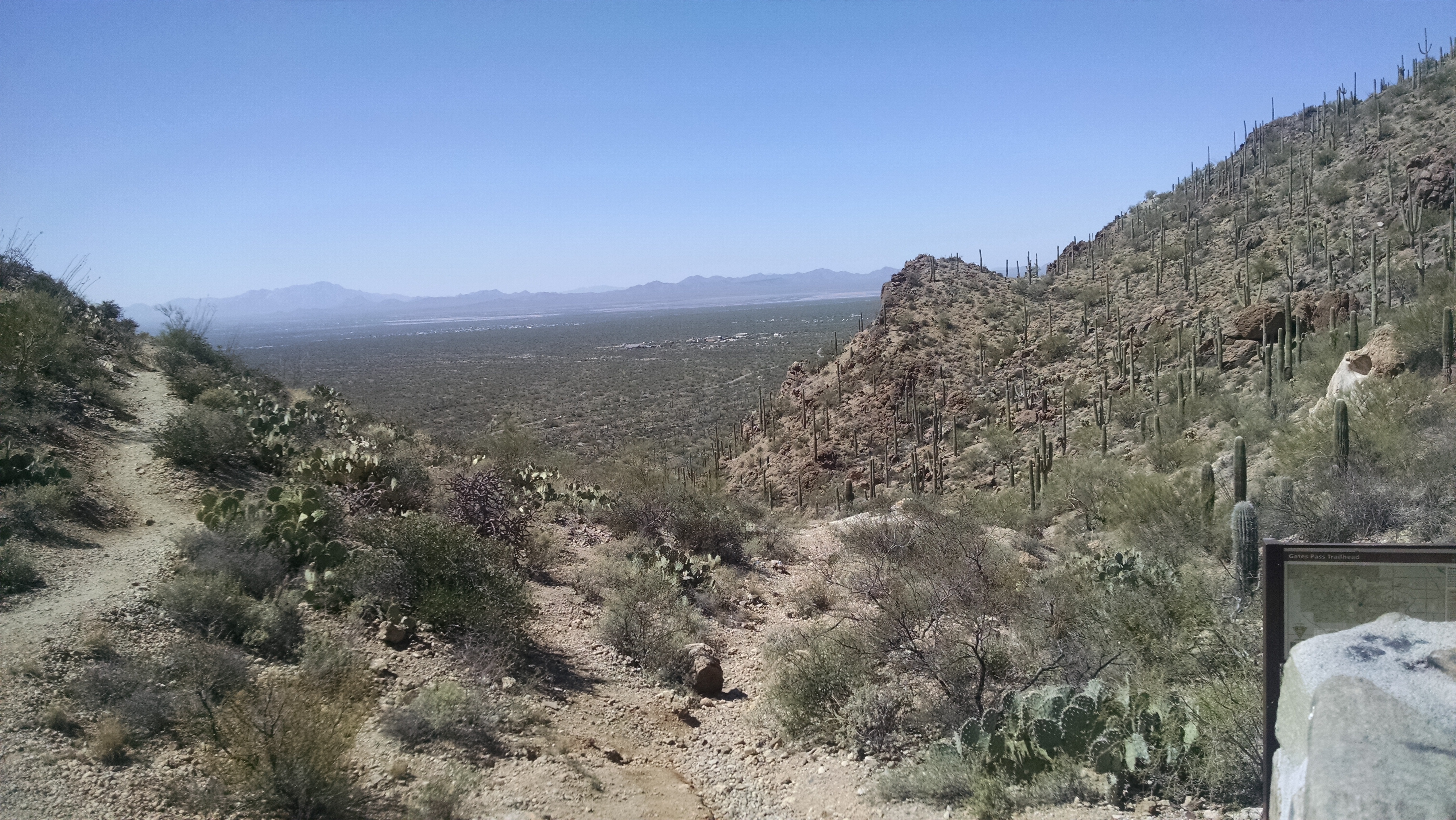
IMG_20160316_121740352It wasn’t all words this trip. I was blessed to be able to stay at the home of my late husband’s cousin Adrienne and her husband John, both delightful people I’ve been wanting to visit for a long time. They volunteer at the symphony store in the lobby at the Tucson Music Hall. The night I arrived, they took me with them. I helped sell CDs and music-related items such as earrings shaped like treble clefs and mugs, bags, scarfs, etc. We also got to hear the music, which included the Tucson Symphony and guest artists The Mambo Kings. Fun! The day after the workshop, Adrienne and I toured the marvelous Arizona-Sonora Desert Museum, which was loaded with cactus, critters and kids on spring break. And in the warm evenings, we dined in the patio and had great talks.

Then it was time to come home. It was 80 degrees in Tucson. When the captain on the plane announced that it was 43 degrees in Portland, Oregon, people groaned. The Oregonians laughed. Back to hoodies and raincoats with new books to read while the rain pours down outside.