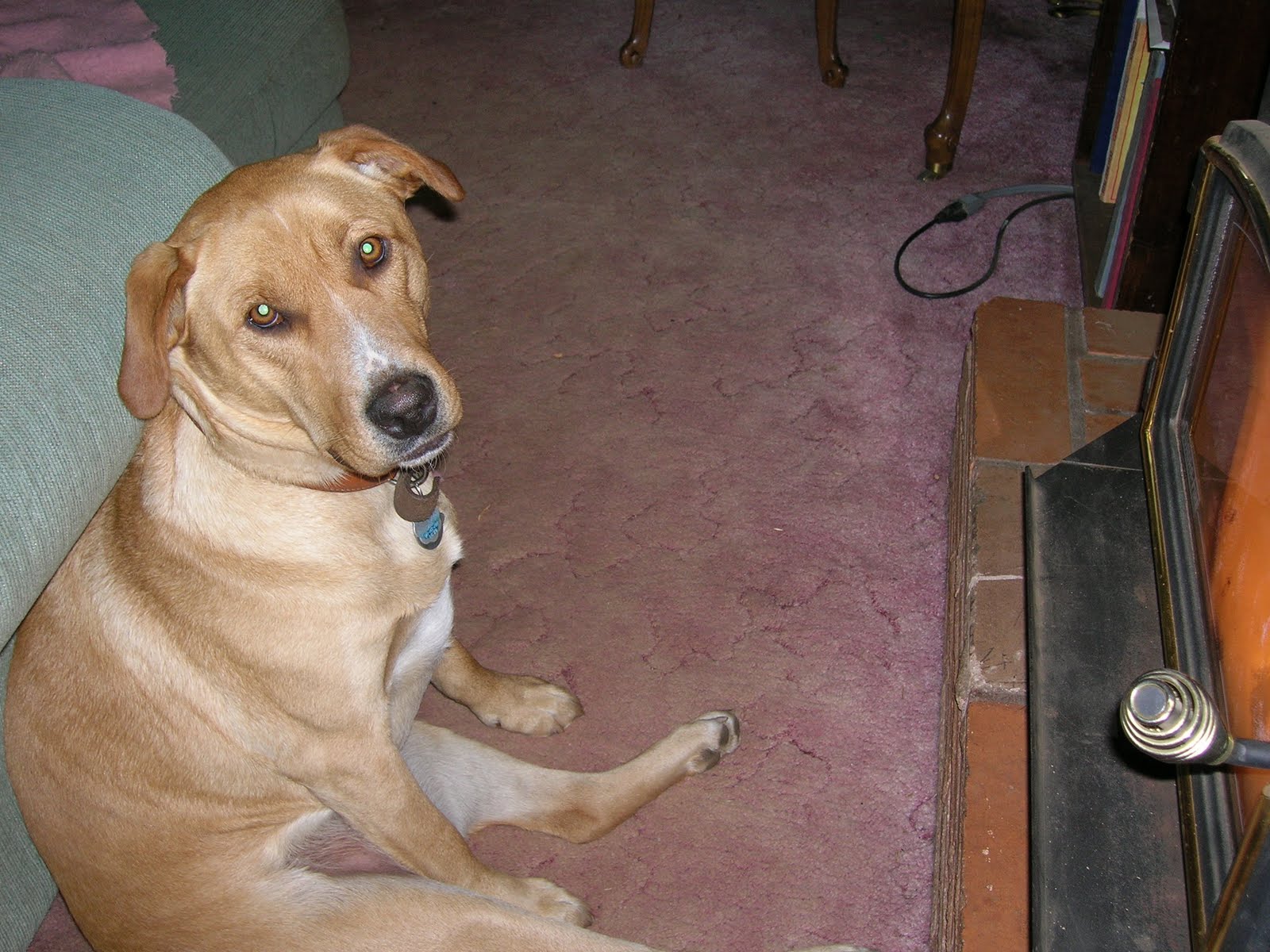
Well, La De Da

 st1\:*{behavior:url(#ieooui) }
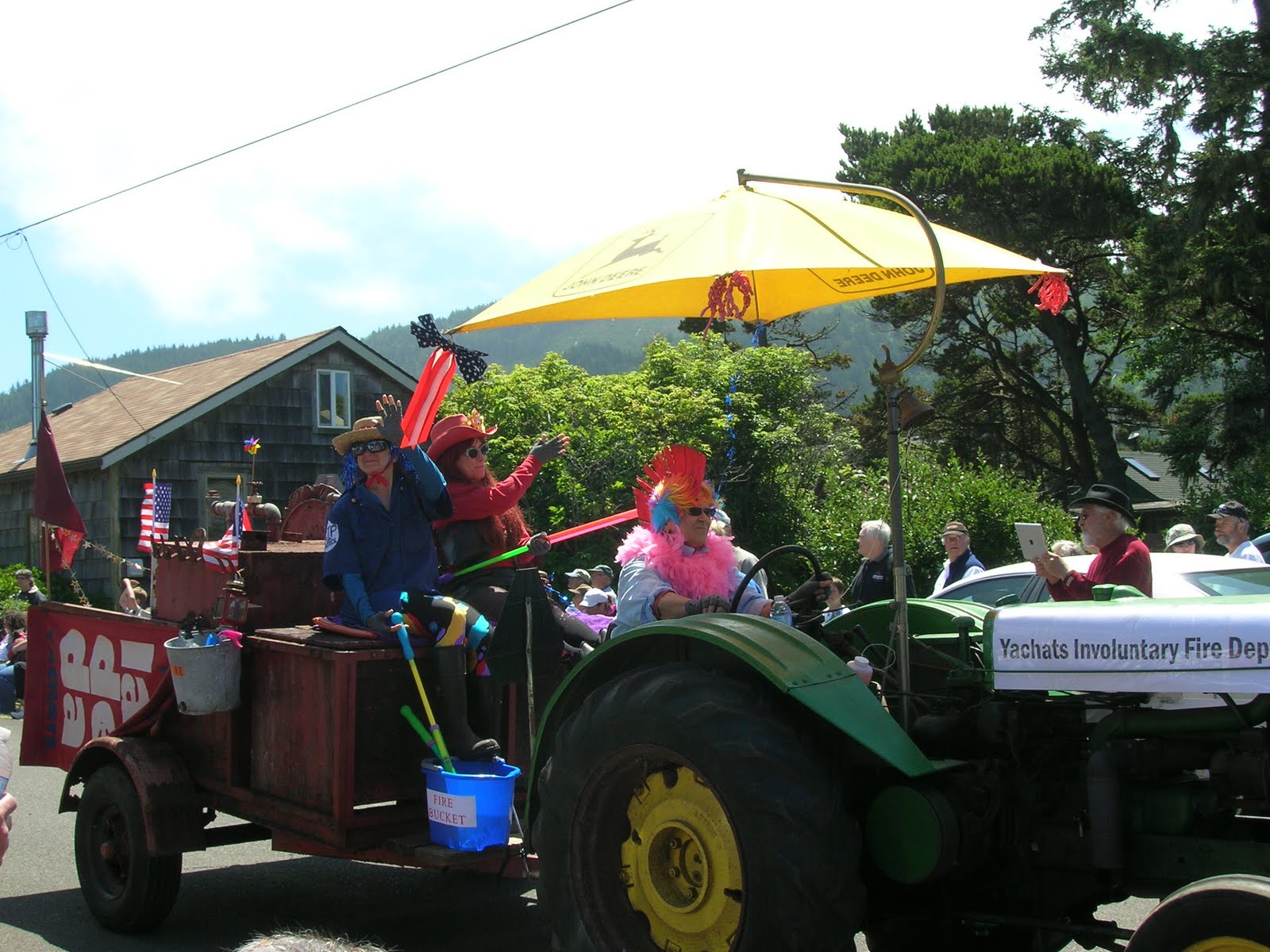
A parade, pies and pups filled the streets of Yachats (pop. 749) yesterday for the annual La De Da parade. With temperatures in the high 60s and a sweet breeze, hundreds of people from all over hunkered along the sides of the roads for the annual parade that is like no other.
Instead of precision marching bands, we had the umbrella drill team with actual umbrellas, a little girl in a wagon celebrating her fourth birthday, seniors doing tai chi, a string quintet playing in the back of a pickup, dachshunds wearing hot dog buns, belly dancers, ecologists dressed as trees, fire trucks, tractors and more. Marchers tossed candy and passed out cartoons and real estate ads.
Poodles, labradoodles, spaniels, greyhounds and every other kind of dog marched or panted on the sidelines, dressed, like their owners, in red, white and blue or tie-dye.
Once the parade had made its circuit from the Yachats Commons—a former school that is now city hall, community center, concert venue and everything else—down past the Lion’s Club and around the bend to where the road overlooks the rocks and crashing surf and back, the crowd dispersed to eat barbecue at the fire department or pie at the commons and shop at booths set up all around. Then they went home to rest up for Fourth of July fireworks over the bay at dusk.
My friends and I adjourned to the Salty Dawg Saloon in nearby Waldport: great burgers, sports on the TV, sea shells embedded in the tables, and a giant photo of James Dean in the ladies’ restroom.
This does not happen in Silicon Valley.
***
I hate to advertise, but I must. My new book, Shoes Full of Sand, is out in paperback this week. If you like this blog, you’ll love this book. Click here to read about it.

I’ve Got That Oregon Glow

Last weekend, I was in California for my niece’s birthday party, held at my brother’s house on the road to Yosemite. It’s a starkly beautiful landscape of golden hills and oak trees. Hawks glide on the breeze and rattlesnakes rustle in the grass. Often over 100 degrees in the summer, it was pleasantly cool, only in the 80s. The sunset over the hills Saturday night was spectacular, turning the whole sky scarlet.

But I’m not used to the heat. After 15 years, I have become acclimated to the coastal climate. Delicate flower that I’ve become living here on the Oregon Coast, I noticed my arms starting to burn after only a half hour in the sun and slathered on the suntan lotion I bought on the way up.  I already had on a hat and more clothes than anybody else.

I had thought I was doing pretty well with my tan. We have had some great sunny days in South Beach lately. I spend as much time as possible on my deck, reading, writing, playing music, and doing yoga or anything else I can transfer outside. We had sun even when it was raining in California. I thought my face and hands were browning up nicely. The rest of me, well it doesn’t get exposed much, so the latent pigment hasn’t shown up, but I felt pretty tan. Until I went to California.

The rest of the family has been schlepping around in shorts and tank tops for at least a month, and they are brown, brown, brown, cocoa brown, milk chocolate brown, there’s-Hispanic-in-my-heritage brown, brown enough that cuts and scars show up white. When I bared my legs to wade in the pool, people shrieked, “Oh, you’re so white!” Someone said, “She lives in Oregon.” Someone else replied, “Oh, ha, ha, that explains it.”

Fine. The cool water felt great on my hot skin. Let them burn themselves to leather. We on the Oregon Coast are short on Vitamin D but probably have healthier, less wrinkly skin because of the moisture in the air. Around here, in the land where everything on shore is green and the blue ocean sparkles nearby, I’m brown enough, and I’m proud. I’m an Oregonian now.

Monarch Sculpture Park: Turn at the Butterfly Tree

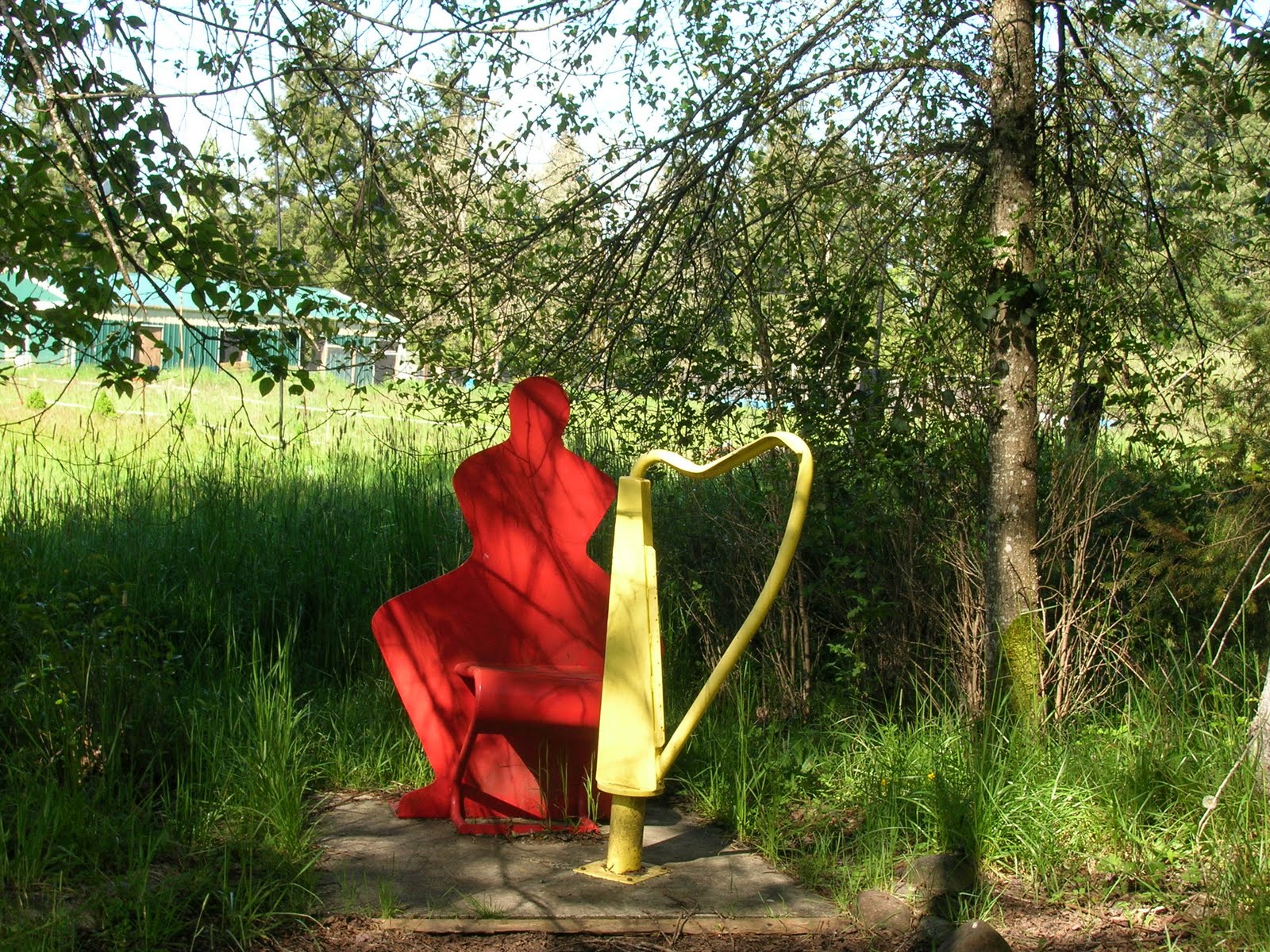
Giant iron and steel sculptures along the road lured me into a fairyland of natural and manmade art where real birds perched in a stainless steel tree made of butterflies. I walked through a giant green portal that boomed as the wind blew through it and came upon the three little pigs’ houses, giant bugs made of metal scraps, a hand two stories high and a croquet set big enough for a giant.
As I wandered through the Monarch Sculpture Park, located 10 miles south of Olympia, Washington, roosters crowing vied with the bongs and clangs of gongs and musical instruments made of sheets of metal and pipes placed along the grassy paths. I wanted to look everywhere at once.
Beyond a fantasy garden filled with sculptured flowers in wild colors, plastic streamers waved from the trees in the Sacred Grove. I opened a mailbox to find pens and streamers to write my own message to hang with the others.
Opened in 1998, Monarch Sculpture Park has grown to more than 100 stone, metal, wood, ceramic and glass sculptures spread over 80 acres of forest, creeks, ponds and grasslands. The site also includes an indoor gallery and offers art workshops, retreats and residencies.
Founder and director Myrna Orsini says the object is to provide an art adventure for everyone, based on the idea that creative expression has no boundaries. Visitors of all ages can see, touch and play with inspiring, quirky and crazy works by famous artists as well as those just starting out.

The outdoor art is open to the public year-round from dawn to dusk. The gallery is open by appointment. This year’s indoor exhibit, “Censored,” features art that might be rejected by other galleries because of its political or sexual nature.

Throughout the year, residents live and work at Monarch, adding their art to the exhibit and sharing their skills with the local community through arts presentations and workshops.

Orsini, who created many of the sculptures in the park, said she was inspired by art centers in Europe where artists could create art and display their work in outdoor exhibits. She relies on donations, residency fees and volunteers to operate the park. These days, she says, she’s struggling to keep the park open and may be closing this fall, so go soon if you want to see it.
Most of the paths are accessible but they do ramble through mud and tall grass. My feet got wet, but it was worth having soggy socks. As Orsini says, the park is a bit out of the way, but when people find it, they fall in love and keep coming back.
Monarch is located at 8431 Waldrick Road SE, Tenino, WA 98589, (360) 264-2408, http://www.monarchartcenter.org.

Help, It’s Not Raining!

We had some freakishly hot days on the Oregon Coast last week. Saturday got up into the 80s. We figure that was summer. Seriously.

Nobody knows how to handle these days. Bugs come out of nowhere, including crane flies and flying carpenter ants as big as hummingbirds. We don’t know what to wear because we finally have to take off our fleece jackets and our fleece vests and our fleecy Ugg boots, and let a little pale skin come out. We don’t even have any suntan lotion; thank God the Dollar Tree reopened yesterday. Our bodies do this weird thing we can’t identify until someone from somewhere else explains that it’s sweat. And my dog, poor Oregon Coast pup, is dragging around wishing she could take off her fur coat.
I remember well getting into my car in California and burning my hands on the steering wheel, walking into buildings just to feel the air conditioning, and getting a new pair of sandals every year. Around here, nobody has air conditioning. What for? All we can do is open a window. I’m used to lolling on my deck as much as possible, soaking up the sun, not hiding from it. I know it was only in the 80s. The temperature got up over 100 on a regular basis from June through September back in San Jose. Eighty was a nice day. It’s all relative. After 15 years, I’ve acclimated.
Anyway, it’s cloudy today. It dripped a couple drops of rain, and I’m hoping it will rain good and hard because it’s muggy, like Massachusetts in August, and I miss my fleece.
***
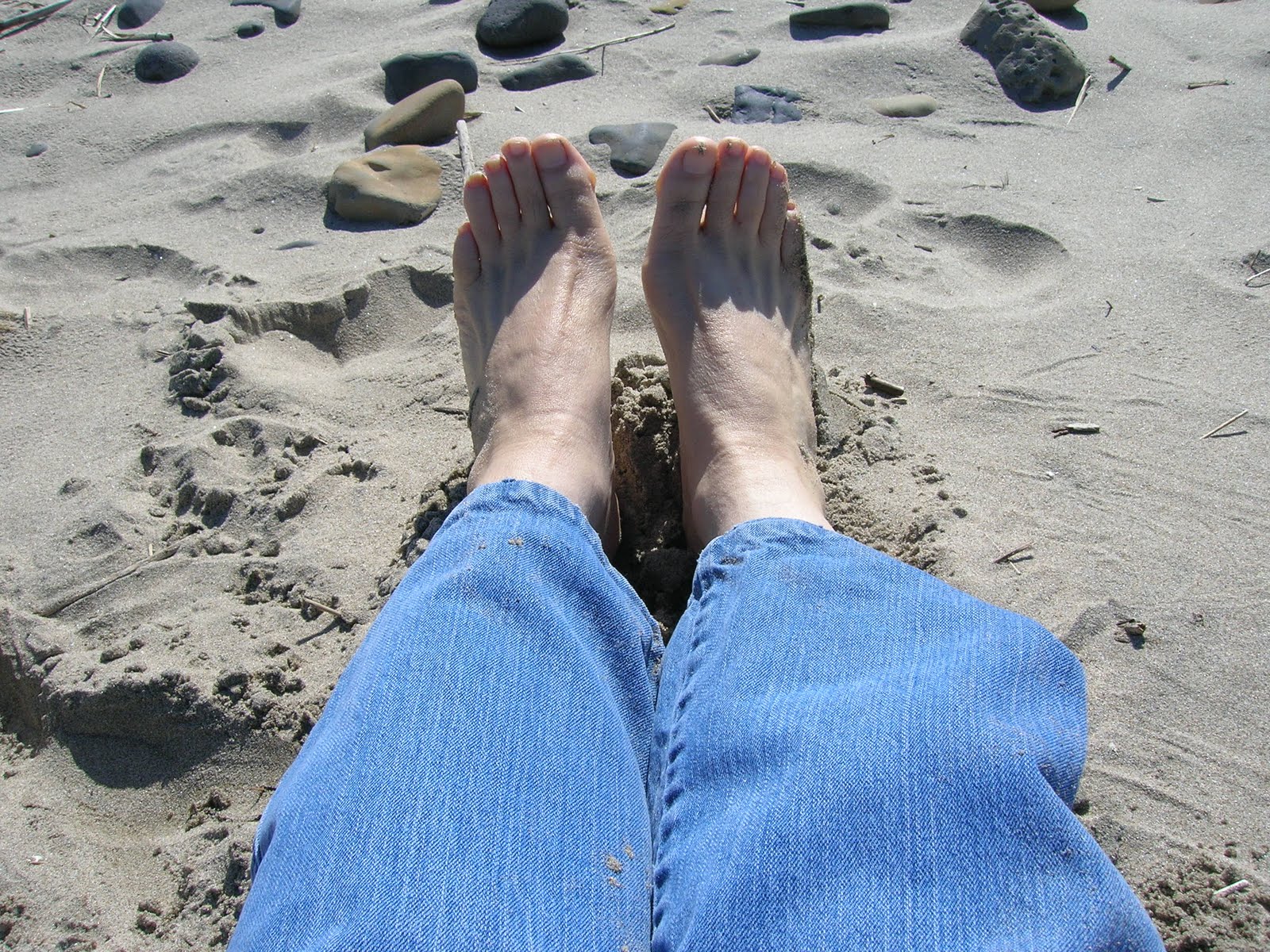
On a slightly related note, Friday turned out to be a good day to take photos on the beach. We’re working on the cover for the paperback edition of my new book, Shoes Full of Sand (already available on Kindle, hint, hint) and I decided to take some more pictures. Here’s some of what I came up with. I’m sure people thought I was nuts taking pictures of sand and my own bare feet and my shoes. But hey, it’s Shoes—Full—of—Sand. And they were.

Where the wolves howl

They look like big cuddly dogs with thick white, gray or brown fur, but wolves are not like the pups in our backyards, my guide, Mary Ann Murphy told me as toured Wolf Haven International near Olympia, Washington last week. As she filled my head with wolf facts, she called me back every time I took a step toward the chain link fences where the wolves live in pairs.
Remembering how the Arctic wolves in the White Wolf Sanctuary in Tidewater, OR, charged the fence when I raised my camera, I obeyed.

It was one of the first warm days of the year, and most of the wolves napped in their enclosures. They look docile, and wolves are beautiful animals, but they make lousy pets, Mary Ann said. They cannot be house-trained, they tend to vie for power, they like to hunt, and they bite with 1500 pounds of pressure, twice that of the average dog. Most wolves taken in as pets are euthanized before their third birthday, she said.

Many of the 50 wolves at Wolf Haven are being prepared for release into the wild and are not on the tour. But that still leaves plenty of wolves to see. We saw many gray wolves, which are not necessarily gray. The largest, male grays like Jakey in the photo, range from 80 to 110 pounds. The females weigh 60 to 80 pounds. All of the wolves have longer front legs, wider feet, and narrower chests than their dog counterparts to help them run through snow.

We paused in our walk along the graveled path as the wolves began to howl. First one began, then another. Soon they were all howling. Wolves howl to locate each other, to mourn, to ward off predators, and to vocalize their social ranking. As I doggedly headed toward the nearest enclosure to get a picture of a howling wolf, Mary Ann called me back. Must stay on the tour, she said. Grumble, but it’s stressful for the wolves to have people coming through every hour.

Wolf Haven, spread across 80 acres among forests and farmland, opened in 1982. In addition to paid staff, volunteers lead tours and help with summer howl-ins and campouts, photography tours and educational seminars.

Beyond a large picnic area near the entrance lies a wolf cemetery, where rock-covered graves mark the final resting places of wolf residents who have died. Wolves only live five to eight years in the wild, but they can live 14 to 15 years in captivity. They mate for life and grieve just as humans do when their partners die. As I paused to take pictures, I could feel the spirits of those wolves howling softly around me.

I went to Washington to do an article on the Monarch Sculpture Park (very cool). Everywhere I went, people asked if I had been to Wolf Haven yet. It wasn’t on the itinerary, but since it was on the road between Monarch and the motel, I figured why not. I’m glad I didn’t miss it.
Wolf Haven International is located at 3111 Offut LakeRoad in Tenino, Washington. Admission is $9 for adults, $7 for kids age 3-12, and $8 for seniors. The sanctuary is closed to the public on Tuesdays and during the month of February. For more information, call (360) 264-4695 or visit the web site at https://www.wolfhaven.org. The noise you hear in the background on the website is howling wolves. The site offers a five-minute virtual tour, information about wolves and the history of Wolf Haven, and ways to contribute. There’s also a fabulous page with pictures and songs of area birds.

Bulldozed, part 2

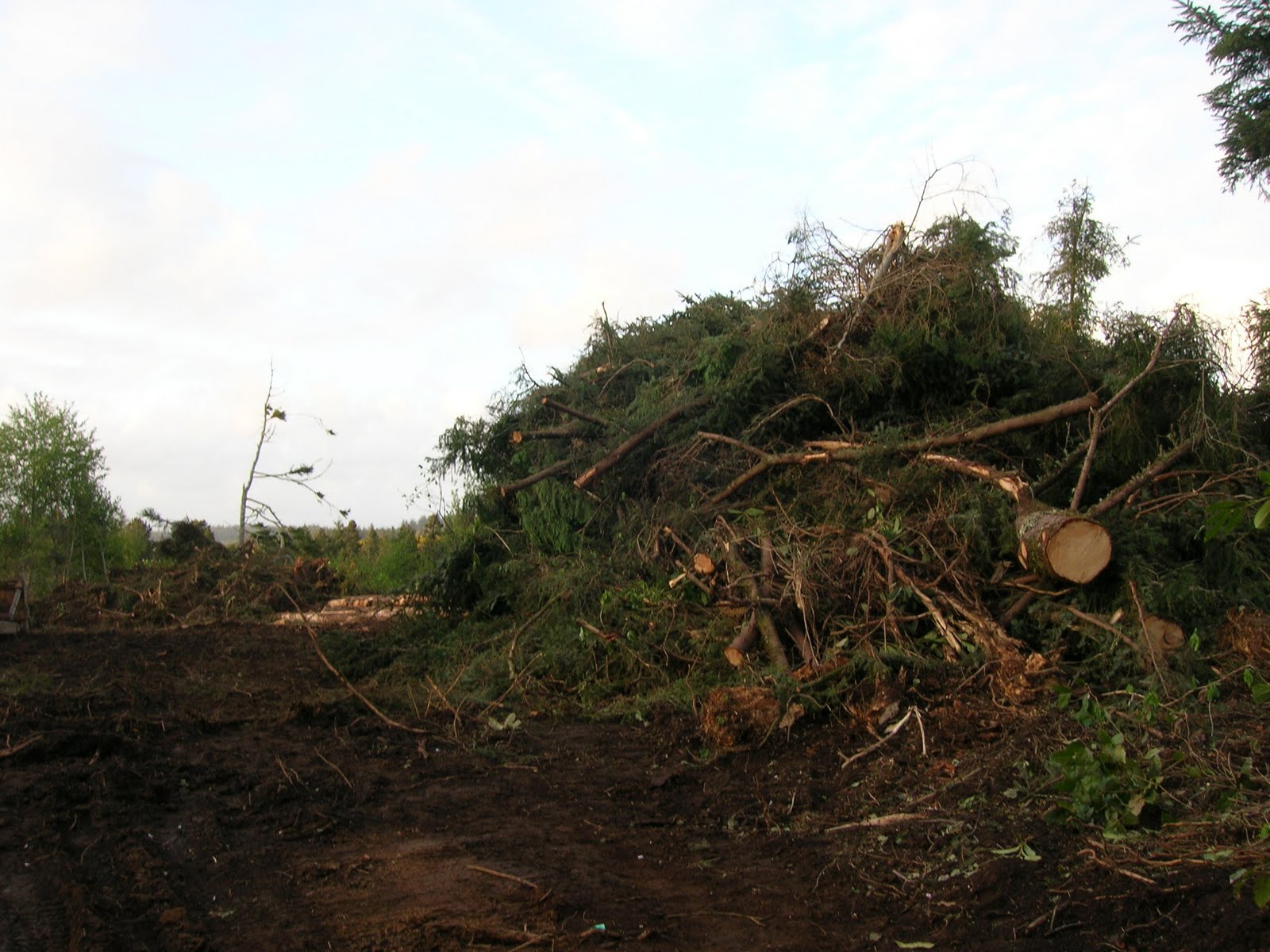
Muddy tire tracks stretched all the way from Highway 101 east to the clearing where Annie and I had walked the other day. Now it was smooth, all the little stumps and shrubs cleared, making a nice long road straight to the edge of the canyon. We walked easily through, and I took pictures of the view spread before us. As we turned toward Cedar Street, I saw the yellow bulldozer and the red cherry-picker were still there. I heard voices. Annie had started digging in the soft dirt. Then she paused, left front paw raised, stilled by an intriguing smell. “Come on,” I whispered. We were about to get caught trespassing where I assumed we were not supposed to go.

Here the mud was chunky, dotted with rocks and sticks. Skinned logs from the felled trees rose in two tall piles.  As the street came into view, so did a woman, blonde with curly hair and black-framed glasses. “Did you come up the road behind the house?” she asked.

Busted. “Yes.”

She smiled. “Isn’t it great?”

Huh?

It turns out the clearing is not for a new house, and it’s okay to walk there. The woman, whose name is Patty, said the airport owns the land and is raising money by logging it. The new walking area and open view are welcome bonuses, she said. Her house gets more light now, and the loggers took down some trees on her property that she had been wanting to get rid of. “Doesn’t it smell wonderful?” she said. It smelled like Christmas.

I’m torn. I love the new trail and the view of the canyon, but I love the trees, too.  I wonder what will happen next.

Bulldozed

For years, a forest cupped the end of Cedar Street, one over from where I live, keeping out people, cars, and all but the smallest animals. Then one day a yellow bulldozer appeared. It snuck in from behind the houses, clearing a rough, muddy tree-stubbled road which Annie and I stumbled through, emerging at the edge of a canyon we knew was there but had never seen up close. We felt like adventurers in a distant land, dodging mice and garter snakes for the ultimate view. Then we discovered the opening curved around to the edge of the woods at the end of cedar. We snuck through the trees and emerged on the paved road, muddy and grinning at our discovery.

The next time we walked down Cedar, something didn’t look right. As we moved north, I realized I was seeing light where light had not come through before. The forest was gone. The yards of the homes on either side suddenly gaped open with a vast view of canyon, yellow-flowered Scotch broom, and signal lights from the airport a half mile south. Annie and I walked straight across a litter of fallen trees and mud to gaze across. Of course I didn’t have my camera that day.

Sunday, after a heavy shower, the rain stopped, and the sun came out just before sunset, making everything a beautiful yellow against charcoal clouds. Annie was aching for a walk. This time I brought the camera. You can guess what happened. The bulldozers were gone, nothing left but piles of felled trees and logs, mud and a half-eaten peanut buttered and jelly sandwich. We slogged through a half mile of muck to the edge of the canyon. I raised my camera for the ultimate shot, pressed on the shutter button . . .The camera beeped at me. “Battery exhausted.” Sometimes I can force out another picture or two, but not this time. It was done. We stood and admired nature for a while, breathing in the Christmas-tree scent of fallen pines, watching a barn swallow circle overhead. Maybe another day.
I suspect more houses will be built here. As much as I hate seeing trees go down, I know that somebody bulldozed part of the forest to build my house, too. Like the end of Cedar, the end of my street is surrounded by trees, but the ribbon of forest between my land and the next property seems to grow thinner all the time. Such is the way of the west.

Prayer

Dear friends,
My husband Fred passed away yesterday after a long struggle with Alzheimer’s Disease. I have been competing in the Poem a Day challenge at Robert Lee Brewer’s Poetic Asides blog. Today’s prompt was to write a prayer poem. This is what I wrote. Fred is still my muse.

Prayer

Today I am a widow,
my husband gone from his body,
the hands that caressed me stilled,
the lips that kissed with such
tender strength left open
to let his soul escape.

Lord, as I kiss his sunken cheek
and embrace him through the sheet,
sprinkling tears across his neck,
help me to remember that this
was just a shell, and now,
like you, he is everywhere around me.

What is My Dog Thinking?

I’m reading a book called Merle’s Door that describes a relationship between the author and his dog which is quite different from what many of us have, especially if we live in cities or suburbia. His owner, Ted Kerasote, allows Merle to come and go, unleashed, letting him have his own independent life. The book goes deeply into the history of dogs, how their brains work and how they behave. It makes me reconsider every interaction with Annie.

For example, when I sit down on the couch and Annie leans all her weight against me, she’s asserting dominance. When I lie down and let her stand over me, I’m letting her dominate me. When she makes yawning noises or licks her lips, she’s anxious. When she grabs paper and runs past me making lots of noise, she wants me to play with her. I like to think I’m the alpha dog, but sometimes I’m not so sure.

Merle’s dog door allows him access to a world that is not fenced in. It’s a metaphorical door as well as a literal one. Annie has a door, too, but I panic if she gets outside the fence. I’m afraid she won’t come back. I’m also afraid she’ll get into a fight with another dog. I wonder what she thinks when I leave.

Sunday at the dog park, a woman with two white Scotties wearing bandannas left both gates open and Annie ran into the forest. Not that she didn’t like the dog park. She was eager to get there, even though there were no dogs around at first. Eventually, a guy came with a seven-month-old gray lab/pit mix named Shadow and a white fluff ball named Roxie, and a lady came with a full-sized black poodle who pranced instead of walking and a teacup poodle that is smaller than most cats. Annie mostly kept her distance, looking on from afar, but she wagged her tail and seemed glad to see them. Not a sign of aggression. The next day on our neighborhood walk, we met a new dog, and my sweet girl tried to kill him. Was it because she was on a leash? Was it because the dog was whining at her? Why is she mellow in the dog park and aggressive on the street? If only she could explain.

And why do I go into such a panic when she takes off? It was a pretty safe area, mid-afternoon, no cars, no wild animals, but I immediately set out to get her back on the leash. She kept me in sight but stayed out of reach, tail wagging, lips grinning, leaping over shrubs and mud patches and into the construction area at the nearby community college. When I turned away, she followed me at a distance, finally running around the outer rim of the dog park and meeting me at the car. Should I trust her more? I have been conditioned not to, fearing cars, animals, and my dog attacking something. Also, in most cities and suburbs, it’s illegal to let a dog run loose. Kerasote, who lived in the wilderness near the Grand Teton National Park, had a different arrangement with Merle. He allowed the dog to go off on adventures and return when he was ready. He trusted him to know what was dangerous and take care of himself. It seems like a much more respectful connection.

The book lingers in my mind every time I interact with Annie. She looks like Merle, but she is not Merle. All she knows is her life with me. Still, sometimes I think she may be smarter than I am. Yesterday, after I got home from Albany, I got out of the car and discovered it was warm in my driveway, not just sunny but actually warm. So I changed my clothes, grabbed the dog and her leash, and drove to Ona Beach. I had promised Annie that she could go swimming as soon as it got sunny. She had been flattening herself into every mud puddle, paddling her paws, clearly wanting to swim.

From the parking lot, I saw that one of the main paths was flooded. We could just start swimming there, but Annie dragged me away from it and toward the beach. As we moved away from the parking lot, we felt an icy wind coming off the ocean. So cold! But maybe it would be okay on the sand. No, it was freezing. Still, I was determined to get us into the water. Annie complied, charging into the river that merges with the ocean. Holding her leash, I followed, walking through ripples halfway up to my knees and then all the way up to my knees. Ice water.

Annie paddled for a minute, but that was enough. She led me out and we ran on frozen legs toward dry sand. I expected her to go back into the water, but she declined. We sat in the sand awhile, Annie leaning against me, then got up to go home. I purposely led us to the flooded path. Maybe it was deep enough for Annie to swim in. I sloshed right in, my thongs and pants already soaked, and forged ahead like a snowplow through the water, spray reaching all the way to my hips.

“Come on,” I said to Annie. She looked at me like I was crazy and skirted along the muddy edge. Once I was in, I had no dry way out wide enough for human feet, so I got wetter and colder until we reached the car, opened the door and Annie jumped in. At home, she rolled on the grass and I lay on the deck trying to get warm. I could just picture her shaking her head, thinking, What an idiot. That water is COLD.

And now she’s sleeping in front of the pellet stove while I work. Dogs are obviously smarter than people.

Duel on the Grass

Sometimes I just can’t help myself. It’s the twelfth day of the Poem a Day Challenge, and I’m getting goofy. Here’s today’s true story.

Duel on the Grass

Annie ate the bumblebee,

batted it around for a while

as I screamed at her “No!

Let the bumblebee go.”

She shot me a doggy-faced smile.

She pounced on the bee,

flipped it into the air.

I bribed her with treats

and pieces of meat.

Suddenly the bee wasn’t there,

just a bit of black fur,

a sliver of wing.

“Oh God, did you eat it?”

“I plum massacre-ed it.

The tastiest part was the sting.