The strange world of legal marijuana

Marijuana, grass, weed, ganja, pot*. The dried leaves and female flowers of the hemp plant. Smoke it, make brownies, cook up a medicinal omelet. Get caught with it and  go to jail. Test positive for it, and you lose your job. Start with grass, and pretty soon you’re taking heroine and cocaine. Mellow stoners walking around in a daze, scarfing down junk food because the weed gave them the munchies? Sneaking a joint out back?

That’s how it used to be, but now it’s legal in Oregon. We voted for it, and it passed. Last summer, stores here started selling medicinal marijuana to those with prescriptions. On Oct. 1, they started selling pot for recreational use. Anyone over 21 can walk into a store and buy a quarter ounce of leaves to use as they wish. The headline on the front of Friday’s News-Times proclaims: At Long Last, Retail Pot. The photo shows a line of middle-aged people walking into Pipe Dreams Dispensary in Lincoln City to buy pot in broad daylight. We have four marijuana stores in Newport, eleven in Lincoln County. No more dealers sneaking baggies to customers in the dark.

Saturday, driving home from Portland, I saw one of those tall skinny balloon guys wiggling in the breeze next to a building all lit up with Christmas lights. It had a lighted green cross. At first I thought it was some kind of church. But then I read the letters on the side of the rubber guy: marijuana.

It is so strange. All our lives it was illegal to use it or have it. A felony. Now it’s being advertised like cars and computers.

While I was at a meeting in Portland, all of us working on our computers, one of the guys, long-haired, about my age, shared his expertise on the subject. He and his wife went to one of the marijuana shops on the first day, sniffed the various types of leaves and each purchased their limit. They planned to bake it into cookies. While you get a rush from smoking, you get a longer, more mellow experience when you eat it in a brownie or a blondie, he said. Whatever was bothering you before does not bother you once the marijuana kicks in, he added with a smile.

Strange. Talking pot recipes.

I think back to parties and picnics where I got a whiff of that sweet smell and felt the thrill of violating the law. I remember an outdoor Willie Nelson concert to which my brother and I took our mom in 1980. She sniffed the air. “Is that marijuana?” Mike and I looked at each other and laughed. “Yeah, I think so,” I said, breathing it in, hoping for a tiny high.

Then there was the whole Stan situation. Back when I was in college in the ‘70s, I was living at home and dating this guy named Stan because I really liked his friend Jack. Wherever Stan was, Jack was. Stan was very weird, possibly stoned all the time. He wore paisley shirts and striped pants, had this odd high laugh and green stuff growing on his teeth, but I had almost convinced myself I was in love with him. One night while Mom and I were watching TV, she turned to me during a commercial and asked if any of my friends smoked pot. I said yes, sometimes, but I never did. Well! The TV went off, my father was called in, and I was ordered to stay away from Stan and all his friends.

Stan came over to plead his love for me and his status as an upstanding citizen. I remember him sitting in the big chair by the window, talking in his spaced-out high-low voice while I sat on the edge of the sofa wringing my hands. Soon he and Dad were both shouting and then Stan was out the door, driving away forever. I hollered something at my father, probably my usual, “You just don’t understand!” and ran to my room sobbing.

All because of marijuana. And now it’s legal. I have no idea what happened to Stan or Jack, can’t understand now why I wasted a minute on either one of those guys. But I was 19 going on 12.

Yesterday I passed three marijuana stores on my way home from church. So strange.

Recreational marijuana is now legal in Oregon, Washington and Colorado. There are still restrictions. See marijuana.oregon.gov.  You can only buy a quarter ounce of dried leaves and flowers per person per day, but you can possess up to eight ounces. You can’t smoke it in public. If caught, you get a citation, like a traffic ticket. An article in Sunday’s Oregonian reported that you still can’t have or use pot on any of the state’s college campuses because the colleges get federal funding and it’s still illegal nationally. But if you get caught, you probably won’t go to jail.

A guy at our Friday jam session said he’d never tried pot, but maybe now he will. I’m thinking the same thing. It sounds nice. And if you can combine it with brownies, hallelujah!

If my mother were alive, she would be amazed. At this point, my father just shakes his head.

Ah, Oregon.

* The word “pot” came into use in America in the late 1930s. It is a shortening of the Spanish potiguaya or potaguaya that came from potación de guaya, a wine or brandy in which marijuana buds have been steeped. It literally means “the drink of grief.” –-blog.dictionary.com/pot-marijuana

Running away to Neskowin

DSCN3995Some days I just have to run away. If I had a regular job, I’d have to stifle that impulse, but as a writer working from home, I can jump in my car, drive to the highway and decide to go either north or south. Last Thursday, with my car finally back from the body shop, I chose north.

I needed to get reacquainted with my Honda Element, sometimes known as The Toaster, after almost two weeks driving the black bomb, a low-slung Toyota Corolla that was fast, quiet, fuel-efficient and had a great stereo. In comparison, the Toaster feels like a truck. Now it’s a truck with many shiny new parts. Since the accident, I had become a very nervous driver. I needed to get over that.

DSCN4002
A riot of nasturtiums at a house in Neskowin

Thursday’s adventure started in Depoe Bay, where I joined the tourists watching for whales and taking pictures. It was a gorgeous day, the waves wild and many shades of blue. As I stood outside the whale-watching center with my camera, a stranger said, “Look over there. A whale. You’ll see his spout in a minute.” To be honest, I never saw it, but it felt good staring at the waves, resting my eyes after too many hours staring at a computer screen. Workers at the center keep a tally of whale sightings. Folks had already seen eight by 11:00 that morning. They counted 11 the day before.

From Depoe Bay, I continued north to Lincoln City. School may have started, but we still have plenty of tourists, many of them driving gigantic motorhomes. Slow. But I wasn’t in a hurry. Ooh, Robert’s Bookshop. A goldmine, but I had already purchased at least a dozen books in the last month. The outlet stores. Didn’t feel like shopping. Library. Again, too many books. Antiquing? Yes, but later.

I have grown fond of the Pig n Pancake restaurant in Newport, housed in the old city hall building. So when I saw the Lincoln City P n P, I decided to eat there. The place was jammed. Noisy. It wasn’t a dining experience; it was a feeding trough. Party of one? The hostess led me to a tiny table barely big enough to get my body behind and slapped down a menu. The next party was too close for comfort. And I thought: no. I walked out, got back in my car and kept driving north.

I did a lot of grumbling to myself about how if my husband were still alive, this trip would be a lot more fun, and nobody would stick us in a corner. He loved these field trips.

I was thinking I’d go to the Pelican Pub in Pacific City, but first I came to Neskowin, a tiny beach community where I sang during a 2014 garden tour. That day, running late and fixated on the gig, I didn’t notice the Cafe on Hawk Creek just off the highway. But I saw it this time. It looked cute and uncrowded.DSCN4003

I walked in, the hostess took one look at me and said, “Two?” Um, no. But that was the only negative thing. She sat me at a big wooden table, and I sank into a soft-cushioned seat. I ordered the chicken club sandwich, but this was not the usual three slices of bread with lunch meat chicken, bacon, tomato and lettuce. This was a giant hunk of fresh-baked chicken, fat slices of bacon, tomato and onion and cole slaw on a ciabatta roll. Heaven on a plate. I sipped my iced tea, read my book and luxuriated in great food. The waitress left my bill but assured me there was no rush. The meal fed my soul as well as my body.

I had gone far enough. Backtracking to Lincoln City, I spent the next couple hours wandering the aisles of the Little Antique Mall at the north end of town, where I scored some 1930s sheet music and vintage handkerchiefs. I love looking at old stuff and listening to old music.

I got home in time to catch some sun on the deck and quality time with the dog. All in all, a great runaway day. Now that the toaster had a little dirt and few more miles on it, it was time to go back to work.

Woman and Dog in the Woods

IMG_20150903_164207601[1]

So many things on my mind. Health problems, car accident, an argument with a friend. After dinner, I sink into the backyard spa and let the hot water steep me like a tea bag, soaking out the crazies as daylight fades around me. While I soak, Annie runs around the yard, barking at dogs she hears in other yards, grabbing a yard-long tree branch and carrying it around, then settling down to chew on it like a peppermint stick.

When I get out, not ready to go into the house, still avoiding the telephone and email, I wrap myself in my big towel and sit on the grass. Annie comes running and sits beside me. I wrap my arm around her. Suddenly we feel like IMG_20150902_184515698[1]a couple, Annie and me, partners in this challenging life of childless widowhood in the woods. I am overwhelmed with gratitude for this big yellow dog. I know she won’t live forever. But she’s here now, and that’s what counts.

Whatever I do, she’s nearby, watching, listening, waiting for a chance to share my food, walk with me, or lie beside me on the love seat while I read, write, talk on the phone, or just pet her and tell her I love her. When she leans her 80 pounds into me, I feel something inside me sigh and relax.

Earlier, we walked our usual walk down 98th Street and into the wildness area beyond the houses. Suddenly Annie froze, ears up, listening. I didn’t IMG_20150904_100542760[1]hear anything. I was ready to plunge on through the salal and blackberries, but Annie turned us around. Tail down, she led me swiftly back to the road. I still didn’t see any danger, but she did, and I trust her superior hearing and smell. Often she has sensed someone or something long before I noticed. It was probably just a deer, but when Annie says, “Let’s go,” we go, just as she obeys when I pull her out of the way because a car is coming or I see potentially poisonous refuse on the side of the road. These days when the bushes are full of ripe berries, she eats from the lower branches and I eat from the upper ones. We’re a team.

Thank God for Annie.

Crunch! Car Crash Changes Plans

IMG_20150828_153133529[2]I was expecting to write a very different post today, but . . . life happened.

I was all dressed up and heading to Corvallis for a Timberline Review literary magazine event. Traffic on the coast was terrible. I just wanted to get out of Newport, which was flooded with tourists. I was on Highway 20, but still in town, when my phone rang. I know. I should have ignored it. But it was my dad, and I was afraid something was wrong, so I made a sudden turn into a parking lot to answer the phone. At least that was my intention. Bang! Crash! I lost control of the car, hit something on my left and was headed for a fence. I did not know until the other car pulled in beside mine that my car had been hit from the rear. The driver was local, uninsured, and in tears. Her tiny black dog was hysterical.

The front of the passenger side of her car was smashed, the headlight in pieces, wires and such dangling, radiator leaking. My back bumper was damaged. But where did the piece of car lying on the pavement come from? Big piece. It took me a while to figure out it came from the front, where the real damage was, where I ran into a metal post.

People came running out of the nearby candle shop. Someone swept up a big pile of glass and car parts from the street. We were both shaken but apparently not hurt. Our air bags did not deploy (the recalled ones I didn’t have replaced yet). A fire truck came, followed by a police officer, crew-cut, shades and all. He filled out a report. I told him I turned abruptly. I was willing to take all the blame, but the officer insisted that the law says that if the other driver hit me from behind, she was following too closely, so she would be cited and I was in the clear.

My Honda Element is drivable, but it needs repairs. The estimate is $3,000, with possibly more showing up when they take things apart. I have Cadillac insurance. State Farm will pay for repairs and a rental car, and I will be okay (although my bumper stickers are toast.) The other car, an older Honda Accord, was towed to the same place I took my car. The woman doing my estimate looked out the window and said, “Oh, that’s totaled.” It’s not fair. It’s not right. I’m sure the other driver needs her car as much as I need mine, and I doubt that she can afford a new one.

My phone has a new name: “that f-ing phone.”

It’s a knee jerk reaction for me. Phone rings, I grab it, I look away from the road to see who’s calling, and if it’s family, I answer it. Not anymore. I’m turning the phone off when I drive so I won’t even know if anyone calls.

It happened so quickly. I sometimes think about what I would do if I were about to get in an accident, how I would try to protect my face or my hands. But there was no time for a thought or a word. I just knew I was hitting things and had to get away from the fence that was coming right at me. Since then, I keep hearing the crunches and seeing that fence over and over in my mind. Driving scares me now.

When I was done with cops, insurance and repair people, I called my father. He gave me a good tongue-lashing. I deserved it. “Let the damned phone ring,” he said. “Call back later.” It turned out he was fine, just calling to see how my medical tests had turned out. I get those results this afternoon. Fingers crossed.

Today I am aware of how blessed I am, so blessed I feel guilty. I’m not rich, but I have enough. I can afford a nice car and good insurance. My body still works as well as it did before the accident. I can still write, play and sing my music, walk the dog, and go to lunch with my friends. Not everyone is so lucky.

Dear friends, turn off the phone. It’s not just texting, it’s telephone calls, email, checking the weather, fiddling with the GPS and all the other features on our Smart Phones. It’s hard to resist their allure, and you cannot safely use the phone and drive at the same time. When I slowed to turn off, I didn’t even know there was anyone behind me. I didn’t look. My attention was completely on the phone. Smart phones are smart, but sometimes we people who use them are idiots. A phone call can always wait. Always. Minus the phone, I would have spent my evening eating hors d’oeuvres and listening to poetry. Instead I was filling out a report for the DMV. It’s not worth it.

Next week, I promise, even if the house burns down, God forbid, I will offer a blog full of happiness and beauty. Or dog pictures, which are the same thing.

Leave me a message at the beep.

I Should Have Listened to My Mom

When you visit the doctor’s office complaining of chest pains and pressure, people tend to panic. Even when you tell them you’re pretty sure it’s gas. Driving to Portland, stuck in traffic, thinking I should have gone to the ER because it hurt pretty bad, I sent up a prayer for God to tell me what to do. He sent me a giant burp. Which made me laugh and say, “Thank you!” But doctors still think, HEART ATTACK. And I kept thinking of how Rosie O’Donnell described her own heart attack and how women experience heart attacks differently from men.

But I was on my way to a conference in Portland, middle lane of I-5, cars not moving. I was going to teach a class, pitch to agents, represent the Timberline Review, attend workshops and network, network, network. Meanwhile people from my church kept dying, and I would be playing music for a funeral the day I got home. I had received a scary recall notice for the car in which I was sitting. I had nonstop music activities, Writers on the Edge president duties, and a troublesome situation with a certain someone in my life. Plus I had to leave my dog behind. A little stress?

I don’t do well with stress. Neither did my mother. As I took my troubles to Google that night in my hotel room, I suddenly remembered the night she went to the hospital with similar pains. Forever after, whenever my brother and I misbehaved, my father would scold us with the words that our mother was sick because of us. Dad never beat us, but he sure could pour on the guilt.

Anyway, Mom’s pains were exactly where mine finally settled, top of the stomach just below the ribs. There’s this valve there, the pyloric sphincter, that was the source of her troubles.  When I read the name, I sat back on my cushy bed and thought, “Oh my God. That’s exactly what I have.” Yes, I’m a little bit of a hypochondriac, but I think this will turn out to be the diagnosis. It’s a chronic pain at the entrance to the stomach that happens when it doesn’t open and shut properly. Like mother, like daughter.

When we’d start to get upset, Mom used to say, “Don’t get your bowels in an uproar.” She wasn’t kidding.

So I showed up at the doctor’s office a week after the original pains had settled below my ribs. She went into hyper-drive, ordering an EKG (normal), chest X-ray (normal), blood and urine tests (normal), and an ultrasound (not till Thursday). She put me on Prilosec, one pill every morning, and took me off foods like spices, tomato sauce and—say it ain’t so!—chocolate. A week later, I’m feeling better. I’m probably going to live.

Meanwhile, Annie had to go to the vet. She had a fungal infection in her girl parts. For the last 10 days, I’ve been hiding antibiotic pills in her food and massaging said parts with cream. Fun! She feels better, too. Or at least she has stopped licking down there. Now I think she has fleas.

After the conference, I rewrote my entire novel in two weeks and sent it to two agents who were interested. Cross your fingers. I have a pile of Timberline Review submissions to read, another pile of authors to consider for the Nye Beach Writers Series, songs to prepare for church and for the kids in religious education, another book to finish writing, and a dog that wants to walk at precisely 3 p.m.

Stress? What stress? I saw my shrink on Wednesday. She upped my meds and had me do breathing exercises. In, out, in, out.

Too much information? I know. I was going to write about the fires destroying huge swaths of the western U.S., including big chunks of Eastern Oregon. The smoke has made its way to the Willamette Valley and points west. Terrifying. None of my troubles compare to this. Please pray for rain.

And if you have chest pains, don’t wait a week to go to the doctor, even if you have a busy schedule. It might be gas, but it might not. I was lucky.

County Fair: Where Else Can You Eat Elephant Ears?

IMG_20150815_144942706_HDR

IMG_20150815_150137232_HDR
Not every fair has a tomato tasting table.

I grew up going to the Santa Clara County Fair in San Jose. Even got one of my first jobs there. That fair was HUGE. You could walk all day and not get to the end of it. Top-name acts played in the bandstand, giant halls were filled with needlework, baked goods, and people selling things like kitchen knives and Magic Fingers massage chairs. The food, the rides, the horses, the tractors, it went on and on. There were fireworks every night of the fair. It was also hot, smelly, expensive and crowded but that’s the county fair. You eat junk food, drink beer, dance to the music, play the games and pet the goats.

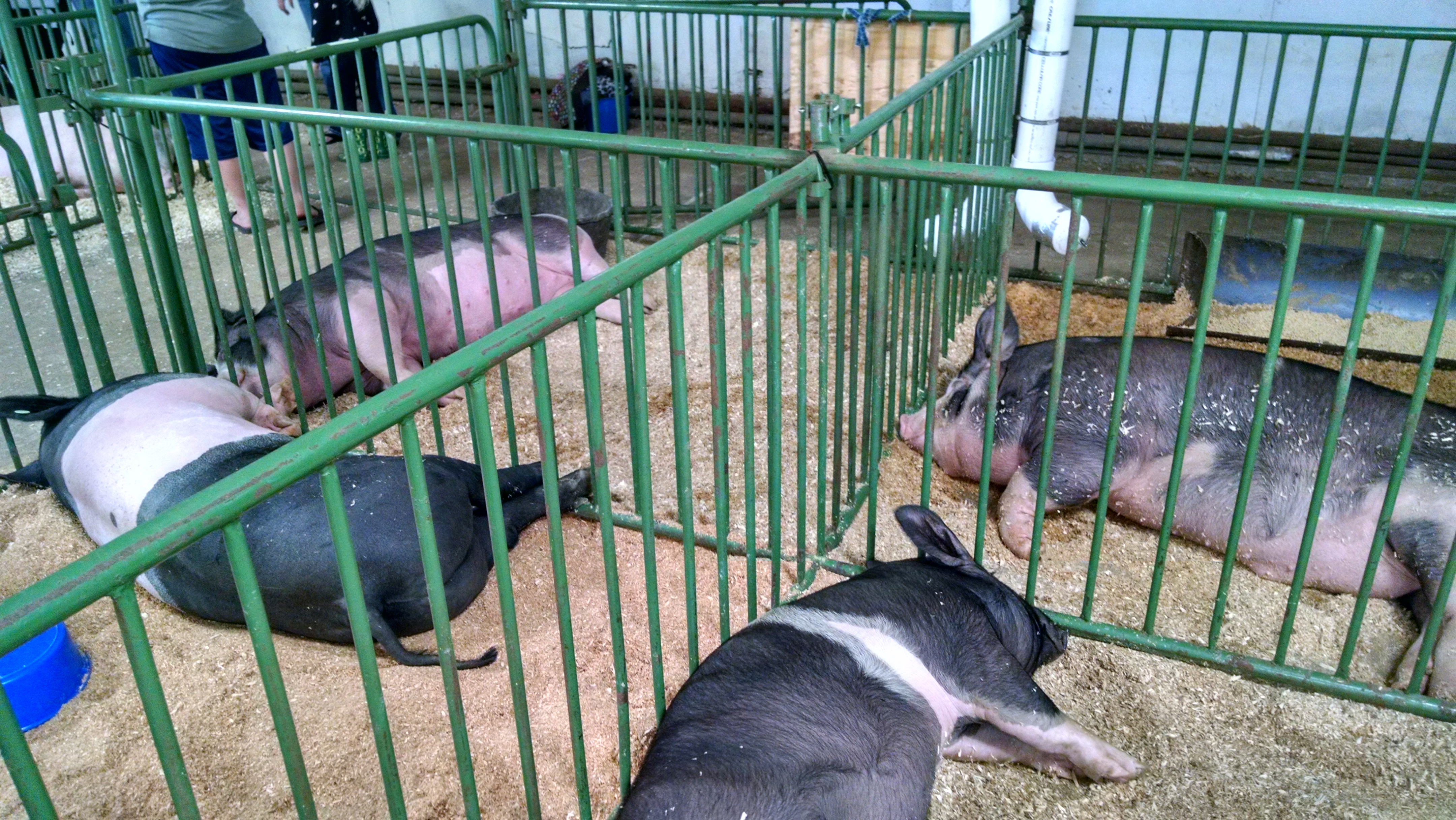
The fair here in Lincoln County is a little different. Billed this year as the all-new fair, it wasn’t much different from before, except that admission was free. Still no place to park, same booths selling corn dogs and elephant ears–big floppy sheets of sugared pastry, same old tacky rides, same goats and chickens, same guy playing guitar on the main stage to a sea of empty chairs. The big featured act was a couple who impersonate Johnny Cash and June Carter Cash. But as they used to say in San Jose, Fair Time is Fun Time. I’ll let my pictures say the rest.

IMG_20150815_145820200_HDR
You’ve got to have a guy selling kitchen tools.
IMG_20150815_144656490
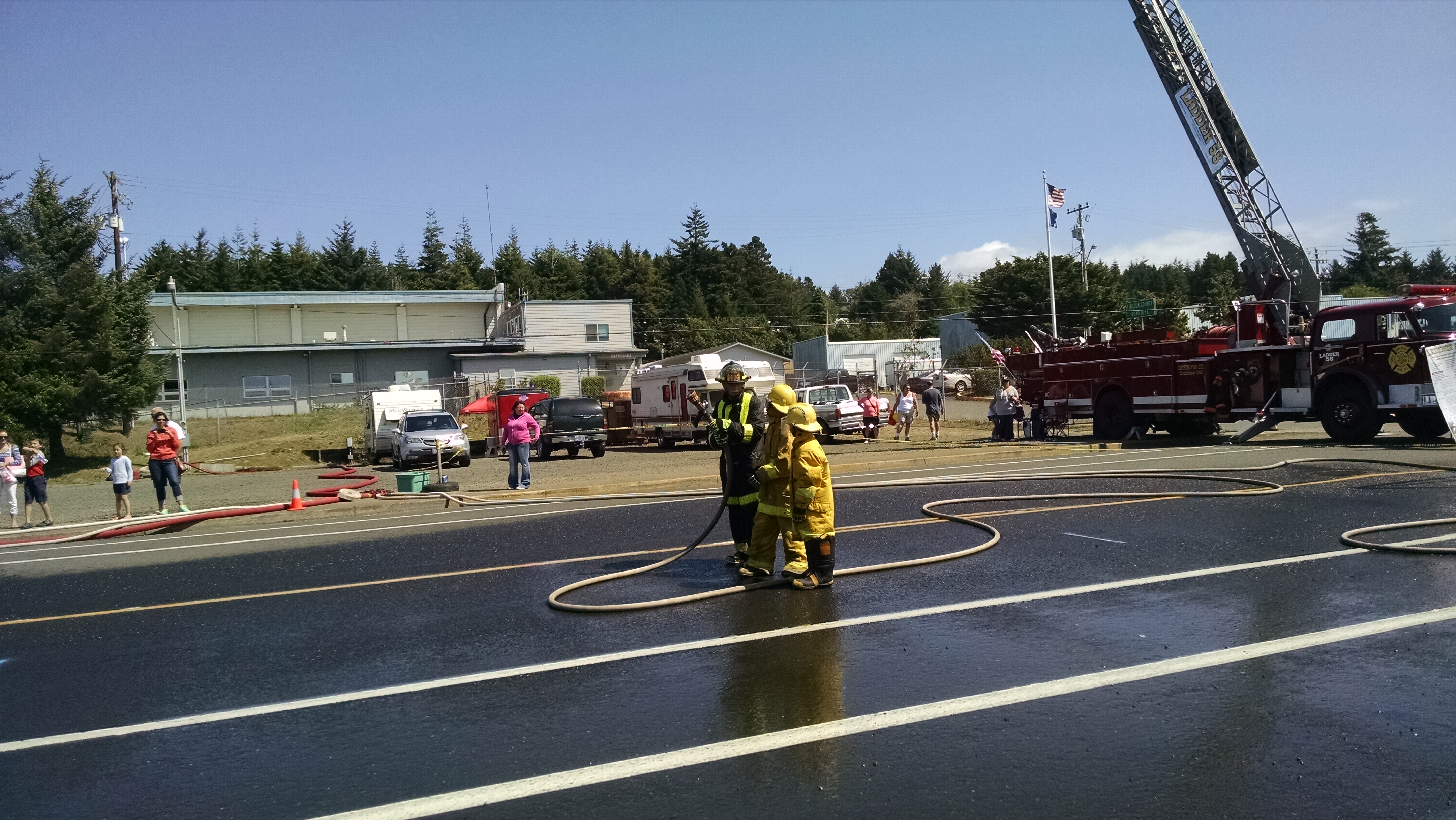
A new feature this year allowed kids to put on firefighter clothes and operate the big hoses.
IMG_20150815_143420686
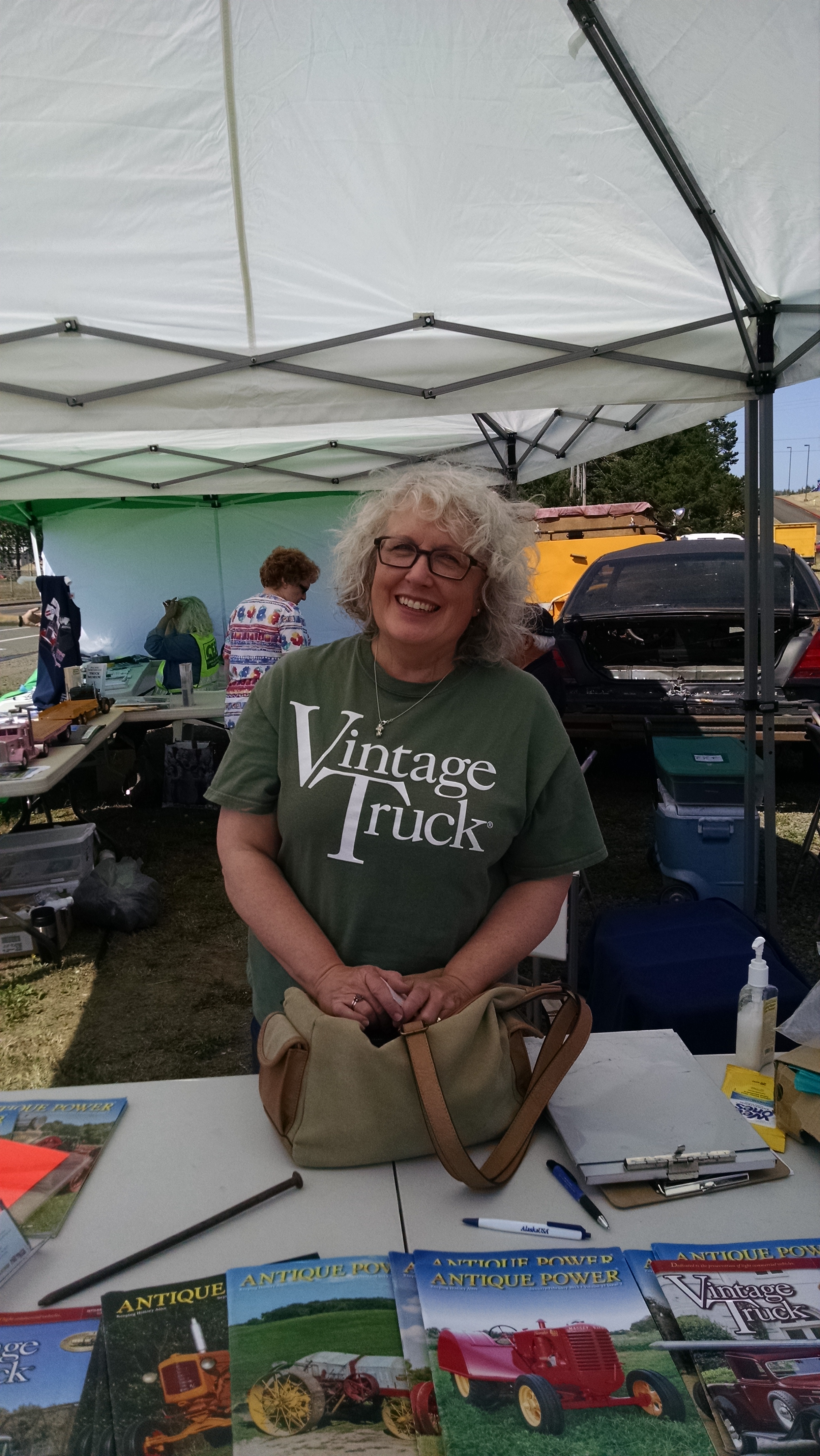
Writer Candace Brown, a longtime long-distance friend, came down from Washington to represent the truck and tractor magazines she writes for.

Taking a Vacation Day in Paradise

IMG_20150729_131430517[1]I live in a vacation paradise. People travel thousands of miles to visit the Oregon coast. And with good reason. It’s gorgeous here. We’ve got forests, beaches, parks, fine restaurants, lighthouses, the aquarium, fresh air, moderate temperatures, and more. But those of us who live here frequently find that we rarely pay attention to all of that. We’re too busy taking care of business at home and at work. Beach? Oh yeah, that’s nice. Maybe tomorrow.

But some days are just too fine to sit in an office staring at a computer. Plus a girl just gets tired, you know? So one day last week, I joined the tourist parade and took a vacation day. Leaving Annie sleeping at home, I got in the car and drove south, turning where the muse led me. You might want to try this trip yourself someday.

Heading south on 101 from South Beach, I turned east on Beaver Creek Road, across from Ona Beach. When I came to the fork with South Beaver Creek, I turned right. Many of the scenes in my not-yet-published novel Being PD take place in this area, and I found myself reliving some of those scenes as I drove through miles of estuaries, pastures, forests and farms. The road was smooth and curvy, the scenery beautiful, and the traffic non-existent. I had heard this road led to Waldport, but I had never tried it for fear of getting lost. No problem. Ultimately I came to a T intersection at Bayview Road and turned right. This road ran along the north side of Alsea Bay. Ultimately it came out at Highway 101.

Over the bridge and through Waldport, I came to Gov. Patterson state park and joined the tourists at the beach. I spread out my blanket, sat on the sand in the sun and wrote in my journal, looking up to watch people passing with their dogs and kids, the waves breaking white and full, the sand dotted with driftwood forts. And the woman walking along talking on her cell phone all the way to the end of the beach and back. Luckily, I had forgotten to charge my phone so it was turned off.

When I got hungry, I drove south to Yachats, a tiny town with a lot of great restaurants. Bypassing the Drift Inn, Leroy’s Blue Whale and the Green Salmon, I decided to try Ona. It’s a little expensive, a little pretentious, but the view of the Yachats River and the food are worth it. My crabcake sandwich with curry sauce was delicious. Unlike at my usual hangouts, I didn’t see a single person I knew. Everyone was visiting from somewhere else. Why not me?

After lunch, I drove around the corner to park beside a car just like mine—silver Honda Element—and take pictures. What a place. It’s got to be a sin to ignore it. When the owners of the other Element came up the path from eating their lunch on a bench overlooking the surf and saw our cars together, they did a double take. We compared years and features and shared our mutual love of the vehicles some folks call “toasters.”

Time to return to reality, but first I stopped in Waldport at Well-Road Books, a well-stocked used book store with bountiful shelves and soft music playing. One book after another called to me. I came out with a stack of novels I can’t wait to read.

This morning, looking out at blue skies and everything in bloom, it’s hard to believe it will be gray, raining and windy in a few months. Now is the time to enjoy this place. Isn’t this why we moved here?

Unleashed 19 Years and Counting

Nineteen years ago, Fred and I moved from San Jose, California to the Oregon Coast. Literally driving off into the sunset, we caravaned north with a rented truck carrying most of our possessions and a Honda Accord carrying me, the dog and my instruments. We had some problems along the way. You can read about it in Shoes Full of Sand. (Only $2.99 for the Kindle version.)

I have been here almost a third of my life. When we arrived, I was only 44, had all black hair and no arthritis. Fred was a youthful 59, and our dog Sadie was only a year old, full of energy.

So much has changed over the years. Fred and Sadie are gone. It’s just me and a dog named Annie, who is already 7 ½ years old. Both of Fred’s parents and my mother have died. So have both my uncles and all of the older generation of my family, except my father, who by some miracle is still going on his own in San Jose at age 93. My brother, who started as a recreation leader the kids called Mr. Mike, became a lawyer and then a judge in Mariposa County Superior Court. His kids are adults now.

I have often thought about going back to California. If I were on my own that first winter, I would have. The rain and wind never stopped. I was cold, miserable and homesick. But Fred loved it here, and we stayed. Now, in this unusually dry summer, I crave the rain. When the temperature gets over 65 degrees, it’s too hot for me. But when it’s in the low 60s, I lie out on the deck and soak in the sun. Come December, the days will be short and sunshine will be only a memory.

Much has happened since we sold our house in San Jose and moved to Oregon. In the U.S., we’ve gone from President Clinton to Bush to Obama. The attacks on 9/11 made terrorism a household word and led to wars in Iraq and Afghanistan, as well as undeclared conflicts in other parts of the Middle East. We started a new century. The Internet took over our lives. We got e-mail, Facebook, Twitter, and Pinterest. We bought Kindles, Smart phones and iPads. TV screens became flat and wall-sized. Gluten-free became a thing. Saying “a thing” became a thing.

Back in San Jose, the population zoomed to over a million people, crime soared, and traffic became an impenetrable wall. The house where I grew up, a three bedroom, one-bath house with no dishwasher, no central heating and no WiFi, is valued at more than $700,000. Studio apartments there cost more than my mortgage here. Santa Clara Valley became “Silicon Valley.” It’s too crowded, and more people keep coming.

I have kept busy over the years: Five books, an MFA, transitioning from writing articles for newspapers and magazines to writing essays, poems and blogs, something no one had dreamed of in 1996. A job playing, singing and leading church choirs. More new friends than I can count, friends who feel like family. I co-founded the coast branch of Willamette Writers and am now president of Writers on the Edge.

Did it turn out the way we planned? Not all of it. I wanted to write, play music and walk on the beach. We wanted to live in a small town with no crowds where people get to know each other. We got all that. I am blessed. But I never expected to do it alone. With Fred gone, maybe I should have gone home. But to what? To who? The Oregon coast is my home now.

What will happen in the next 19 years? I don’t know. I don’t think I want to know. Today the trees are standing tall, there’s blue in the sky, I have a meat loaf sandwich waiting for lunch, and Annie’s asleep on the couch. Later today, I’m going to jam with other musicians, and later still, I’ll watch the finale of the Bachelorette. Will she choose Nick or Shawn?

What were you doing 19 years ago? Where did you live? What has changed for you since then? Please share in the comments.

Would you cross America by covered wagon today?

Longtime journalist Rinker Buck, suffering from a late-middle age slump, got a wild idea. He would travel the Oregon trail the way the pioneers did in the 1800s.


Longtime journalist Rinker Buck, suffering from a late-middle age slump, got a wild idea. He would travel The Oregon Trail the way the pioneers did in the 1800s. He would outfit an authentic covered wagon, hitch up a team of mules and traverse the country, starting at St. Joseph Missouri, traveling through Nebraska, Wyoming and Idaho and ending in Oregon. This being the 21st century, he would have to figure out how to deal with the freeways, shopping centers and homes that had been built over the old wagon ruts, but he was determined to do it. The result is Buck’s new book, The Oregon Trail: A New American Journey, published this year by Simon and Schuster.

Rinker Buck had planned to go alone, but when he asked his brother Nick for help getting ready, Nick insisted on going, too, and bringing his little dog Olive Oyl.” Both men were dogged by demons from their past and sought the “Oregon Trail Cure.” The result is a tale that’s a blend of Cheryl Strayed’s Wild: From Lost to Found on the Pacific Crest Trail and Bill Bryson’s A Walk in the Woods: Rediscovering America on the Appalachian Trail. It’s funny, poignant and suspenseful. The Bucks have their share of mishaps, along with a big dollop of luck, and I find myself riding with them all the way, falling in love with the men, the mules and Olive Oyl.

Of course in modern times when a covered wagon shows up on the road, people lean out of their minivans to take pictures with their smart phones, but there are still long passages of pastures, mountains and deserts with no one around for miles. Their days on the trail fill the brothers with a joy I can feel right through the pages.

Buck writes in an easy-reading style that carries the reader along. When justified, he lets the f-bombs fly. When they screw up, he says, “I really screwed the poodle this time.“ But he also describes the scenery in lines that sound like poetry. Throughout the book, he includes information about all aspects of the pioneer journey. We learn about mules, wagons, the people who died on the trail, and the entrepreneurs who gathered at the “jumping off” places to sell the travelers all kinds of necessities and junk for the journey. We learn about the Indians and the Mormons and the big role they played on the trail.

They had their share of adventures, but of course the Bucks’ trip in 2011 wasn’t as rugged as it might have been back in 1850. They had planned ahead and had contacts waiting for them. They had transcontinental communication as long as they could charge their cell phones. Trail enthusiasts rushed to help them, feed them and honor them as celebrities. They were unlikely to catch cholera or smallpox. There were no Indians. But there were still long sections with dust, mud, broken wheels, no cell phone reception, no water and nothing but Hormel chili to eat. They could have called it off at any time, but they didn’t.

Most of my ancestors came from Europe. They either came directly to California by boat, took the train across, or traveled up from Mexico with horses and wagons when the Spanish ruled the land. There’s one branch of the family that might have crossed the country by wagon, but I haven’t found any information on that yet. Me, I’d never have made it out of Missouri. As soon as they told me I’d couldn’t take all my stuff and couldn’t have iced tea with my lunch, or maybe not even have lunch, well, I’d be going home. I like my creature comforts.

My husband, our dog Sadie and I did our own migration from California to Oregon, detailed in my book Shoes Full of Sand. We did it in a Ryder Truck. On a freeway. But there were breakdowns, hunger, heat, and desperation. For all three days. And sometimes all we had to eat were donuts. I retrace that trail several times a year in my Honda, and I keep meeting new Oregonians who have followed the same path, perhaps completing the migration that began long ago when their ancestors moved to California. We’re all pioneers in our own way.

Read this book. It’s great.

Ten Ways You Know They’re Tourists

This is the time of year when the Oregon coast is flooded with tourists. Suddenly it takes twice as long to drive through town. We have to wait for tables at our favorite restaurants. They wander the aisles at J.C. Market in groups, carrying beer and tortilla chips. I look out at the people in the pews at church, and see mostly unfamiliar faces.

Among ourselves, we curse the tourists, especially those slowing traffic with their RVs laden with bicycles, kayaks and little perfectly matched cars. But in public, we call them visitors to be polite. After all, most of us were once tourists, too, before we became born-again Oregonians. And we know, in our hearts, that we are just as clueless when we go on vacation.

How can you tell the tourists from the locals?

1) License plates from elsewhere, mostly Washington, Idaho, California, Arizona, New Mexico and British Columbia. But we get people from all the other states, too.

2) They walk around in shorts when it’s 50 degrees out—with an Oregon Coast hoodie they just purchased for $50 at a gift shop because they were freezing. OR they bundle up for the Arctic when it’s 65, which we consider warm.

3) They dawdle on the roads because they’ve never seen an ocean before or don’t know where they’re going. If from California, they drive 10-20 mph over the speed limit, not realizing cops actually do give speeding tickets here.

4) They’re not white, and they’re under 60 years old.

5) They say freeway. We don’t have one. They say mall. We don’t have one of those either.

6) They want to know where Main Street is. It’s Highway 101.

7) They mispronounce Yachats (YA-hots), Yaquina (Ya-QUIN-a), Siletz (Si-LETZ) and Willamette (Wih-LAM-ette).

8) They come in bunches, filling the whole car or the whole booth at the restaurant, and they go ga-ga over clam chowder.

9) They use a GPS when all you need to know is you’ve got the ocean on the west and the hills on the east and can’t get lost. Just follow the numbers north and south or the alphabetic tree names east and west.

10) They go IN the water at the beach.

I know there are more. Feel free to add your own tourist clues in the comments. Although they clog up our traffic, our visitors keep our economy going, so we’re glad they’re here. We like to share our beautiful home. After all, Newport’s slogan is “The friendliest.” Besides, most of the visitors will flee when the rain starts. If we had spent the winter here before selling our house in California, we would have fled, too.