No Phone??? Let Me Talk to the Manager

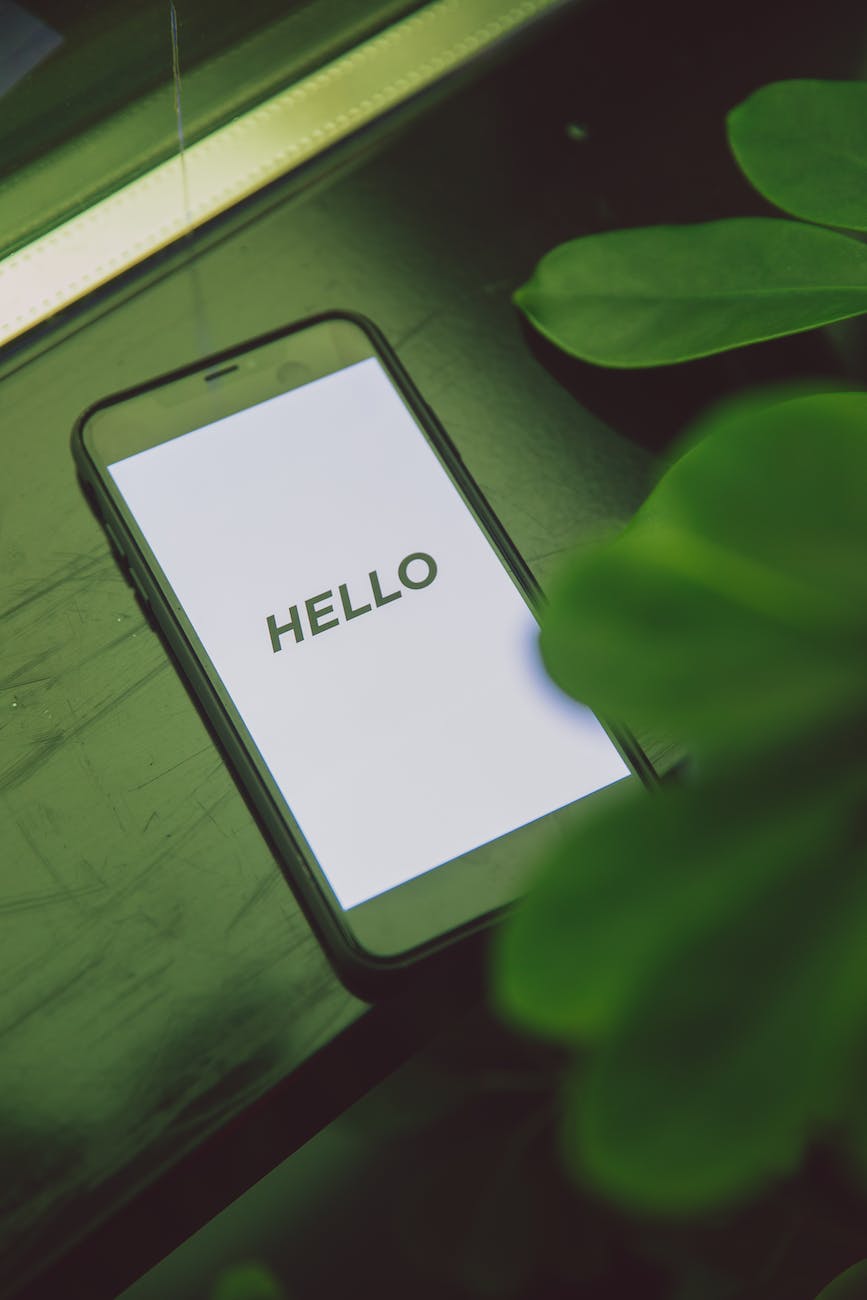
Cell phone sits on green table, some green leaves in right foreground. On the screen, it says, "HELLO."

It was getting dark. I was alone in an unfamiliar section of Portland overlooking the Willamette River. This was the only restaurant within walking distance of my hotel. I skirted the barefoot young man in rags talking to himself and walked into this Asian fusion place, looking forward to a good meal after a long day at the Portland Book Festival.

High ceilings, mirrored columns, young servers in black, large parties of young people, a computer tablet at the entrance to sign in. I started the process. How many in your party? One. Are you willing to share a table? No. Please enter your phone number and we will text you when a table is ready. Uh-oh.

My phone was charging back in my hotel room. I flagged down a worker. “I don’t have my phone.”

She looked at me like I was from another planet. When she discovered I was also a party of one, she had to consult her boss on how to handle this anomaly. Ultimately, I had to sign in on the tablet, including my phone number.

“I don’t have my phone,” I repeated.

“We’ll work something out,” she said, a little flustered.

I waited on a bench next to two young women who were both staring at their phones. Customers came and went, most of them less than half my age. I started to wonder if I should have stayed at the hotel and eaten microwaved pasta in my room.

Finally, the young woman escorted me to a table. It was a four-top with a great view of the river, the Hawthorne Bridge, and OMSI, the Oregon Museum of Science and Industry. I would have taken pictures, but I didn’t have my phone.

I was the only person in the place occupying a table by myself. I was the only person of grandparent age not eating with children and grandchildren. I was the only person without a phone.

For the record, I would have been happy to share a table with someone close to my age who would actually talk to me, not talk around me to their friends or stare at their phone the whole time.

“Have you eaten here before?” the girl asked. No. She explained that I needed to click on the QR code on this slip of paper for the menu and then order with my phone.

“I don’t have my phone.”

Again, she was flustered. She went off somewhere and found an old-school printed menu. “It’s not up to date,” she warned, leaving me a checklist to mark what I wanted.

I checked a few items, not sure what I’d be getting, a young man whisked it away, and eventually I was served salad greens, won-tons, and beef-stuffed “pancakes.” It was all delicious. I watched the busy staff serving loud, happy parties who were laughing, talking, and sharing food. Outside, white clouds in the blue sky turned pink and then gray, and darkness fell. Inside, I stuffed myself with won-tons dipped in chili sauce and pondered the new world.

When I got back to my room, I had a text message: Your table is ready.

Everything is online these days. I bought my ticket for the festival, reserved my room, and set up my Uber rides online. I listened to music in my car by connecting my phone with the car audio system. I checked the time, checked the schedule, and ordered books by featured authors on my phone.

I received a text with a photo from my brother on my phone and exchanged a long series of texts with a friend to arrange a lunch date.

The one thing I did not do was make or receive a voice call on my phone.

A mobile phone is essential these days. How dare I go walking without one?

The Pew Research Center says 97 percent of Americans own a cell phone. Imagine how much money is being spent for all of those phones and all of those service plans. Not everyone can afford it, but the expectation is that you will have a smartphone, it will have all the apps, and you will know how to use them.

I can imagine what my father would say if he were to come upon this restaurant. Forget the fact that he would never eat Asian food. When asked to check in on a tablet and give his cell phone number, his response would be something like “Are you kidding! I’m not giving them my %$$#@# telephone number.” Followed by, “Whaddya mean there’s no menus? To hell with this place!”

But Dad, who died in 2019, was born 101 years ago, when all you could do on a phone was talk to people–if you were one of the few families lucky enough to have a telephone at all.  

To the restaurant’s credit, the food was wonderful, and at least four workers thanked me and wished me a good evening on my way out. I would go there again, with my phone and with other people. I’m proud that I did not hide in my room eating microwaved pasta. I braved this strange new world all by myself and survived.

Have you found yourself in situations where not having a mobile phone with you has been a problem? Tell us about it in the comments.

Photo by Polina Zimmerman on Pexels.com

Processing…
Success! You're on the list.

Me and Tom Hanks Selling Our Books

WW authors at Wordstock
Kerry Blaisdell, Jack Estes, John Dover, and Sue Fagalde Lick at the Portland Book Festival      Photo by Gail Pasternack

It’s 5 p.m., and the Portland Book Festival is winding down. Where once one couldn’t move for the crowds, now there’s space between the bodies. Formerly known as Wordstock, the festival has once again drawn thousands of book lovers to the Portland Art Museum and surrounding venues. Everywhere you turn, someone is giving a talk, reading from his or her books, offering services for writers, or selling books. People bring their babies and their kids, hoping to turn them into readers. Food carts line up selling tamales, pizza, donuts, and other goodies.

In a world where half the people say they never read books, it’s wonderful to see so many celebrating the written word, even if they wander around in a word-stoned daze, making it hard to move. We stand in line for the readings and talks, for food, for coffee, to buy books, and to use the restroom.

Now, with the festival ending in one hour, it’s getting easier to breathe, but it doesn’t bode well for sales. With several other Willamette Writers authors, I have drawn the last shift for selling and signing my books. My book bag is heavy coming in, but I hope it will be much lighter going out.

We stand behind the table, behind our piles of vastly different books and exercise our best selling techniques. Debby Dodds flashes her technicolor smile and plays her connections with seemingly everyone in Portland to sell her young adult novel, Amish Boys Don’t Call.

Jack Estes, whose wonderful books are about soldiers, shouts out, “Do you know any veterans?” because, well, who doesn’t, and tomorrow is Veterans Day. Sometimes the question backfires. People are like “What? Why?” Plus, people don’t give Veterans Day gifts. Maybe they should.

John Dover, creator of the “jazz noir” Johnny Scotch series, plies his local connections and offers readers a good time with his books and stories. Kerry Blaisdell hands out free calendars to lure people to her urban fantasy novel, Debriefing the Dead.

Me, I pass out postcards with the cover photo from Up Beaver Creek. “Would you like a pretty picture, something to look at and de-stress?” Mostly women accept it. A few turn it over, read my pitch and come back to take a look at the book. Success.

Since our table sits under the Willamette Writers banner, we give out information about the organization, about the various branches, our program for young writers, and our literary magazine the Timberline Review.

But it’s a tired crowd, with going home on their minds. It’s getting dark outside. Their bags of books are already too heavy. Many don’t even glance in our direction. Some dart in to grab the leftover Halloween candy set between the books. And some stop to chat. And chat. And chat. I want to scream, “Move on. You’re blocking my books. I don’t want to carry these damned things home.” Just as I wanted to scream when I was on the other side perusing the booths, “Pass on the right!” and, “If you’re going to stand still, get out of the way.” But I don’t scream any of those things. I smile and offer up pretty pictures.

My photo technique works. I sell a book. The buyer hands me a credit card. It’s the first time I’ve used the credit card app on my phone. Will it really work? It did when I practiced at home, but . . . Look! It works! I hand her my phone. “Finger sign here, please.” How crazy is that? In a minute, I get an email saying $15.00 has been deposited into my account. Magic. Somebody else buy a book. Let’s do it again!

Up until this year, I have not accepted credit cards. Cash or checks only. But that’s old-fashioned. Now we all have our little card readers on our phones. Zip, zoop, sold.

That one sale is it for the night, which is as good as any of us except Debby does, but as John Dover notes, this is not about sales. It’s about shaking hands and making connections. It’s about getting people to take our cards and our swag so that they might go home and order our books or at least remember our names.

It’s also about being with other authors after the solitary process of writing our books. We compare notes. Best and worst selling experiences. Bookstores that treat authors well or treat them badly. Places we might give talks. Favorite flavor of Ghirardelli chocolate squares. (Mine is mint.)

And it’s fun. I think of myself as shy, but I have spent the day talking to strangers, putting myself “out there.” “Hey, you need another book!” I hear myself shouting. I’ve turned into a huckster.

Afterward, walking the six blocks to the parking garage, my bag is no lighter than it was coming in. I couldn’t resist purchasing one more book from a Facebook-only friend I finally met in person. I don’t mind. My feet hurt, but my heart feels good.

It has been a long day, which started with standing in line with approximately 2,000 people for over an hour in 36-degree weather outside the Arlene Schnitzer Concert Hall to see and hear Tom Hanks talk about Uncommon Type, his new book of short stories. The ticket price included a copy of his book. We grab our books from the thousands piled on tables in the theater lobby and cuddle them like kittens. Tom Hanks does not have to stand behind a table with postcards and chocolate bars trying to get people’s attention. It helps if you’re an Academy Award winning actor.

Tom Hanks’ hour-long talk was fabulous. It was funny, sweet, loving, and wise. I’m in love. We all are. Last night, I dreamed about Tom and his big gray dog walking up my driveway. I greeted them like old friends, casual, not star-struck at all—until my sweet Annie dog turned into Cujo and attacked his dog.

I’m so sorry, Tom. Would you like a pretty picture of Beaver Creek?

***

  • Fun fact: Back in the early 90s, Tom Hanks spent a night camping in an Airstream trailer on my grandfather’s property at Seacliff Beach, California. Or so says my father, who is not impressed with all this book nonsense, but thought it was pretty nifty that I got to see Tom Hanks.
  • The Coast branch of Willamette Writers meets this coming Sunday, Nov. 18 at 2 p.m. at the Newport Library. Rachel Barton will lead a free poetry workshop. Everyone is invited to join us for lunch at the Chowder Bowl at 11:30 that day where we can chat and fill up on chowder. PM me or email me at coast@willamettewriters.org if you’re coming to lunch so we can save you a seat.
  • I just discovered this is my 500th post! That’s a lot of blogging.