I will turn 65 on March 9, 2017 (gasp!). In honor of that event, I’m offering new paperback copies of my books for only $6.50 for the entire month of March. Get Shoes Full of Sand, Childless by Marriage, Azorean Dreams, and Freelancing for Newspapers for half price with no shipping charges. The first five people to order will also receive copies of a poetry chapbook I call “The Dog Ate It” just for fun. Such a deal! Why would I do this? Because it’s my birthday. Also, I want to make room for a new book coming soon. Stay tuned for details on that.
This sale only includes the paperback versions. The ebooks are already ridiculously affordable at Amazon.com. Looking for Stories Grandma Never Told? We are out of stock here at Blue Hydrangea Productions, but you can order the latest edition at Amazon.com.
Make me happy on my birthday. Just click on the covers below to order via Paypal. If you’d prefer to send a check, mail it to me, Sue Fagalde Lick, at P.O. Box 755, South Beach, OR 97366, and I will put your books in the mail immediately.
Pets do not grasp the concept of personal space. Offer to share the couch with them and they will ignore several feet of empty cushions to sleep on top of you. If you invite them onto your bed, they will plop themselves right in the middle, sideways, and expect you to deal with it.
At lunch the other day, a friend talked about the cat who keeps sleeping on top of her feet despite being kicked off several times a night. Another described how her old dog slept horizontally in the middle of the bed, causing her and her husband to cling, vertically, to the edges. Picture a big letter H.
Thinking back many years ago to my first marriage, I remember a cat whom I referred to as The Flying Cat because he kept getting in my face while I was trying to sleep, which led me to see how far I could throw him, the farther the better so it would take longer for the cat to come back and start the whole affair over again. During the day, that cat would chase me and try to bite my legs. I happily gave him up in the divorce. I can still see his white face pressed against the bars of its cage, yowling, as I moved my stuff out of our apartment. Buh-bye.
Cats get this weird dominance thing going, but dogs, they just want to be close. Very close. Look at how puppies cram together. With their siblings gone, dogs want to get just as close to you. But now they’re big. And they sleep with their paws stretched straight out, pressing into your skin or your nightgown. They’ll drape their whole heavy body over your arm, your belly, your leg, any part that will prevent you from leaving this cozy lovefest and they don’t care that they’re cutting off your circulation.
Sleep on the floor? Sleep in a crate? No, I want to be with you. Sound familiar?
Until this year, I kept Annie out of my bedroom. I have a hard enough time sleeping as it is. The few times we tried, she spent all night bugging me to pet her, wagging her tail and pawing me. So no, Annie and her brother Chico were faithfully crate-trained. Take these two Milk-Bones, go sleep in your crates, and I’ll call you in the morning.
Chico is long gone. This winter, thunder scared Annie so bad she banged my door open and insisted on being together. I was feeling lonely, so I said okay. Helping this decision is the fact that dear Annie is in the early stages of hip dysplasia. She can’t jump up on the bed anymore. And I’m not lifting a 75-pound dog. I spread a blanket on the floor. She settled in. But she seemed cold. The next night, I added a second blanket. Now we’re up to three. I have to slide off the far side of the bed and use the hall bathroom so as not to disturb the sleeping dog. I need a flashlight so I don’t trip over the blankets, which tend to move during the night.
Annie has not quite accepted the fact that she can’t share my blankets. Several times a night, I hear her walking up to the side of the bed. I feel her hot breath and her nose poking me. Hey, hey, hey. “Go to sleep,” I mutter. She collapses on top of my slippers.
As a result, I am half asleep typing this, and Annie is running in her sleep on the loveseat out in the living room. Neither of us got enough sleep during the night, but by God, we were together. Now I don’t dare try to kick her out. The habit is formed. I’m thinking about going to a motel to get some sleep.
So how do your dogs and cats sleep? With you or elsewhere? Do they take up the whole bed? Horizontal? Vertical? Legs in the air? Please comment to tell us about your night-time adventures with your furry friends.
Old slides. Everyone of a certain age has them stacked up in little Kodak boxes or organized in vinyl sheets. People used to come home from vacation, gather family and friends in a darkened room and show slides till everyone was falling asleep. Remember the sound of one slide clicking to the next, the frustration when a slide would get stuck or appear sideways or upside down, the dust floating in the light of the projector bulb?
What am I talk about? You just click “slide show” on your computer, right? Not in the old days, not so very long ago. Slides were photo images shot on pieces of film that you took to the drugstore where they were processed and each picture fastened into a cardboard square. One at a time, you fit them into a rectangular or circular container that fit into a projector that showed a light through the image and projected it onto a screen or a blank wall. You had to turn out the lights to see them properly.
I have hundreds of slides. Although I have been publishing photographs for decades, most of my slides are seriously underexposed. I was good at black and white prints, the staple at my newspaper jobs, but I never got the right combination of f-stop, exposure time and flash for slides. Thank God for automatic cameras.
I bring this up because I have started scanning my old slides, culling the ones I don’t want anymore and making digital copies of the ones I still like. Grabbing boxes at random from the 1980s and 1990s, I find that I took weird pictures. While most people photographed their family members standing up against the beach, historic building, statue or whatever, mine rarely included people. I shot cows, cats, alleys, trees, sprinklers, textured doors, and sea gulls, so many gulls. Maybe one or two shots per role show people. Now that they’re dead or much older, I wish I had done the traditional people shots more often. As I scan, I find myself saving even the blurry ones because they’re more precious than yet another beach shot or a cat that has probably been dead for 20 years. And I get so excited when I see a little piece of our car. That’s the white Honda!!!
I also wish I had labeled pictures better. Oregon beach? Which one? A forest path? Where is that? Was it rebellion against my newspaper photographer assignments where I had to include people in nearly every shot and meticulously document names, dates, and locations, making sure to spell everything right? Always shy, I hated having to walk up to strangers, ask to take their pictures, then spend several minutes trying to get their names and a useful quote. What a luxury on vacation to scatter-shoot anything that caught my eye without taking notes. Of course now I usually travel alone, so I’m still shooting buildings and animals.
Here’s a shot of my old dog, Sadie. Oh my heart. I forgot how beautiful she was, how lush her fur in comparison to Annie’s sleek pelt.
Hey, there’s me. 1993.Yachats Writer’s Conference. I did not know then that many of the writers there would become my friends after we moved to the Oregon coast. Apparently I did not understand that you could wear jeans and fleece everywhere. What a weekend that was.
I stare at these slides as memories emerge from the deep vaults in my brain. My scanner is old and slow. I have time to wonder what happened to these people and these places and consider how different things look to me as a resident from how they looked when I was just one of many tourists passing through.
I think I need to throw most of these slides away once I scan the ones I like best. But computer technology changes constantly. Will I be able to see them five years from now? Ten years? Will I be around to care? Lacking answers, let me a share of few of them now while I ponder whether I have the patience to scan all of my slides or whether it’s worth the effort.
What about you? Do you have slides or photos from the past that you keep but rarely look at? Have you digitized them? Has the meaning changed with the years?
Once upon a time, I wrote a short story for a Writer’s Digest correspondence course. The lessons came by mail in those days. The assignments–outlines, character descriptions, scene summaries, etc.–added up to a final story that’s reminiscent of “The Devil Wears Prada.” Eager young worker, horrible boss, boyfriend who doesn’t get it.
The plot revolved around the boss’s refusal to move from typewriters to computers. Our young heroine struggles with the correction tape on her electric typewriter (remember those?) and her boss complains that if she were a better typist, she wouldn’t need so much correction tape. Our girl, Colby, is mired in work and about to get fired because she just can’t keep up. But then, an angry client comes in while her boss is out. He wants his ad changed right now. Colby sneaks onto a co-worker’s new computer (an Apple?) and click, click, click, makes the changes. The client is delighted, Colby is promoted and she gets her own computer. Only in 1988, right?
It’s a terrible story, full of holes and clichés and way too many adjectives. I found it while cleaning out old writing files. I never throw away my work, but this went into the big blue recycle cart, where it is now lost among the boxes, butter tubs, and junk mail. I have also discovered reams of articles about writing from back in the olden days when I and others who taught or wrote about writing urged wannabe writers to get a computer or be left behind. It seems silly now, but I remember . . .
I learned to type on a manual typewriter with a slippery roller. The letters were attached to rods that got tangled up if I typed too fast. In my late teens, I used babysitting money to buy myself a new typewriter, blue plastic. My father couldn’t understand why I would waste my money on such a thing. It wasn’t like I needed it for school or anything else; we all wrote with pens and pencils, but I was determined to be a writer from the time I discovered words. Real writers had typewriters.
I encountered my first electric typewriter in a college typing class required for journalism students. It seemed to have a mind of its own, the keys moving so fast they stuttered out multiple letters if I breathed on them. I actually told the teacher I couldn’t handle this fancy electric typewriter. She basically told me to suck it up. I did. I got good at it, typing over 100 words per minute–if you don’t count mistakes.
On my first newspaper job in the early ‘70s, we used manual typewriters, big heavy Royals, typing on scraps of newsprint with carbon paper to make copies. We edited in pencil before sending the pages to the typesetter. I moved up to IBM Selectric typewriters in 1978 for a PR job. The letters were on ping-pong-sized balls, interchangeable for different typefaces. High tech! But you couldn’t “save” anything. You had exactly one copy, and if it got damaged or destroyed, you had to do the work over again.
Fast forward. Divorce. Temping as a secretary. Another newspaper job working on old Royal typewriters. And then, 1984, a typesetting gig at a print shop in Sunnyvale, California. The file-cabinet sized computer on which I worked used floppy disks that were eight inches square. The operating system was DOS. No Windows. No mouse. If you didn’t know the right sequence of letters and symbols, you were screwed.
Future jobs would take me through the Apple orchard and early PCs, from DOS to Windows, from Compuserve to the World Wide Web, news groups to Facebook, Twitter, and Instagram. Now I own a desktop computer, a laptop computer, a tablet and a smart phone, all of which I can use to write, send and receive stories, information, photos, music and almost anything else.
My short story would never work now, even if it were well written. It wouldn’t even make sense. What do you mean her boss wouldn’t let her use a computer? I probably saved that story about Colby and the typewriter on a floppy disk, either 5 ¼ or 3 ½ inch. If I could find the disk, I would have nowhere to plug it in and no program that could read it. What will happen to the stuff I write today?
A Facebook friend recently asked what we’d do if the Internet went away. Well, my blogs would disappear, along with all of my online connections, my ebooks, and any writing I did not save on paper, but when you get to the basics, writing is writing. I drafted this blog in my notebook with my new favorite pen, a Papermate “Inkjoy.” I quadruple back up everything I write and carry a flash drive in my purse, but I also print out everything I value on good old paper.
I don’t know whether to toss all those yellowing articles about prehistoric computer gear or save them as historic artifacts. I have another batch of articles about cameras that used film. I just know a lot has changed.
When I was an editor at the Saratoga News around 1995, a group of Girl Scouts came in to observe real live newspaper people at work. None of the girls knew what a typewriter was. How about you? Any typewriter memories? Or are you wondering what a typewriter is? See the photo; that’s a typewriter, similar to the one I started with. What was your first computer? What would you do without it now? Let’s talk about it.
Fed up with the news and everything else, I took Annie walking on Saturday up the old Thiel Creek Road here in South Beach, Oregon to soak in some nature. It was sunny but cold, the sky a watercolor wash of dark and light blues and grays. These days, we usually stay on the paved roads and clearly marked paths, but there’s a path that Fred and I used to walk with our old dog Sadie that I had been wondering about.
What used to be a fairly open trail through Scotch broom and conifers is now almost completely blocked by salal, a thick shrub whose leaves are often used by florists for greenery and whose berries were a staple in the Native American diet. There used to be an open area a ways in with remnants of an ancient house and paths that led in several directions, including a clearcut area to the east where the stumps looked like gravestones. To the north, we used to be able to walk to the edge of the ravine that separated our neighborhood from the Newport airport.
The entrance is barely visible, but there’s still a sign forbidding motor vehicles, not that anything on wheels could fit there now. “Come on,” I said. Annie, game for any new trail despite her gimpy hip, plowed through nose first, pulling me along. The bushes were way over her head and brushing her sides. Deer would hesitate to squeeze through here, but she’s a determined pooch, and I was not in the mood to be deterred.
Memories flooded through me of walking here with Fred and our old German shepherd-Lab Sadie, both gone now. Last week was the eighth (!) anniversary of the day Fred fell and was taken to the hospital, never to come home again. That week began his journey through four different nursing homes before he died from the effects of Alzheimer’s Disease.
Walking was something we could still do together up until that week. We would make our way to the clearing, pick one of the paths spoking out of the circle and thread through the tree stumps till we found our way back to the road. We’d make discoveries: a new plant, a new bird, a dead rabbit, a pile of trash, tire tracks. As you can read in my Shoes Full of Sand book, I watched Sadie kill a squirrel here one day.
As always, small planes flew overhead across the domed sky. The sky always seemed so round here, as if we were standing inside one of the glass floats artists make here on the Oregon coast.
A half mile in, we came to the clearing. The baby pine I photographed way back before my cell phone had a camera in it is a big tree now. And now, east of the clearing, I found a grove of red alders, named for the red wood inside the patchy gray and white trunks. The trees stretched skyward, looking strong and healthy. Beyond, salal, Scotch broom, Douglas fir and Sitka Spruce had risen up above the stumps. It didn’t look like a cemetery anymore.
I felt tears coming. I sat crossed-legged in the weeds and let them fall. Annie licked my face, then snuggled up against me, gazing at this new place in the forest that she had never seen. I could see some of the old paths leading out of the clearing, but they would have to wait for another day. Annie’s leg was shaking from the effort of getting here. My back hurt. Plus I was due to play music at church in an hour. Somehow I felt I had already been to church. Trees fall and new trees grow in their place. An old dog dies and a new dog leads me through the woods. There’s always another path to follow. You cry and you go on.
I’ve been thinking a lot about doing things alone. After all, I’m alone most of the time. It’s me talking to the dog the way Tom Hanks talks to Wilson the volleyball in that movie where he’s stranded on an island. At least the dog wags her tail, and I have discovered that if I wink at her, she will do her darndest to wink back, usually with both eyes. She will also yawn if I yawn. But if I start making funny faces, she just stares at me like I’m nuts, which is totally possible.
Anyway, I’m alone a lot. This April, it will be six years since I became a widow. It’s already eight years since Fred went to the nursing home. After so much time, being alone feels like my default situation.
No, don’t get all sorry for me. I do that enough for myself. Besides, I love not having to deal with another fussy human’s needs. Today I’m on a scientific quest which could lead to a longer project in the future. Let’s explore what you can and cannot do alone.
It’s like having two hands or just one. When I sprained my wrist a few years ago, I discovered it’s almost impossible to open a can, cut meat, hook a bra, or play the guitar with one hand.
You can play the harmonica with one hand or even no hands. You can eat a hamburger and fries with one hand. You can drive with one hand, preferably the right hand so you can turn the key and shift the gears. But open a bottle of beer? Not unless you smash it on the edge of the sink and drink around the jagged glass.
You can make love with one hand, but two hands are better.
All those one-handed things can be done if you have another person to help you. But what if you don’t? Let’s look at what you absolutely cannot do alone.
Get a hug
Make a baby
Sing a duet
Play football
Get a decent picture taken
Play Frisbee
Play Marco Polo
Water ski
Search online and you’ll find religious sites that eventually get to the fact that you need God. Agreed, but God won’t help me move my megaton TV to the other room (hint, hint) or hold the ladder while I clean the gutters.
You’ll also find various inspirational sites and go-get-‘em women’s sites that urge you to try going to a restaurant or a movie all by yourself because somehow it will make you a better person. No it won’t, but at least you’ll get to eat all the popcorn.
Some things you CAN do alone, but it’s not a good idea. I have done most of them.
Move furniture bigger than you are.
Eat an entire large pizza.
Hold a wine-tasting party.
Go hiking or rock-climbing
Drive way out into the wilderness where there’s nobody but bears and the guys from “Deliverance” and your cell phone doesn’t work.
Soak in a hot tub until you fall asleep and stay asleep until the rain wakes you up.
A lot of things, like eating out and going to a movie are just not as fun alone. Here’s an amusing page that talks about things you can do solo but would probably rather not.
And some things are good to do alone:
Think
Read
Sleep (actual sleep, not sex)
Pluck, shave, wax, nuke unwanted hairs.
Learn to play the violin.
I need your help with these lists. Add your suggestions in the comments. I really want to get a comprehensive list going, and Annie is no help at all. Wait, yes she is: Here’s something you cannot do alone: Get snuggled by someone who loves you. Annie, here I come.
Valley Chorale back in the 1990s. I’m in the third row, far left.
You know those dreams where you find yourself walking into a class where somehow you have failed to show up for the whole semester and now it’s finals and you don’t know anything and the teacher doesn’t even know your name and you’re for sure going to fail because you never studied or did any homework? You know that dream, the oh-shit-I-forgot-to-go-to-school nightmare? I get those. My shrink says everybody does.
But more often I get choir nightmares. I have been involved in various singing groups since fourth grade. I sang in school choirs, glee clubs and madrigal groups from elementary school through college, followed by a serious of adult ensembles, including the Coastal Harmony Vocal Band, the Billy Vogue Country Singers, the Skillet Likkers (not the famous ones), the Lincoln Community Chorus, the Central Coast Chorale, and for 14 years, the Valley Chorale in Sunnyvale, California. I have sung in church choirs since 1989, joined the choir at Sacred Heart Church here in Newport in 1996 and have been accompanying and co-directing since 2003.
In my dreams, the church choir and the Valley Chorale stand out.
Directing the choir at a small-town church like ours means simultaneously singing, playing piano and leading the choir—which may be only two people at some Masses. It’s watching the priest and listening for cues. When he says the last Kyrie Eleison, I need to be ready to play the “Gloria.” When he raises the cup, I need to wrap up the Offertory song. These days, with our chant-happy priest, our Masses are almost constant singing. By the end of the 10:30 Mass on Sunday mornings, my throat is raw, and my brain is shorting out. I keep thinking about lunch and other non-religious subjects.
The anxiety plays out in dreams. I’m late, I find someone else sitting at the piano. I can’t find my music and the priest is already walking into the church. My hands don’t work, my voice quits, somebody moved the piano or unplugged it. I wake up with some song from church playing over and over in my head until I want to dig it out with a grapefruit spoon.
Although I have sung in many other choirs, The Valley Chorale is the one that keeps showing up in my dreams. The Chorale (not “choral,” not “corral”) is still going back in California. It was started by a group of friends with a strong religious component that has faded away over the years. I joined when I was only 23, newly married to my first husband. They called me “Little Susie.” Through the years of that marriage, the divorce that followed, and the second marriage to Fred, the chorale was my family. Under the direction of mother-daughter team Marian Gay and Cathy Beaupre, we rehearsed every Monday night, sang almost every weekend during our fall and spring concert seasons, went on a weekend bus tour twice a year, and gathered for parties and dinners, weddings and funerals.
The men wore black tuxedos. The women wore loose pastel gowns that we declared a good fit if we could get them on and they didn’t fall off. We perched on the risers in jeweled sandals at senior centers, mobile home parks, shopping centers, churches, retirement homes, and the occasional concert hall. We’d break into song in restaurants, on buses, or at people’s houses. We were not out to make money or get rich. We just loved to sing.
The concerts, billed as Bach to rock, always included some classics, some gospel tunes, some folk and pop, and a medley from a Broadway musical, complete with costumes. It was corny. Think Lawrence Welk Show, if you can remember back that far, but it was fun.
Illness forced me to quit in 1995. The following year, we moved to Oregon, where I joined new choirs, but I never dream about them. I dream about the Valley Chorale. In those dreams, I show up after years away. I don’t have the right gown or I don’t know the music. Sometimes I have changed so much they don’t know me. God knows I have changed. When I left, I was in my 40s with curly black hair and a much higher range. They have changed, too. Member have died or retired. New people have joined. They have learned new songs. But I keep going back to those dreams. I’m on the bus, I’m at the semi-annual “bash,” or we’re getting on the risers about to sing and there’s no place for me to stand.
Some of the dreams are based on reality. There’s always a moment of panic when you’re changing clothes between numbers and your zipper gets stuck or you can’t find your shoes and you’re terrified you’re not going to get back to the stage on time—but I always did. Yes, your music goes missing, you suddenly can’t remember the second verse, you trip coming down the aisle, the strap breaks on your sandal, or you start coughing and can’t stop. Stuff happens. You sing on.
This morning I had a different dream. I can’t call it a nightmare, and I can’t remember many details, but I do remember I was introducing a new, young singer to the Chorale, offering her the experience of this wonderful musical family.
That’s progress, I think. Valley Chorale, I miss you. I still have my jeweled sandals. Keep singing. And church choir, please show up for practice tomorrow night. Father P. is making us change the service music again.
What do you dream about? Do you have school nightmares? Choir dreams? Sports dreams? Dreams about your kids? Let’s talk about it in the comments.
Those who follow this blog will remember that last week I was struggling with a dead pellet stove and a conglomeration of space heaters that kept tripping the single electrical circuit that powers my kitchen and living room. The temperature had landed firmly in the 30s, and it was COLD. I had taken to wearing thermal underwear in the house, moved to the bedroom that was a couple degrees warmer and allowed the dog to join me for added warmth.
It stayed cold all week. On Wednesday, the third time weathercasters predicted we might have snow, it finally happened. I could see the white light coming through the windows before I crawled out of bed. Snow everywhere. Pretty. Powdery. Magical. But underneath that snow lay ice. Hard, slippery, can’t walk-on-it, can’t-drive-on-it ice. Everything canceled. Schools, meetings, my dentist appointment. We were stuck in the house with puny heat, except for a slip-sliding walk. Annie and I learned that pavement is bad, grass is good, and mud is messy but it holds onto your shoes.
The snow stuck around until Saturday. It was too cold to melt. But the roads cleared up. I got out on Thursday for a haircut and much-needed groceries. Free at last! I know, it was one day, and nothing compared to the folks stuck for weeks with snow up to their roofs, but I was running out of food.
Friday, the electrical outlet into which I had plugged the biggest space heater and my tiny Christmas tree ceased working, taking the porch light out with it. We have some interesting wiring around here. I played with the circuit breaker switches. No go. Plugged and unplugged, wiggled and shoved. Called my electrician dad, who said get it fixed immediately; you could have a short that might start a fire. Crap. Freezing and fighting electrical problems. At least a fire would be warm.
Broke and disheartened, I called my neighbor. “Do you know anything about electricity?” He replied, “I know if you stick your finger in the socket, you get a shock.” Funny. I explained my problem. He limped over on his healing broken ankle and was soon crouched on my floor pulling out my dead plug. A wire had gotten disconnected. Stuff is all corroded in there, he said. He fixed it. The lights went on. Glad to help, he said. Thank God for small towns and friendly neighbors.
While the neighbor worked on my plug, I took down my Christmas decorations. Not in the mood anymore.
All day Friday, the temperature seemed to go down instead of up. On our brief walk, the cold wind tore at my skin and made me want to cry. But Saturday it started to get warmer. And then the rain came. It got warmer still. I took off a layer of clothing. The patter of rain on the skylights sounded like music.
It rained hard. It rained cold. It rained sideways. I got soaked in five minutes in the yard. My gutters overflowed. New leaks sprang up in the laundry and garage. But this is all normal for January on the Oregon coast. It’s still frozen east of here, so I feel blessed. This morning at 9 a.m., it’s 42.8 degrees, and the only things frozen at my house are the ice cubes, peas and veggie burgers in my freezer.
No, the pellet stove is not fixed yet. I’m hoping it will happen today. But I’m warm enough.
NOTE: This was supposed to be just a caption for my snow photos. My brother wonders why people up here talk so much about the weather. We can’t help ourselves. It’s a new show every day. I know this winter is crazy everywhere. Right now it’s flooding in California, land of perpetual drought. How is your weather? Tell us what’s happening at your house.
I have turned into one of those women who is always freezing, whose fingers are icy when you shake hands, who wear three times as many layers of clothing as seems logical. It’s not my age, and I certainly haven’t gotten skinny. No, the pellet stove, the main source of heat at my house in the woods, is defunct again. On the Thursday before Christmas, it developed this habit of starting to light a little fire in the pot and then moaning to a stop. No more fire. No heat.
I cleaned it, scraping out a layer of pellets burned into rock. Surely that would fix it. Nope. Little fire, moan, darkness. I hit reset 10 times that day. No go. I called the stove guy. Got the machine because a hundred other people are having stove problems around here.
The poor stove had been working overtime for weeks, with temperatures staying in the 30s much of the time. Threats of snow and ice had not materialized here yet but Portland and places not far inland were going crazy, with cars sliding all over in the big freeze. Schools and businesses were closed. A friend in Eugene had no power for six days. Not a good time for a dead pellet stove.
I love small towns for their lack of traffic and crowds and the way everybody knows everybody. I love that I can walk into the post office and Valerie grabs my package from the stack because she knows who I am. I can walk into my favorite restaurant and they know I want iced tea with no lemon. I can park my car by the pallets of pellets at Copeland Lumber, and a guy will start loading them into the Element before I even go in to pay. They know I’m getting 15 bags, 600 pounds of processed wood. It’s all good.
But this no-heat business stinks. You see, we have no gas out here in South Beach, unless you install a big expensive tank, and most of the houses were built without electric heating systems. We have baseboard heaters in some rooms, little “Cadet” heaters installed in some walls, but mostly we heat our homes with wood in the form of logs or pellets. Chimneys sprout from every roof, most with metal caps that swing around in the wind.
We used to have two woodstove shops in town. One went out of business. The other is trying to take up the slack, but there are too many stoves out here, and one must wait for an opening to get service. I was lucky the guy made it out here last Wednesday, after only six days and a chilly Christmas. He took one look and declared that I need a new thermocouple, a little piece that sticks out above the burn pot and enables the stove to light and stay lit. He would have to order one. It would not be here before New Year’s. Looking around at my assortment of plug-in heaters, he sympathized. “Well, you have some heat.”
Yes, enough to stay alive but not enough to be comfortable. Plus I have knocked out the circuit breaker six times so far. My electrical system cannot take the added stress of a plug-in heater plus almost anything else in the kitchen. If I want to use the microwave or toaster oven, I need to go without heat for a while. At least now I know exactly what to do when suddenly everything goes dark and silent. It’s number thirteen on the circuit board. My electrician dad says I can’t keep doing this; it’s dangerous. He says you get 20 amps on most circuits. The heater takes 12.5. That doesn’t leave much for extras, and if the refrigerator cycles on, it’s over. Maybe I don’t need the microwave.
The picture above was taken at 10:21 a.m. The sun was shining outside, and the three-foot-tall electric heater I bought with Christmas money two years ago had been on full blast all night. It wasn’t going to get much warmer.
People who live in snow country are thinking I’m a wimp. It’s not like it’s 30 below. I do have sources of heat. Remember the bedroom I moved out of a couple months ago? I have moved back in because that bed has an electric blanket, and I can’t afford to buy one for the other, larger bed. It also has a baseboard heater that I use reluctantly because it’s too close to the sheets. In addition, it has space on the floor for Annie, who can no longer jump up onto the bed and has decided she is not going to freeze alone.
The master bedroom, pretty though it is, is just too cold. In fact, when I was cleaning out Fred’s clothes after he died, most of his neckties had mold on them. It’s that cold and damp back there.
I have a baseboard heater in my office, too, but I only feel it if I’m sitting right here typing and only on my legs. My hands feel like iced bones with a thin covering of skin.
This morning, the frost-crisped lawn and leaves are edged in white. The sidewalk and driveway sparkle with flecks of ice. My phone weather app claims it’s 35 degrees now but feels like 26. I know it’s worse elsewhere. On the radio, the guy said it was below zero in Bend, Oregon. I’m not going to Bend or anywhere east. I’m from San Jose. I don’t do snow and ice.
Next time I go house-hunting, my first question will be: What kind of heat does it have?
Meanwhile, my neighbor across the street walks around his house in shorts as smoke billows out his chimney. It’s actually hot in his double-wide. Maybe it’s time to go borrow a cup of sugar.
May you be warm and healthy in the new year, and may the world come to its senses.
I have been scouting with my cameras for covers for my upcoming novel currently titled “Up Beaver Creek.” I’m not sure I’ve got the right shot yet–next time I should avoid shooting in early afternoon on a rare sunny day–but in this week between the holidays, I thought I’d share a few pictures with you.
There are numerous Beaver creeks in Oregon and in other states. This one is just north of Seal Rock about the middle of the Oregon Coast. From Ona Beach, it travels east through marshes, farms, and hills. Sometimes it’s a wide river, and sometimes it divides up into trickling fingers that meet again later.

 I will turn 65 on March 9, 2017 (gasp!). In honor of that event, I’m offering new paperback copies of my books for only $6.50 for the entire month of March. Get Shoes Full of Sand, Childless by Marriage, Azorean Dreams, and Freelancing for Newspapers for half price with no shipping charges. The first five people to order will also receive copies of a poetry chapbook I call “The Dog Ate It” just for fun. Such a deal! Why would I do this? Because it’s my birthday. Also, I want to make room for a new book coming soon. Stay tuned for details on that.


 Pets do not grasp the concept of personal space. Offer to share the couch with them and they will ignore several feet of empty cushions to sleep on top of you. If you invite them onto your bed, they will plop themselves right in the middle, sideways, and expect you to deal with it.
 Thinking back many years ago to my first marriage, I remember a cat whom I referred to as The Flying Cat because he kept getting in my face while I was trying to sleep, which led me to see how far I could throw him, the farther the better so it would take longer for the cat to come back and start the whole affair over again. During the day, that cat would chase me and try to bite my legs. I happily gave him up in the divorce. I can still see his white face pressed against the bars of its cage, yowling, as I moved my stuff out of our apartment. Buh-bye.
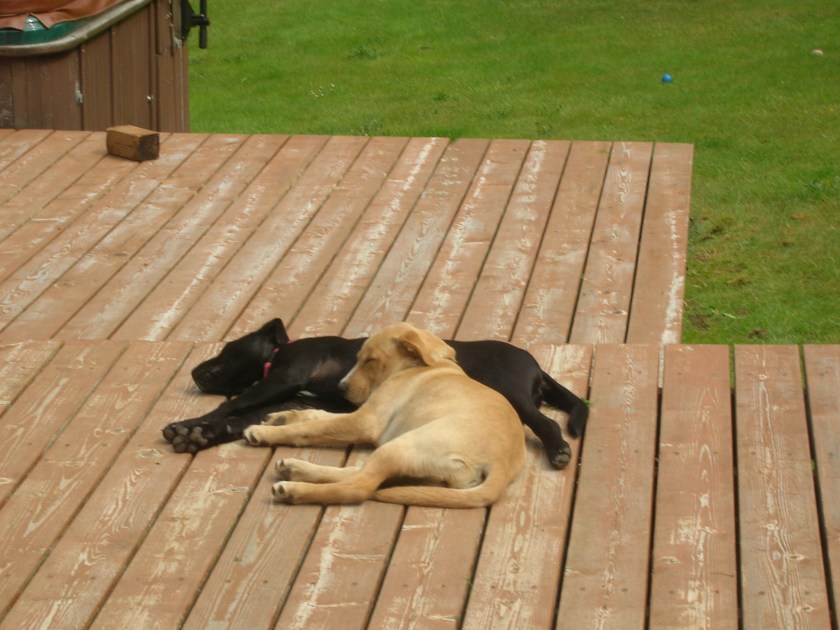 Sleep on the floor? Sleep in a crate? No, I want to be with you. Sound familiar?


 , ask to take their pictures, then spend several minutes trying to get their names and a useful quote. What a luxury on vacation to scatter-shoot anything that caught my eye without taking notes. Of course now I usually travel alone, so I’m still shooting buildings and animals.
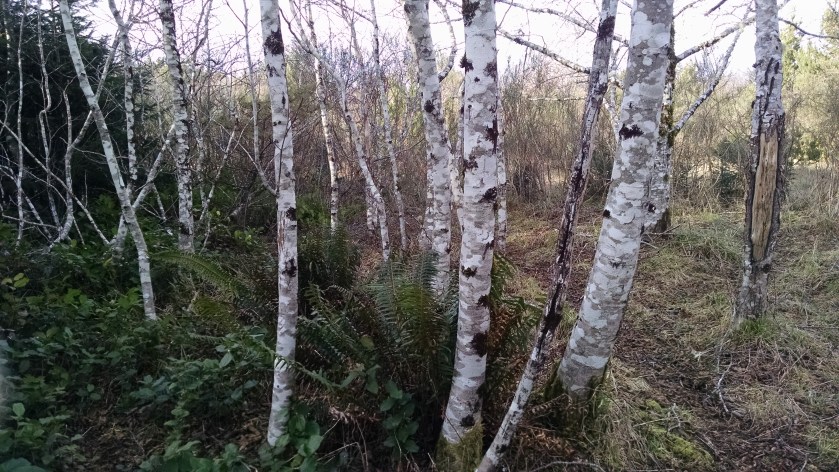
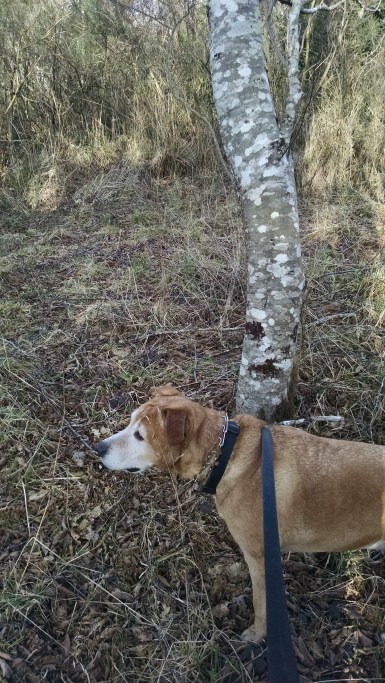 gone now. Last week was the eighth (!) anniversary of the day Fred fell and was taken to the hospital, never to come home again. That week began his journey through four different nursing homes before he died from the effects of Alzheimer’s Disease.
 Those who follow this blog will remember that last week I was struggling with a dead pellet stove and a conglomeration of space heaters that kept tripping the single electrical circuit that powers my kitchen and living room. The temperature had landed firmly in the 30s, and it was COLD. I had taken to wearing thermal underwear in the house, moved to the bedroom that was a couple degrees warmer and allowed the dog to join me for added warmth.
 I have been scouting with my cameras for covers for my upcoming novel currently titled “Up Beaver Creek.” I’m not sure I’ve got the right shot yet–next time I should avoid shooting in early afternoon on a rare sunny day–but in this week between the holidays, I thought I’d share a few pictures with you.
 There are numerous
 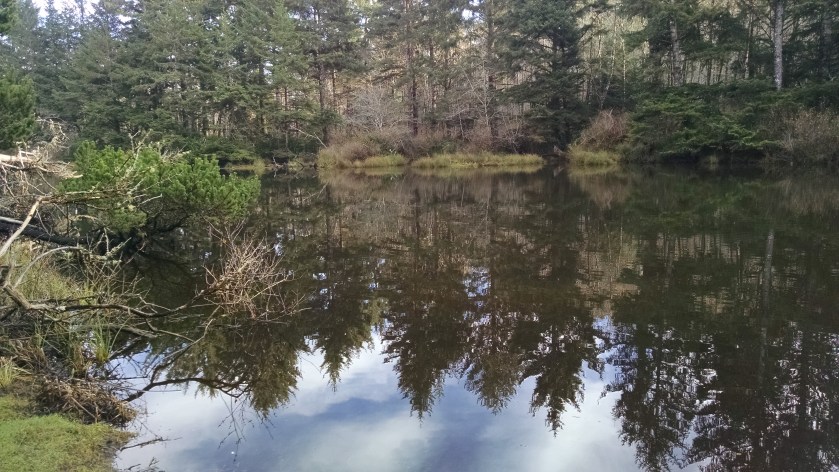 More on the book to come.

 Unleashed in Oregon