Blindfold experience teaches important lessons

I walk through my world quickly, always thinking about the next task, my attention darting everywhere. But a writing exercise yesterday changed my perspective. As the first part of a workshop with nature writer Ceiridwyn (CARE-i-dwyn) Terrill, she blindfolded us and had us walk through a woodsy course behind the library with only a string to follow.

I was first in line. Ceiridwyn led me over a protruding root to the flat part of the trail, then let go. It seemed easy at first, like walking down the hallway at night, but then I ran into this tree. A smooth-barked alder, it seemed to mark the end of the course. “Is this the end?” I hollered. “No,” came the reply. “Figure it out.” I could hear the other writers chattering and laughing up above the trail, but my world had shrunk to one thing: find the path. Straight ahead I felt tree and shrubs, probably honeysuckle or salal. To the left, under the string, seemed to be nothing but open air. I couldn’t move unless I went under the string, but would I fall? I had no choice. Dorothy, the next writer in line, was coming, waiting for me to find the way for both of us. I went under the string and found more path.

Without being able to see the sky and the trail, it was hard to keep my balance. I walked with tiny steps, unlike my usual strides, until I ran into another tree, broad enough to hug, its bark rough against my hands and arms as I felt around it and determined that the string ended there. Or did it? Dorothy insisted she felt more string; we had to go on. No, I argued, this was the end. Blindfolded, neither one of us could be sure. Our world had shrunk to this tiny place on the path, to this tree and this string. Nothing else mattered.

When we were allowed to remove our blindfolds, we discovered that this was indeed the end of the course and Dorothy had felt a loop of string that went nowhere.We hadn’t actually walked very far.

Blindfolded, we depended on each other and on that little bit of string. We could not let our minds fly all over the place; we had to concentrate on moving forward and not falling down.

I don’t want to be blindfolded again. I hate that helpless feeling. I hate having to ask for help. I hate having to consult with other people before pushing ahead on my own. But I think there are many lessons to be learned here. Sometimes you have to ask for help, to trust other people, and sometimes you have to do just one thing, take one tiny step at a time.

(I’d offer photos, but I couldn’t see!)

Ave Maria Amen

            I am not a classically trained pianist. I did not grow up taking lessons or doing recitals in frilly dresses and Mary Jane shoes. My education consisted of Mom showing me Middle C on the old upright and giving me the books she learned with. Fascinated, I plunked away, but nobody in my family wanted to hear me play. It’s hard to listen to somebody just learning an instrument, all those stops and starts and wrong notes. Inevitably, my parents would tell me to stop or they would come in and turn the TV on and glare at me because they couldn’t hear their show.
            I became a stealth piano player, stealing time when no one was around. In college, I would sneak into the practice rooms for an hour between classes. I made progress, but not on the level of someone who is working with a teacher, playing in front of other people all the time. Some things, like fingering, I learned incorrectly. Now I have friends who are piano teachers and I watch their 7-year-old students do things I still can’t do in my AARP years.
            Yet somehow I play the piano for money now. I also play it for solace and for fun. But I play it at Sacred Heart Church in Newport for Mass every weekend and occasionally for funerals. At first I was a nervous wreck. Gradually, I almost relaxed. When the choir is singing and I can simplify the arrangements to a comfortable level, most people can’t hear my mistakes. In my head, I know they’re not even listening to me. I feel blessed that the little girl who loved the piano so much that she played whenever she could sneak in a little time at the keys is now sitting up in front of the church playing for the congregation and getting paid for it. I have worked hard. Playing different songs every weekend at church while singing and leading a choir forces one to practice every day and get better at it. Thanks to Fred, I have my own piano, which I can play whenever I want.
            Last Saturday, I played for a funeral where they wanted “Ave Maria” and “Pachelbel’s Canon.” “Oh Lord,” I prayed, “please help me do this.” I practiced till my fingers were sore, and I was shaking as I played those first few notes in the deep pre-funeral silence. I’d like to say the songs just flowed from my fingers like magic, but they didn’t. I made some mistakes, but overall, I got through them, and those who don’t know the arrangements might not have noticed my errors.
            I was so relieved when all we had left were the normal songs of the funeral Mass, all things I have played many times. Most families choose the same basic songs: “On Eagles’ Wings,” “Be Not Afraid,” “Amazing Grace,” “Song of Farewell,” “Shepherd Me O God,” “How Great Thou Art.” Plus we sing the parts of the Mass. No problem.
            I had a choir of three sopranos and me, everyone else traveling or busy with the church picnic getting started outside at the same time as the funeral. We launched into our songs and it was good. And then, cocky because I conquered those two big classical hits, I totally screwed up the “Amen.” I started in the wrong key and had to start over. Then I did the same thing for the “Lamb of God.” Being in church, I couldn’t curse. I could only swallow my pride and play as if every song was “Ave Maria.”
            Up in heaven, God was laughing hysterically.
           

Speed-walking in Newport: It’s finishing the race that counts

Every time I turn on the TV these days, I see people running on a track. Skinny people in tight, bright-colored outfits competing in the Olympics. They run fast, determination in their eyes, streaking toward the finish line and a medal that will make them rich and famous. The camera focuses on the runners in the front, the ones who will take home a gold, silver or bronze medal . It does not show us the people in the back, the losers, unless they fall or have prosthetic legs like that amazing guy from South Africa. Yet the people who fall behind and finish the race unheralded also trained hard, also took the hopes of their country to London, also hoped to win a gold medal.

Well, in the Newport Walking Club, I’m that person in the back of the pack, walking hard with no hope of catching up with the folks in the front. At least that’s how it was on my first walk. I showed up with my backpack laden with my camera, water, phone, cash, insurance cards, and info about my new book just in case somebody wanted to talk about it when we stopped to chat.
Uh no. This was not that kind of walk. This was serious exercise. The group started fast and never slowed down. We walked this amazing trail I didn’t know existed. It runs from the east side of the Agate Beach parking lot through the woods to the Big Creek reservoir. The tree-shaded trail is partly paved and includes numerous wooden bridges over wetlands full of ferns and enormous skunk cabbages. Signs along the way describe the vegetation. After walking about a mile and a half, we emerged on a street that led south to Big Creek Park and the Newport swimming pool and east to the reservoir. We walked along the road beside reservoir. It went on forever. And then we turned around and walked back.
  
Meanwhile, I kept trying to take pictures and read the little signs. Every time I looked up, the group was ahead of me. No gold medals for me. I came in last, but hey, I made it back to the parking lot before everybody left. Afterward, I thought we should adjourn to a bar for margaritas, but no. I guess that would negate the fitness aspects of the walk.
Annie and I went back to that path a couple weeks later. She enjoyed a soak in the creek, and I marveled as an eagle flew right over our heads. We both paused often, Annie to sniff, and me to look around at this path I would never have discovered without the walking group. Next time, I’ll leave the backpack at home and see if I can make it to the middle of the group. Gotta represent South Beach.
The Newport Walking Club does several walks a week, including noon expeditions in town and longer walks at 5:15 p.m. on Mondays and Thursdays. Recent trips have included walks at Yaquina Head and from Nye Beach to the jetty. This week’s walks include a trip to Idaho Point. Visit http://www.meetup.com to sign up and see the schedule.

My berry-picking dog


Our daily walks are journeys of discovery. Last night Annie and I saw a calico-colored mouse, dead but totally intact, with its feet in the air. Tonight it’s gone. I thought I saw a really long garter snake under my bushes. Annie dove down to smell it and looked up, confused. It was a snake’s skin without the snake in it. Probably about two feet long. Now I want to know, where’s the snake that left its skin behind?

There’s always something to see. We’ve seen eagles and deer, dead birds and sea lions. Early in the year, we found three-leaved trilliums signaling the beginning of spring. Orange-bellied newts slithered slowly across the street. As the trilliums turned from white to pink to purple, scotch broom painted the landscape yellow.
Then came the rhododendrons in pink, red, white and yellow. Now it’s purple foxglove, white and yellow daisies, buttercups–and berries.
While I was on vacation and Annie walked with the dog-sitter, my pup learned to pick berries. Now I can’t get her to stop. I’m too busy laughing anyway. She’s particular about her berries. Nix on the thimbleberries. Huckleberries are a last resort. She goes for the blackberries and salmonberries (which look like salmon-colored blackberries).
I admit to snatching the occasional ripe blackberry off the vine, nibbling it delicately as red juice drips down my fingers. But Annie has no patience for delicacy. Nor does she seem to care whether the berries are green or past their prime. She will pass up every other plant and plunge her face deep into the bush, grabbing as many berries as she can, swallowing them whole, then looking up at me with a crazed grin. What a miracle; you can grab food right off the bushes.
I think the miracle is that she hasn’t gotten sick or cut herself on the stickers. She’s one good berry-picker. Are you looking for a picture of the berries? She ate them all.
****
I try not to advertise here, but I have a new book out. It’s called Childless by Marriage. Mostly memoir, it is about how women who wanted to be mothers never have children because their husbands or partners are unable or unwilling to bring a baby into their lives. The chapters talk about the decision not to have kids and the grief that follows, birth control, step-parenting, the “mom club,” old age without children, and, of course, being a dog mom. Find out more at http://www.suelick.com/Childless.html.
I have several other books out, including Shoes Full of Sand, Stories Grandma Never Told, Azorean Dreams, and Freelancing for Newspapers. All are available at Amazon.com in paperback, and all but Stories Grandma Never Told are also formatted for the Kindle e-reader.
****
End of commercial. I like coming here to get away from the business of selling books. The blackberries and salmonberries are almost done. Poor Annie won’t know where to find snacks on our walks when the berries are gone, but I’m sure she’ll find something.

Home, home in my yurt

     When I signed up to stay in a yurt at Fishtrap, the wonderful writers’ gathering in Eastern Oregon where I spent July 9-15, I pictured a glorified tent. Canvas walls, two little beds, a rustic toilet, no privacy.
     I was so wrong. When I slogged into the camp at Wallowa Lake that broiling hot Monday afternoon in my  ailing Honda, I didn’t care where I stayed as long as I could stop driving. But after I checked in and got my little wooden name tag on a string, I was pleasantly surprised to find my yurt, named Coho, was a charming round cottage in a village of other round cottages circling a larger round building where we’d have our classes.
     Up the steps and across the deck, I opened the unlocked door to a pretty kitchen complete with table and chairs, sink, microwave, coffeemaker and refrigerator. Looking up, I saw trees through the big round skylight. There were two bedrooms, one to the right and one to the left. I took the left one while another writer, Judith, would take the other. The bedrooms had double beds, and ladders leading up to lofts that remained unoccupied that week. Towels, sheets, thick blankets and handmade quilts waited for us. We had places to hang our clothes and plenty of electrical outlets. No TV or Wi-Fi, but who needed it?
     If you picture the yurt as a pie, with kitchen and bedrooms being three slices, the bathroom and shower room made up the other slices. We had carpet and linoleum, everything clean, all smelling of fresh-cut wood. It just felt good in there.
   As a bonus, deer wandered the grounds, completely unafraid of us. In fact, a doe and a buck bedded down right outside my window the last night.
    I wanted to stay in that yurt forever.
     What about the writing part? Oh, that was every bit as magical as advertised. In a world where most people don’t understand what writers do, Fishtrap provided an oasis where we didn’t need to do anything but write. We had meals and workshops and readings, all fabulous. I did a lot of singing and guitar-playing. But everywhere one looked, people were hunched over their notebooks or computers writing. We writers had finally found our tribe.
     One day in our songwriting workshop, our leader, Hal Cannon(love him!) had us write parodies of “Home on the Range.” Of course, I wrote about my yurt. I’ll give you just a taste:
Home, home in my yurt,
in my black and red Hawaiian shirt,
where the deer eat the grass as we mosey to class
and leave us their gifts in the dirt.
    Love that yurt.

Rubber on the Road

I sometimes have this fantasy image of me being an adventurer, traveling all over in my Honda Element, experiencing new people and places, camping out in the wilderness, unafraid of anything. Just me and the open road.

What a crock. Last week, I drove from one side of Oregon to the other for Fishtrap, a writers’ gathering at Wallowa Lake, near the town of Joseph in far Eastern Oregon. A big chunk of the trip took place on Highway 84, along the northern rim of Oregon along the Columbia River in what is called the Columbia Gorge.

About five miles west of Arlington, I was passing windmills atop mountains that looked like they had been cut with a knife, with the river to my left. Suddenly, a piece of my car came off. It sounded like something hit the car. I kept hearing noises, so I got off the road, got out, looked around at the tires and sides of the car and didn’t see anything except a black smudge on the door. I figured a piece of tire from the road had hit me. It was at least 110 out there, a hundred miles from any town, no other cars around, so I got back into the air-conditioned car and drove on.

A little farther along, I heard something banging the car. It got louder and louder. Then I saw something dark blowing across the windshield. I pulled off again. I saw a long piece of rubber hanging from the roof. I had no choice but to pull it all the way off. I didn’t know what this was going to do. If it held my windshield in, I was screwed. Now I had melted black rubber all over my roof and all over my hands and arms. It looked like tattoos. There was nothing I could do but toss the rubber on the floor and drive on.

The river was still to my left, but it was a harsh-looking territory. Brown, sharp-edged. Dead animal in the middle of the road. Arlington went by in a blink. How could anything except snakes live here? I’ll bet Lewis and Clark said, ”Oh shit, this is bad” when they came through the east end of the gorge. Ominous. Clouds. The rubber thing smelled like cow poop.

Finally a rest stop where I could check the damage. The rubber strip had been holding the top of my windshield, so now there was a gap between the windshield and the roof of the car. I worried that when it rained, the water would come into the car. I also feared that my windshield would get loose and fall out. But what could I do about it out here?

Just past Boardman, another blink, it started to rain. Then a sign said, “Blowing dust next 40 miles.” That’s what the haze was. Damn.

Then I was driving through a dust storm. Wind pushed at the car, and it was hard to see. Tumbleweeds three feet in diameter came at me across the road. A lot of tumbleweeds. Then rain, big hard attack rain and lightning. Oh my God, oh my God, oh my God, I chanted. The tumbleweeds were coming at me like bombs. I was afraid to use my windshield wipers but had to. Thank God, the window held. Nothing was coming in. Yet. It was getting late and dark. If I could just make it to Pendleton and if I could find a motel with a vacancy . . .

I started thinking maybe I should just take tours, even though I hate people telling me what to do and I hate riding buses.

Why didn’t I at least make reservations?

Oh crap. I got a blast of dust, rain, wind and lightning all at the same time. I passed a sign that said if this light is flashing check this radio station for weather info. It was not flashing.

Ten miles to civilization.

Ah, Pendleton. A guy in a Nissan sped by as if nothing was going on. Attractions sign: Pendleton woolen mills. Lodging, exit 207. Almost dark.

The raindrops were thick, like sleet, but my windows felt hot to the touch.

So far, nothing was coming in.

So, Pendleton. Exit. Businesses, stores, houses, a Travelodge somewhere down the road. I followed the sign. When I saw it in the middle of the silent Sunday night town, I thought, Oh Lord. It had the seedy look of those places very poor people rent by the month. But I didn’t want to drive another inch, so I parked, walked around the building until I found the office and discovered a normal-looking lobby, complete with a young Indian woman, last name Patel, at the desk. “How was your drive?” she asked.

“Crazy,” I said.

“Well, it’s been pretty hot today.”

“How hot?”

“115.”

“That’s pretty hot,” I said, feigning calm. But I was thinking, “115! One hundred freaking fifteen degrees!!!!” It didn’t feel that bad then because the wind was blowing half of Pendleton from one side to the other and attack rain was cooling things down. But 115! Any thoughts I had of checking out historic Pendleton were replaced by thoughts of “I’ve got to get out of here” and “Please Lord, don’t let it be that hot where I’m going.”

It was.

But I’m happy to report I had a good time. Fishtrap worked its spirit-healing magic, and the drive back was considerably more mellow, although the wind was so hard at one rest stop that I had a hard time opening the door. I’m actually planning to go back sometime. There is so much to see, especially between Portland and The Dalles, so much history and nature to explore. But not yet.

In the early part of my trip, I was reading Robin Hemley’s Field Guide to Immersion Writing. I was in the section about travel writing, and I supposed I was immersed in it right then. Perhaps that’s what this is, immersion writing. Me and my long strip of rubber coming off the car in the middle of the Columbia Gorge. For now, that’s about as much adventure as I can stand.

Dunsmuir exit offers beautiful surprise

When I got off I-5 in Dunsmuir, California, I was just hoping to catch a glimpse of the town and maybe find a rest stop, but I found myself taking a winding one-lane road toward the Dunsmuir City Park and the Dunsmuir Botanical Gardens. Who knew it was there? When I think of Dunsmuir, just south of Mount Shasta, I think of a few little motels and restaurants and a railroad museum, but there’s more to see.

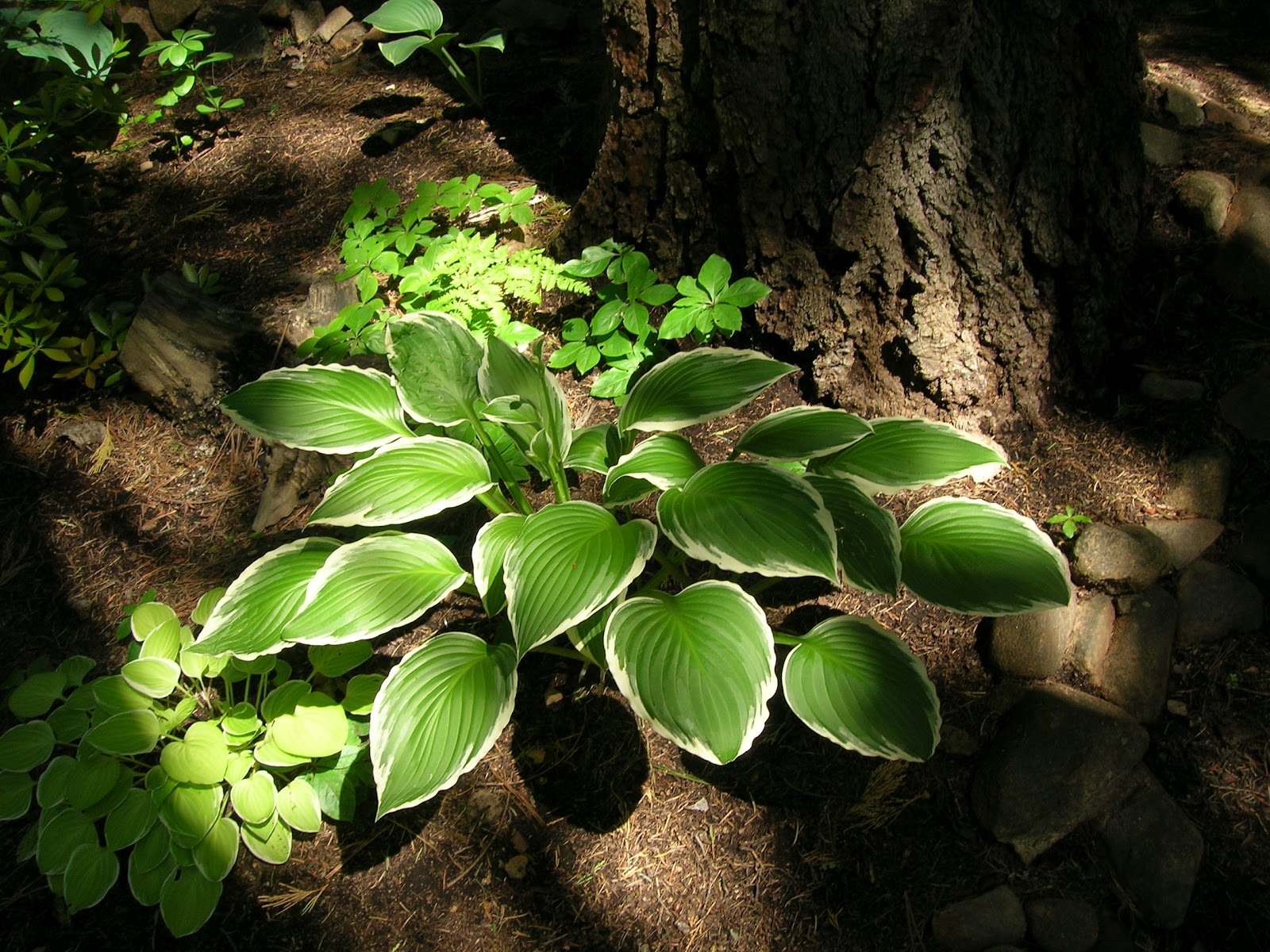
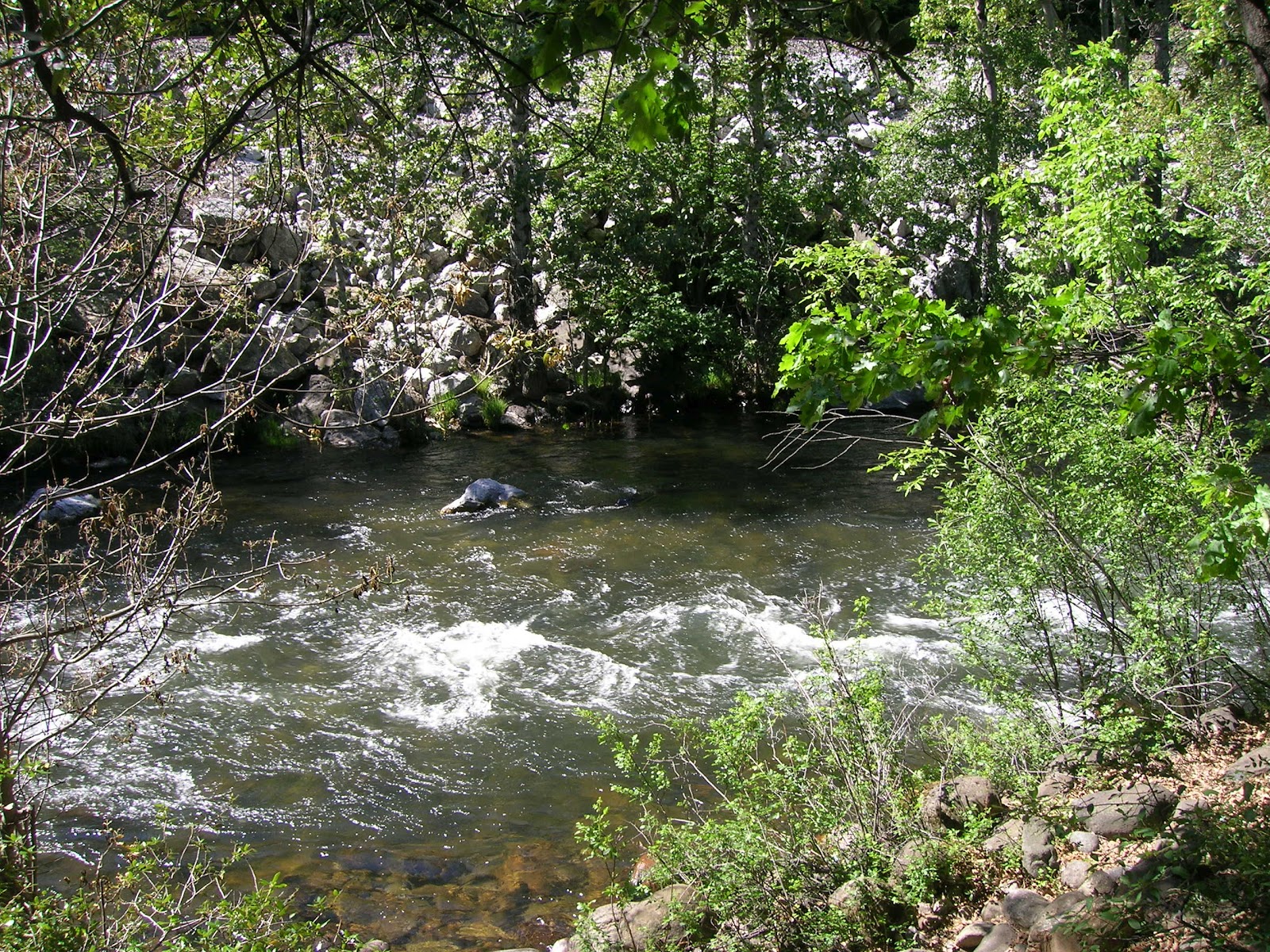
The road opened out into 10-acre park with trails along the Sacramento River, a playground area for kids, a pool and ball field, and a beautiful garden. The gardens, first opened to the public in 1992, are run and supported by volunteers. They feature local native plants in several specialty gardens, including a children’s garden with colorful annuals intermixed with playful statues; Kelly’s Garden, filled with white-only blooms from dogwoods, hydrangeas, bulbs, perennials and annuals, and a butterfly-hummingbird garden. The trails lead through hostas, rhododendrons, Shasta lilies, Japanese Maples, milkweed, ginger, and more, all blooming and fragrant in late spring and early summer.
The gardens are open anytime for self-guided tours, although you may not be able to drive all the way in during snow season. To reach the gardens, take the central Dunsmuir exit #730 off I-5. Turn north and enter the park at the fountain. For more information, visit www.dunsmuirbotanicalgardens.org.
After walking through the gardens, I could have spent all day just watching the river, but I had more miles to drive before nightfall. Next time, I plan to stay longer. You never know what you’ll find if you take an exit off the freeway and see what’s there.

A feast for butterflies and weary eyes

Off Highway 38 near the little town of Elkton is a plain-looking building with an intriguing sign that says Butterfly Pavilion. I had always wanted to stop but never had time. Recently, I was heading for California, planning to stretch the two-day drive into three, so I pulled off.

What a surprise. Officially named the Elkton Community Education Center, the 30-acre site includes 4.5 acres of butterfly-friendly gardens, places where one can observe butterflies in flight or enjoying the plants. In addition, artwork is scattered throughout, and visitors can tour a replica of historic Fort Umpqua or walk shady trails through gardens featuring native plants from all the different parts of Oregon. There’s a library to learn more, and in summer, the cafe is open, with a variety of food, espresso, cold drinks and ice cream sold by local students.  It’s such a pretty place that folks hold weddings and other special events there, and artists set up their easels in the gardens to paint.

When I stopped by, the weather was a little chilly for the butterflies, but there was still plenty to enjoy, including the well-stocked gift shop. Although it was nearly 5:00 when I arrived, the friendly staff encouraged me to stay as long as I wanted to.

The center is open from 10 a.m. to 5 p.m. from Memorial Day through Labor Day, and admission is free. Upcoming events include a tree identification class on July 11, “Paint and Photo in the Park” on July 21, a solar cookout and community yard sale on Aug. 4, Ft. Umpqua Days over labor Day Weekend, and Oktoberfest on Sept. 29. For directions or more information, visit the website at http://www.elktonbutterflies.com.

Japanese dock draws crowds to Newport

Well, I saw it, I saw the Japanese dock that washed away in last year’s tsunami and landed on Agate Beach in Newport. I was bored and in the neighborhood. First I looked from the road, muttering, “Where is it? Where is it?” until I finally saw it in the water up near Yaquina Head. It just looked like a big brown rectangle, but since I was there, I turned into the parking lot. Whoa, has Newport ever seen such crowds in this century? The massive lot was nearly full, with hundreds of tourists walking around in shorts and flip-flops. I followed the crowd through the concrete tunnel under the road. A bearded man stood near the exit, playing the flute. The music echoed wonderfully off the walls. I looked for a tip jar, but he had only a beer can from which he soon paused to take a swig.

I joined the hundreds of people slogging across the sand toward the dock. They brought dogs of all shapes and sizes. Old people, young people, a woman with a walker, couples, college guys, tanned, tattooed bodybuilders and skinny guys with pale skin, and solos like me all had one goal: to see the dock and take its picture. It was much like when the New Carissa washed ashore near Waldport in the 1990s. It was just a boat, but everybody wanted to see it.

I never knew Agate beach was so long, but it was fun being part of the party. Finally, I joined the mobs staring at the dock. It’s just a concrete rectangle with what looks like little tires on one end. It has already been scrubbed clean of aquatic animals and plants that local scientists fear might invade our ecosystem. The dock is not terribly photogenic, which is good because I hadn’t planned this trip and didn’t bring a camera. It’s just the idea that it came all the way from Japan after the tsunami that hit 15 months ago.

Having seen it, people turned to enjoying the beach. It was a beautiful sunny day. Kids and dogs played in the water or threw frisbees on the sand. Families gathered for picnics.

On the way back, I passed what appeared to be a family from Japan, all dressed in dark clothes and wearing big straw hats. They stared at the ocean, their expressions somber. What must they be thinking and feeling, I wondered. For us it’s a party, but for the Japanese, it’s a nightmare.

When I looked back, they were taking each other’s pictures.

Near the entrance, two young rangers had just dragged a seaweed-covered garbage can off the beach. “Is it from Japan?” people kept asking them. “No, it’s American,” they replied.

People are curious. They are finding things from Japan on our local beaches a year earlier than expected. While I worry about our beaches becoming inundated with debris, for now it’s just adding to the allure of the gorgeous Oregon coast–and the possibility of finding a treasure from afar.

I didn’t take pictures of the dock, but it has been heavily covered in the local press, including News Lincoln County, where yet another photo was posted today. So take a look, and if you have time, take a walk on the beach. A contractor has been hired to demolish the Japanese dock. Although a date has not been announced, it will probably be soon.

Highway 38 elk viewing stop a must

It’s funny how one species gathers to stare at the other. When you see a crowd of cars and people with cameras clustered together at Dean Creek Wildlife Area on Highway 38, you can be sure the Roosevelt elk have gathered on the other side of the fence. As I headed south for California two weeks ago, I got a double treat. The male elk had congregated near the road, calmly eating, scratching themselves and gazing at the people gazing at them. When I finished taking pictures, I drove to the westernmost parking lot to have a snack and discovered the females gathered  there. More photos, of course.

It was a beautiful day, with blue skies, sunshine and soft breezes. I had that first-day-of-vacation feeling when all the cares of home drop away and you’ve got plenty of time to relax. Dean Creek is only three miles off Highway 101 outside of Reedsport, with ample parking, plus restrooms, benches and interpretive signs. The preserve’s 1,040 acres of pastures, meadows, marshes and mountains are also home to beavers, muskrats, mallards, Canada geese, great blue herons, and other creatures.

The elk are around all year, although you can’t always see them. But if you do, just be careful parking because people are watching the elk, not the road.

Highway 38, which follows the Umpqua River from Reedsport to the town of Elkton, is a scenic road full of history. It’s worth traveling even if the elk are being shy that day.

Click here for info about the Dean Creek Wildlife Area.

More on this area next week.