Portland East: From the silence to the noise


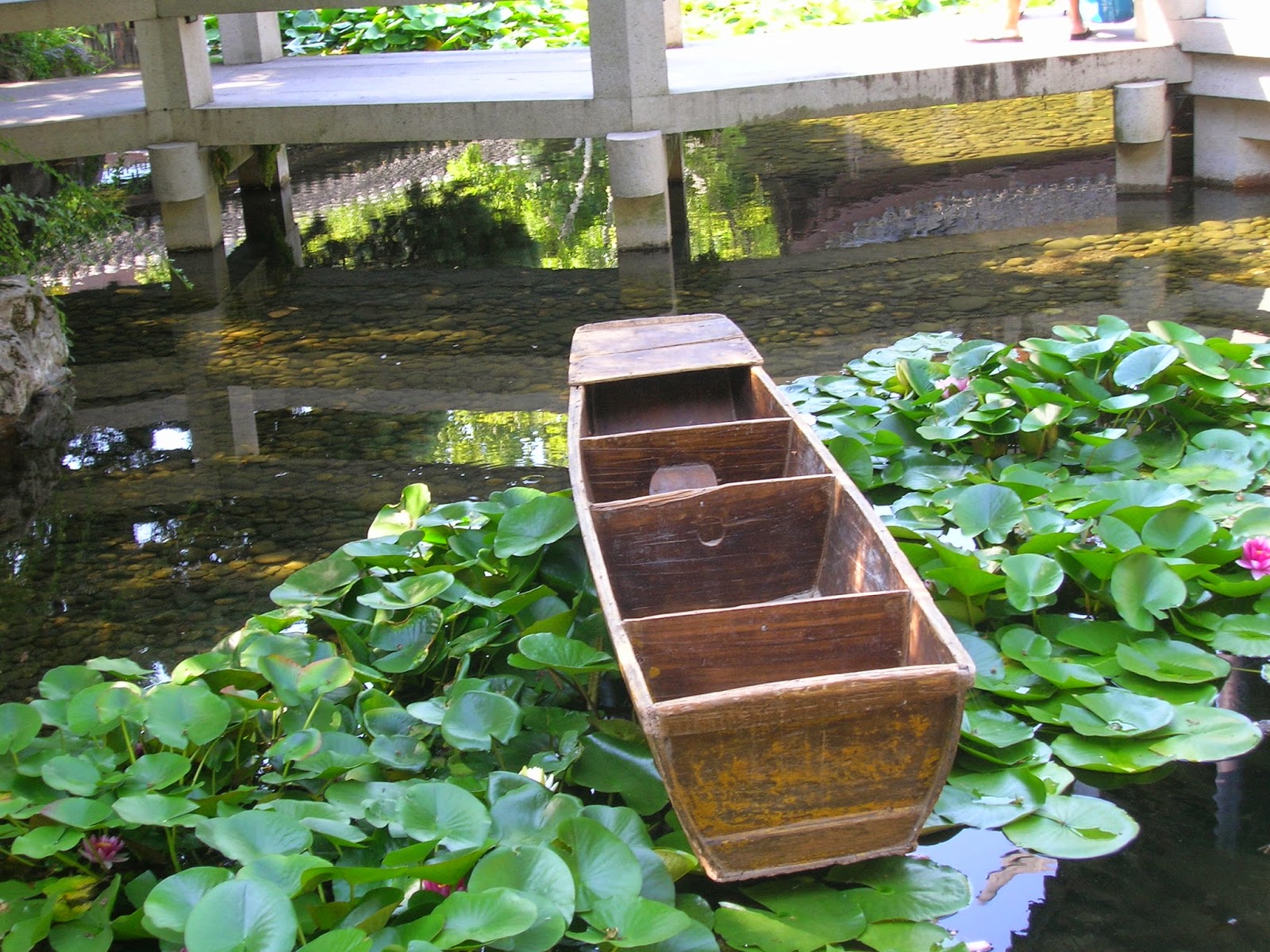
Sitting on a bench in the Lan Su Chinese Garden, tranquility floods the air. It’s so quiet you can hear the fish splash in the lily pond and the breeze whistle through the bamboo. Although we’re in the middle of Chinatown, and there are many tourists of all ages here taking pictures on their smart phones and iPads, they move respectfully through the rooms and gardens.
The brochure tells us that meditation, discussion and storytelling were popular activities in Chinese gardens. This garden was built by Chinese artisans from Portland’s sister city, Suzhou.  Doorways and windows form views within views, the paths are paved with rock mosaics, and Lake Tai rocks rise up like sculptures throughout the garden. Plants range from bonsai trees to japonica, plum, bamboo, and silk. Inner rooms and terraces showcase Chinese paintings and calligraphy while soft music plays in the background. A teahouse offers a taste of Chinese tradition.
Volunteers do much of the work at Lan Su. The garden, located at 239 NW Everett St., hosts many special events, including lectures, concerts, art shows and tea tastings. People rent space for weddings and other occasions. For more information, visit the website at http://www.lansugarden.org.
In town on business, I stayed to see a little bit of Portland. From the garden, I drove south along the waterfront, looking for a spot to sit and write and relax. Ironically, I wound up at another garden, the Garden at South Waterfront Park. This too, according to the brochure, is meant to be a meditative space beside the Willamette River. Well, the garden is lovely. Lots of paved paths wind in and out of the plants, the brochure tells you what the plants are, and I found a great rock to sit on just above the water. Not far down the path, a young woman was already busy writing. I watched speedboats, sailboats, and a guy standing on a surfboard. I remembered a past trip to the Oregon Museum of Science and Industry just across the water. I relaxed on my rock and got out my pen.
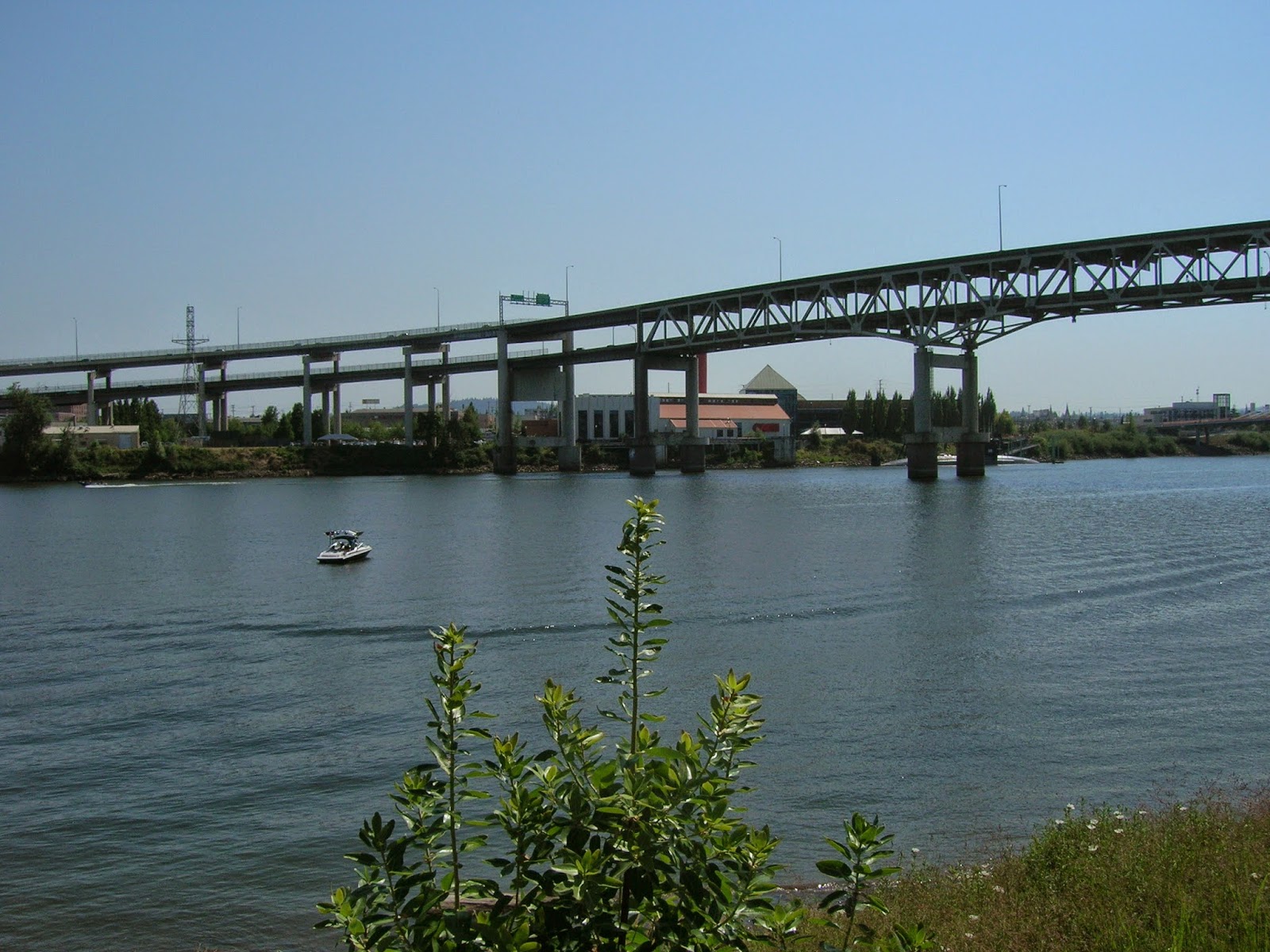
But this was not a quiet, tranquil space. It was hot, about 90 degrees. An endless stream of people jogged, biked, and walked along the paths, half of them staring at their cell phones. From up the waterfront a ways, a rock band pounded the air with drums and bass.  And because we were under two of the city’s main bridges, the Marquam and Hawthorne bridges, the traffic roar was so loud and constant I could not hear speedboats zooming by. Quite a contrast with the Chinese gardens and with the forest where I live.
I retired to the cool dining room at the Lil’ Cooperstown Bar & Grill, where there were TV screens showing sports everywhere I looked, and the music was a little loud, but the food and the service were great.
Portland has many faces. These are just a taste of those on the east side. I hope to explore many more parts of Portland in the future.

What are your favorite east Portland spots?
Two minutes of fame at the Willamette Writers Conference

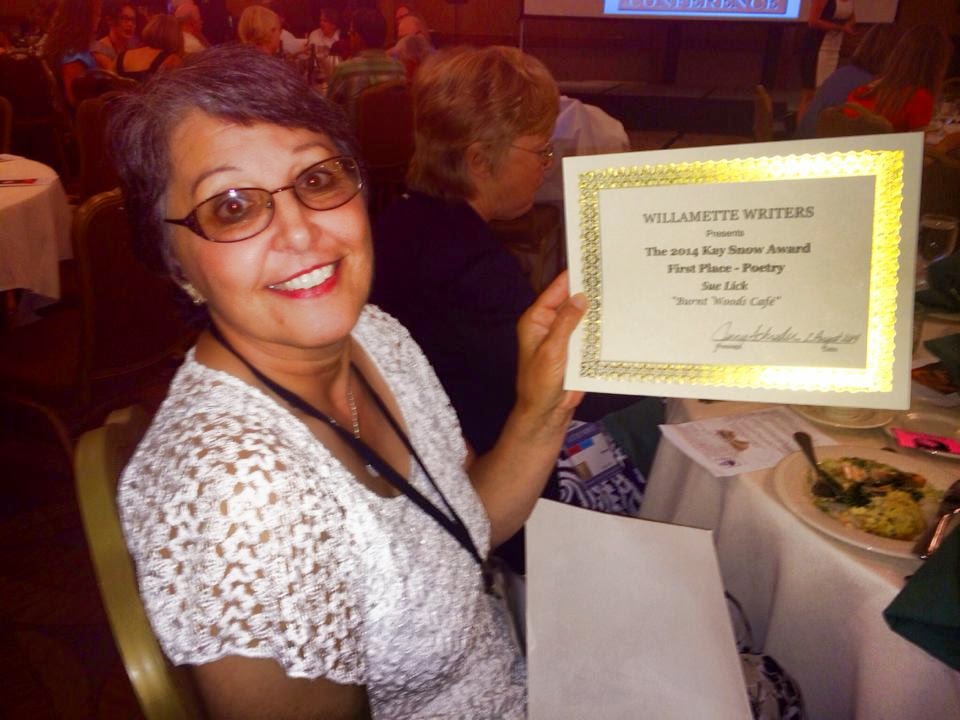
If you follow me on Facebook, you know I had my two minutes of fame Saturday night when I received the first place award for poetry at the Willamette Writers conference banquet in Portland Saturday night. It’s not my first award, but as the queen of second place, I’m thrilled about this one and that it’s for poetry makes it even sweeter. That I could also celebrate with Debby Dodds, a sister graduate from the Antioch LA MFA program was also a blessing. The pictures with me in them come from Debby’s camera.

I got a room with a view, but of what?
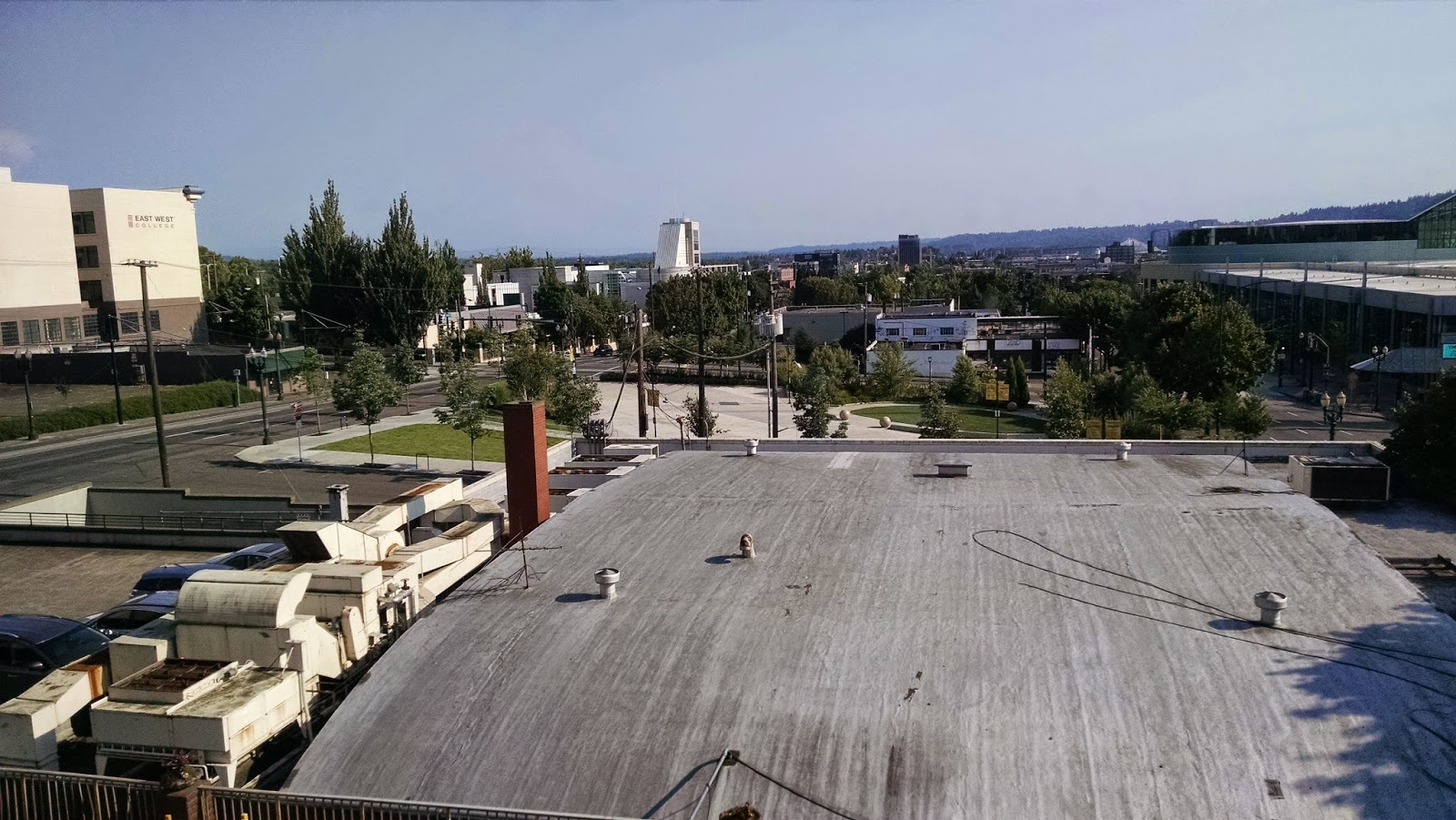
It was a strange day in Portland. So hot even the people who lived there kept complaining. When I got the news of my award, the conference hotel was already full, so I stayed at a place nearby. Lest I get sued for libel, let’s just say it was in the area. If I had read the reviews before I booked my room, I might have chosen a different place. “Rundown” is putting it nicely. The photo will show you what my “view room” offered out the window. It actually got better at night when the convention center towers were lit, but still. Inside, everything was hanging lopsided, not quite clean or falling apart. No pool, no breakfast, not even a free pen. But it was only for one night, and the air conditioner worked.
It was odd showing up at the conference hotel and not being registered for or teaching at the actual conference. I was just there for the banquet. Inside the ballroom, we winners were relegated to our own tables, but most of the winners lived too far away to come to the banquet. So I shared a half-empty table with an 11-year-old winner in the kids’ category, his mom, dad and bored older brother and a non-winner who came in late and needed a seat. Turns out she and I both worked at the same newspaper in Los Gatos, California a few years apart. Amazing.
The awards began a bit late, but moved quickly to the poetry division. Amid cheers, I hurried up to the platform, posed for a picture with my certificate and hurried back to my table, where Debby grabbed me for a hug and a couple selfies, which showed up on Facebook a few minutes later.
Diana Gabaldon, author of the Outlander series
We contest winners were small fish at the banquet. Awards were also given to Justin Hocking, executive director of the Independent Publishing Resource Center; Kelly Williams Brown, author of Adulting: How to Become a Grow-Up in 468 Easy(ish) Steps; Jess Walter, author of Beautiful Ruins and seven other books; Ivan Doig, author of 16 novels and three nonfiction books; and Diana Gabaldon, whose Outlander books are debuting this week as a TV series on Starz. Gabaldon gave one of the best keynote speeches I’ve ever heard. We laughed, we learned, we were inspired, we gave her standing ovation.  Man, she’s good. And she started her books while holding down two jobs and raising a couple of kids. So what’s our excuse?
Once the nerves of my own award were over, I could enjoy my dinner. Salmon with hollandaise, some kind of potato concoction, green beans, salad and the most beautiful dessert, which I should have photographed. With layers of chocolate, coffee, more chocolate and whipped cream, it looked like a cupcake but slid down easy like cheesecake. Not exactly on my diet, but hey, I won first prize. Besides, when you consider my low-fat breakfast at the grungiest Denny’s ever, it evens out.
In the morning, instead of rushing to the Doubletree for a day of classes, pitching, and networking, I was free to roam to Chinatown and the waterfront. It was a wonderful day. Stories and photos to come. And then it was back to Annie in the cool coastal forest. Ah, fame.

It’s Hand to Branch Combat with the wild berries


Yesterday after playing piano for two Masses and after a fattening lunch at Georgie’s, I battled the growth in my yard, especially the berry vines. Anyone who lives in rural western Oregon knows the berries that grow wild here—salmonberries, thimbleberries, blackberries, huckleberries—are a blessing and a curse. They offer delicious fruit, but they pop up everywhere, and the vines are vicious, with thorns that grab at you like claws and don’t let go.
I live in the forest. The pines, berry vines, sword ferns, ivy and no-name weeds would take over if I let them. The forest would close in and smother the house and me and Annie along with it. So I spent my Sunday afternoon in hand to branch combat. I cut for hours, soaked with sweat and scratched with thorns, but loving the feel of my muscles working, growing strong. I don’t need a gym. I get plenty of bending, stretching and lifting working in the yard.
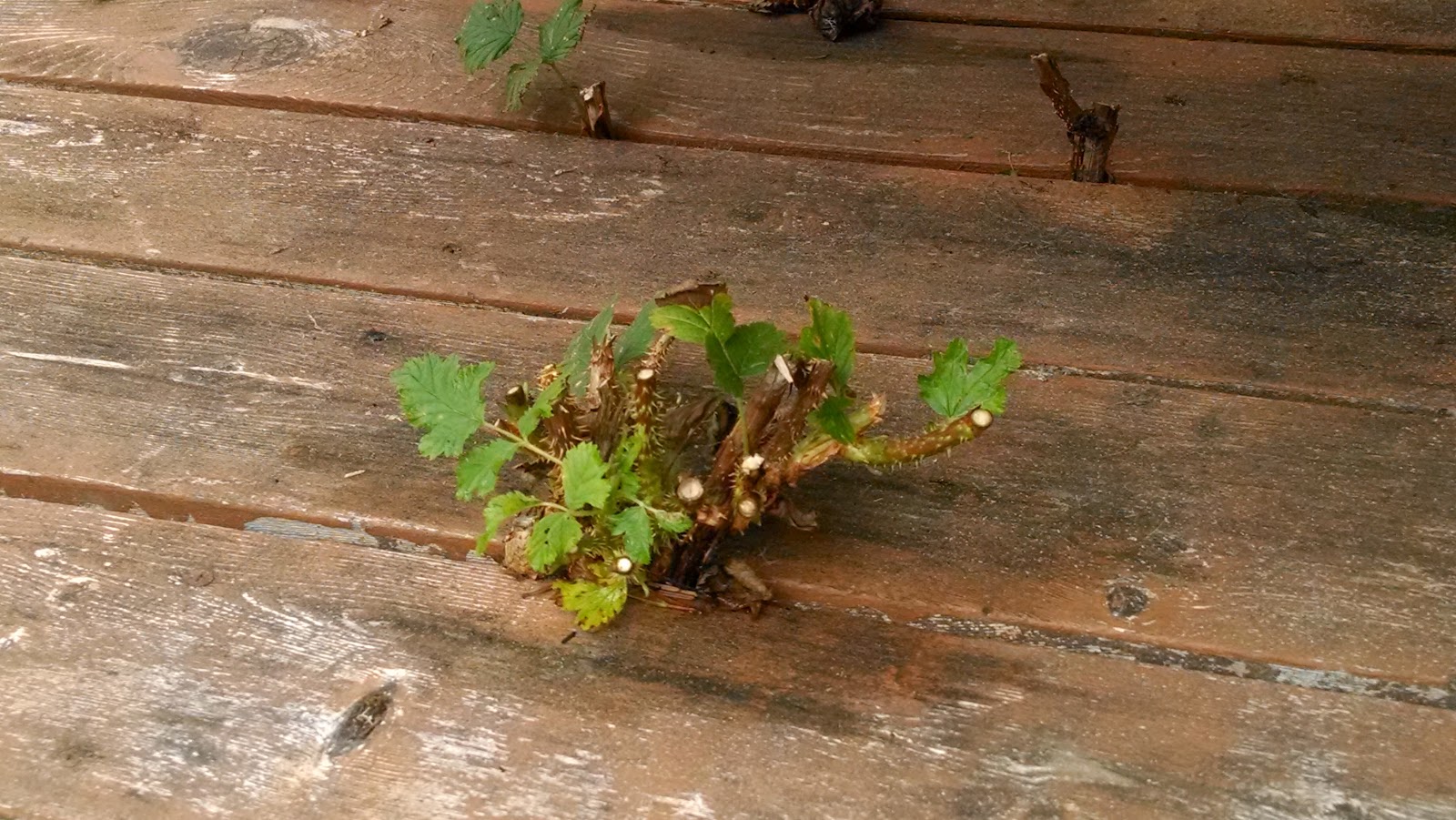
Cutting between the dog pen and the fence, it rained branches that piled up along my feet while Annie dashed around grabbing sticks to chew on. I cut everything sticking out or hanging over—as high as I could reach. I filled my squeaky yellow wheelbarrow over and over, but there was always more to cut, poking out of the fence, through the hedge, or sticking up through the boards of my deck. The berries are even choking the life out of my beloved blue hydrangea. It’s like a monster movie where you can’t get away from the monster. But I attacked wherever I could. And now, if anybody has a truck, I need a trip to the dump.
The forest plants and I are living creatures fighting for the same space. I will never win, but as long as I never stop, I will not be defeated.
Today, mosquito-bitten, sore, and mysteriously two pounds heavier, I look out at my clear path and neatly trimmed vines and feel power pulsing through my suntanned body. I have loppers, and I’m not afraid to use them.

A poem from our daily walk: this time the forest won


Annie and I walk most days up a gravel road through an area that used to be all coastal forest. It lies in the airport flight path and was once planned to be a large recreational complex with a golf course, houses and other buildings, but they were never built. Over the years, we have watched big machines rip out the trees and leave sections nearly bare, but the plants always grow back. The rabbits, deer, cougars and snakes return. However, a couple of the old bulldozers remain. I don’t understand this waste of machinery that just sits there and rots, but they are here, slowly falling apart as the forest reclaims its land. Today I share this picture and poem with you. 
Captured
Long ago the bulldozers came,
jaws ripping down the pines and Sitka spruce,
merciless tires smashing through
blackberry vines, cow parsnip and buttercups,
leaving a graveyard of sun-bleached trunks
among which the deer could find no food.
Now the hard-hat men work somewhere else,
but they left their big machine behind.
The grass has grown so thick only a rabbit
could run to the rusting steel hulk
to sniff at its cracking leather seat,
its gears, its knobs, a forgotten glove.
Scotch broom surrounds it like a fence,
seed pods rattling against the rails.
Thorny vines wrap around its rotting tires.
Crows perch on the top and shit
while a single purple foxglove plant
dances in front of the deadly jaws.
Copyright 2014 Sue Fagalde Lick (Please don’t republish this anywhere, including online, without my permission)

A coastal county fair in the rain

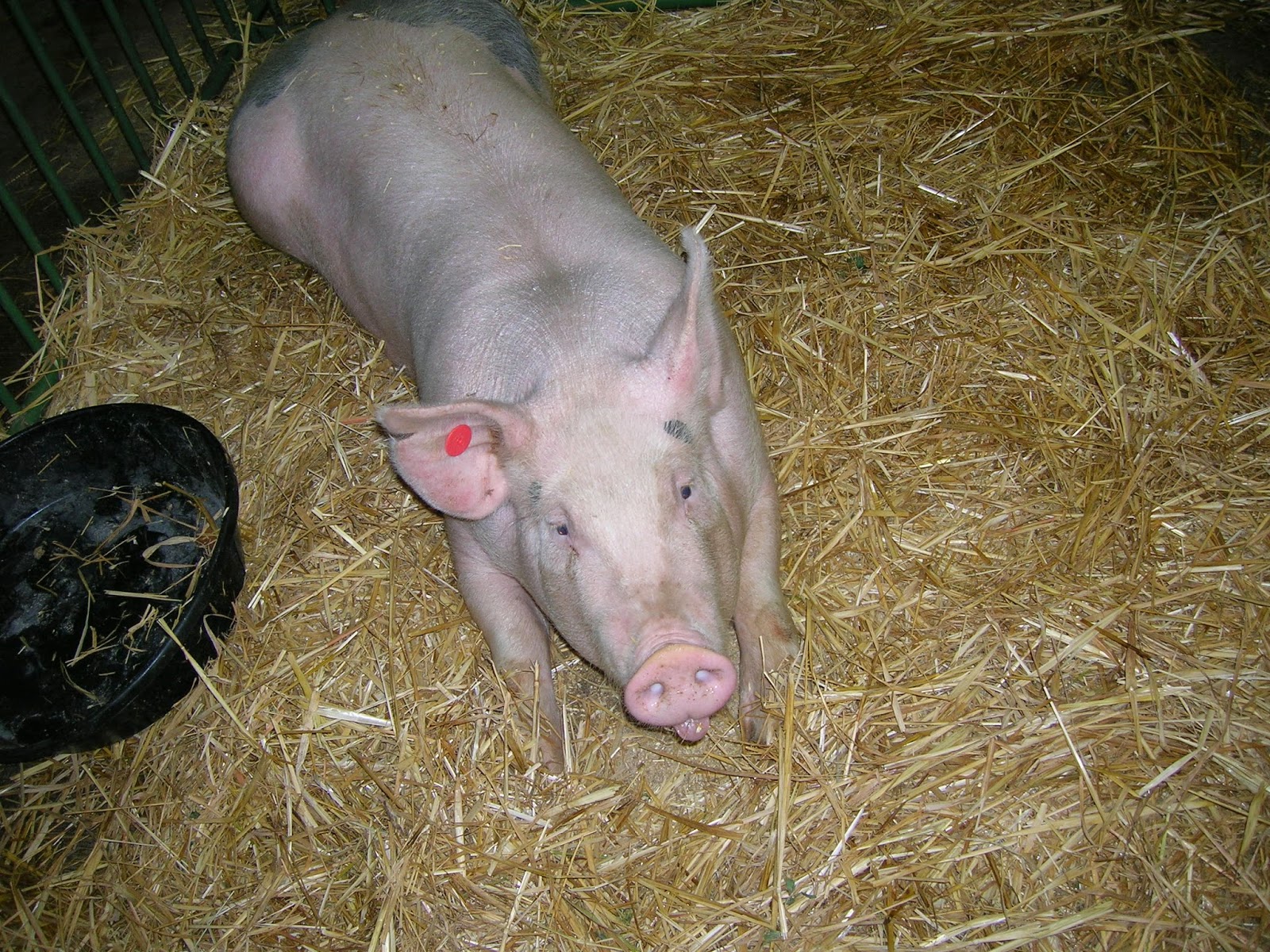
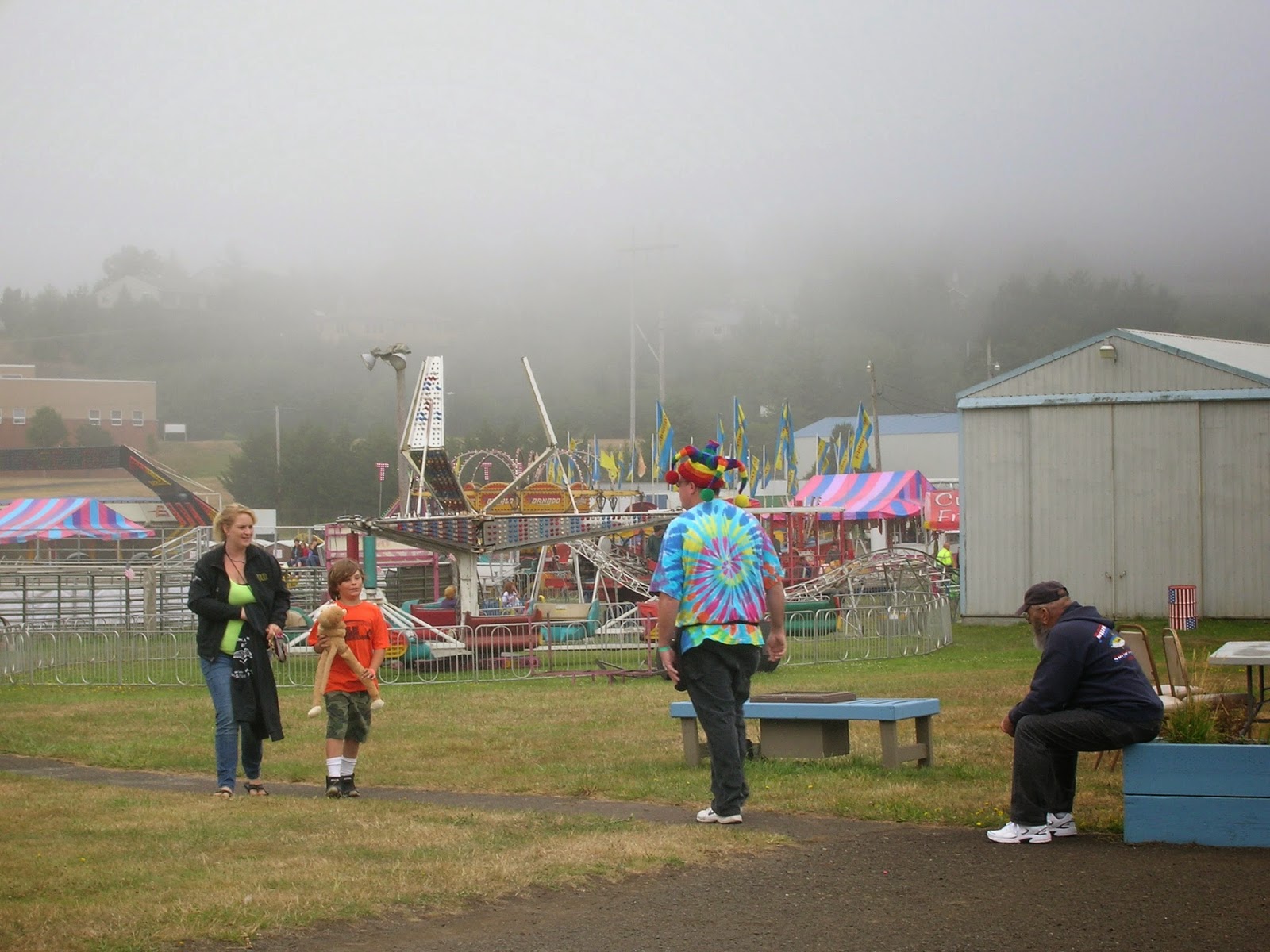
A Sunday afternoon in July. The sky is gray, and it’s raining on the last day of the Lincoln County Fair. I see people walking around in their hoodies, a guy in the grandstand singing and playing guitar, not a soul in the audience. Everything is half empty and tired-looking: ponies waiting for somebody to ride them; carnival rides, half running, one little boy in the lady bug cars; pigs, cows and sheep in the animal barn, unaware that they’re future food; chickens, goats, and rabbits, a duck swimming in a plastic pool; back exhibit hall almost empty, a few knit and crocheted items and one case of baked breads and pies. The main hall echoes with a guy giving violin demos as people wander past booths selling jewelry and kitchen knives or advertising local causes, and stare at the snakes and lizards in the reptile exhibit. Outside, a few people line up to buy elephant ears and sausage dogs. There’s nothing happening in the rodeo area. Best action is at the Pick of the Litter thrift store where I scored some 50-cent CDS, $1 picture frames and a piano book. Like the buildings it occupies, the county fair is tired and falling apart, but it keeps going.


Coastal Fourth: Halibut, elk and la de da


Ah, Fourth of July on the Oregon Coast.

We started with the La De Da parade in Yachats. It’s a parade unlike any other. No marching bands, no floats, just ordinary folks in their most outrageous get-ups marching in a big circle from the Commons to the park that overlooks the waves crashing off the rocks and around the bend and down the street overlooking the bay. You’ve got your umbrella drill team twirling umbrellas in unison, your tree huggers decked out in ivy crowns, your folks from the pizza place dressed like giant pepperoni slices, your dogs in patriotic sweaters, George and Martha Washington taking a stroll, a rock and roll band playing blow-up plastic guitars, and the local ambulance and fire truck drivers rumbling through, honking their horns. The onlookers are as colorful as the marchers. In a half hour, it’s over and folks are gathering to eat barbecue and homemade pie.

I brought two young friends, Ashley, who just moved down here from Alaska, and her friend Matt, who lives in Davis, California. This was their first introduction to Yachats. They were appropriately delighted with both the parade and the sunny but not too hot weather.
For lunch, we joined the noisy crowd at the Drift Inn. As we ate and talked, this guy came in, shouting, “Fresh halibut!” He carried a gigantic dripping fish over his shoulder as he walked between the tables where tourists ate nachos and clam chowder. They put down their forks and spoons and applauded. He brought in two more halibut. I wonder where he put them in the small kitchen at the back. It would be like trying to fit a Buick into a Barbie garage.
After lunch, my guests headed north while Annie and I took our usual walk, then relaxed with a bit of the “Sex and City” marathon happening on TV. Still to come were the Newport fireworks.
Most years I decide I’m not going to go. Too crowded, too late, I don’t need it. But then I start hearing the popping of the aerial displays. I can’t see anything because of the trees that surround my house. I can’t stand it. I get in my car and drive until I can see some of the fireworks from some illegal parking spot on a hill. This year I decided to go see them on purpose.
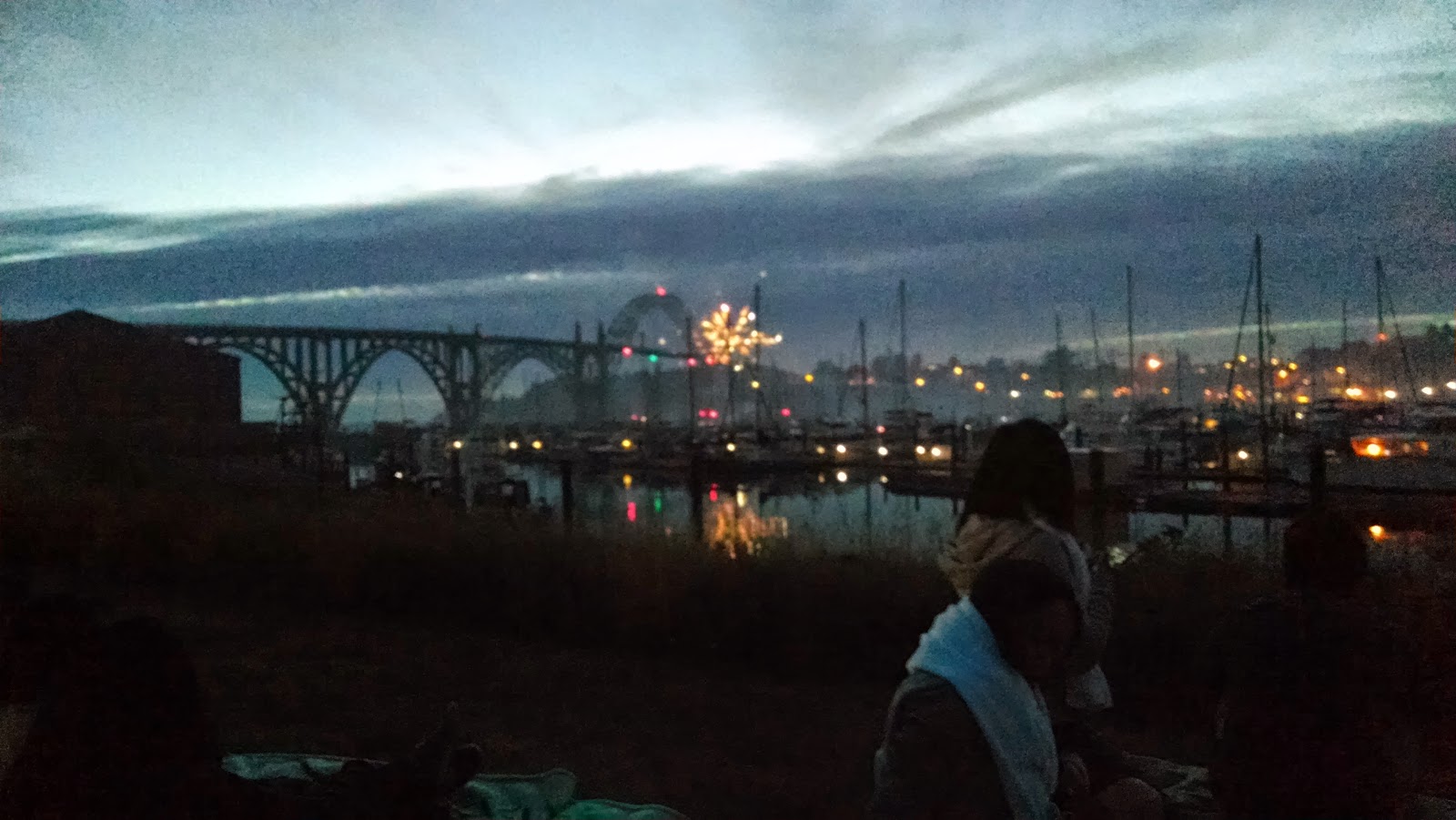
By 9:00, it seemed everyone in Newport and a few thousands tourists had gathered on both sides of Yaquina bay with their folding chairs, their glow-in-the-dark necklaces and their boxes of do-it-yourself fireworks. In every direction, Roman candles shot up into the air, little kids swirled sparklers, and big kids lit up things that went boom. The smoke grew thick like fog. The air over the bridge and over the hills lit up with starbursts of color. Dogs barked, kids screamed, and mosquitoes went crazy with so many people to bite.
The official fireworks started at 10:00, lit from a barge in the middle of Yaquina Bay. All around me, people raised their Smart Phones and iPads, trying to take pictures. Me too, until I realized I could either take pictures or actually see the fireworks. Pop, bang, ooh, wow, ahh. I’ve seen bigger displays, coordinated with patriotic music, but this one was good and the company was great.
Then came the applause and the traffic jam, but nothing like I remember back in San Jose when it might take two hours to get home. When I drove into my neighborhood in the woods at 10:45, my headlights picked up a young male elk standing in the street. As I paused, he ambled over to the neighbor’s yard and calmly stared at me as I drove to my house at the end of the block.
And people wonder why I moved to Oregon.

Blessings for the Old and New at Sacred Heart

Last Friday night, Sacred Heart Church, where I work and worship, celebrated its 125th anniversary. When Catholics started holding Masses here in 1889, Newport, Oregon was a rustic fishing village with muddy streets, horses instead of cars, and open space where stores and condos sit now.

The original church, a tiny box of a building on Olive Street, disintegrated over time, with so many holes in the roof that parishioners tried to get to Mass early so they could find seats that weren’t wet from the area’s persistent rain. That church is long gone. The church building I know was built in 1952, the year I was born, at 10th Street and the Coast Highway. Brick on the outside, wood on the inside, it has weathered well, although sometimes the building cracks and snaps, and the scarred wooden pews creak no matter how hard you try to stay still.
New religious education building
Things change over time. A hall, chapel and vestibule have been added to the original church building, and the construction continues. On Friday night, after a celebratory Mass and dinner, we blessed a brand new religious education building and said goodbye to the falling-down edifice known as the Ministry House.
The new building is state of the art, light, tight, smelling of new carpet and fresh paint. We paid for it with pledge drives, car washes, dinners, and can and bottle collections, along with money from the church budget and the archdiocese. It took a little less than three years from idea to dedication.
Old Ministry House

We’ve been watching the construction for months. Finally our religious education director Sandy Cramer unlocked the doors and we crowded in, admiring the three upstairs rooms and the big room downstairs. Father Brian sprinkled holy water all around to bless the new building. We sang, we prayed, and we listened to the stories of the new building and the old one we could see out the window.

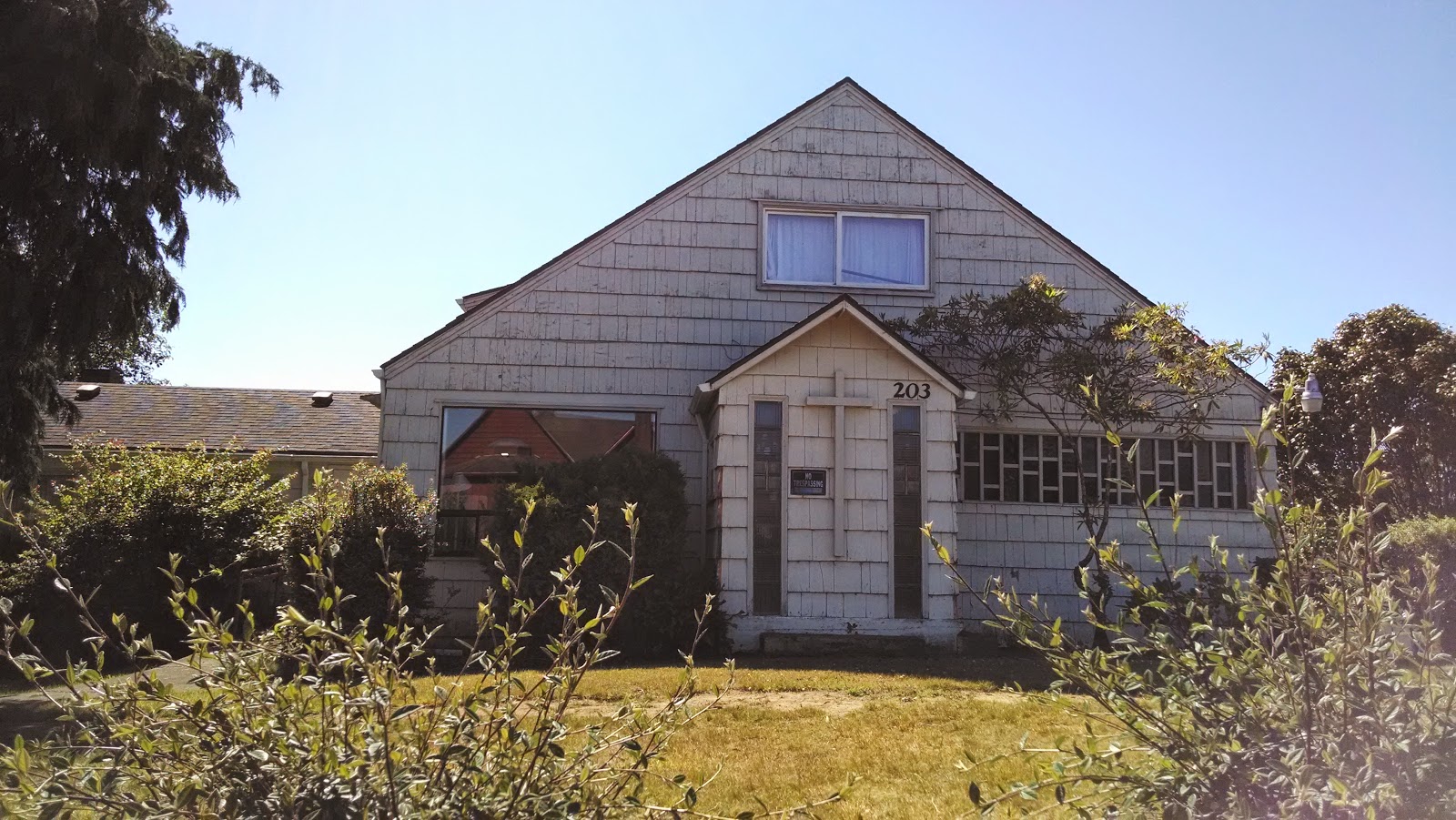
The Ministry House goes back to the early 20th century. It first served as a convent for several groups of nuns. It has been the Knights of Columbus headquarters, a homeless shelter, a retreat house, and a home for children’s religious education classes. Parishioners remember doing lessons with the nuns, playing flashlight tag in the spooky old rooms, singing songs and saying prayers. The Knights remember solemn meetings and raucous poker games.  But like the old church with the leaky roof, the Ministry House can no longer be used. Polluted with mold, mildew and asbestos, it has become so rickety it’s no longer safe. The plan is to salvage as much as possible, then let the folks from the fire station next door burn it down for practice.
We were invited to take a final walk through the old building. The lights were off. The mildew stench made it hard to breathe. Much of the furniture is gone. Yet it felt so homey. The stained glass, the comfortable couches, the bunk beds, and the old-fashioned kitchen reverberated with a century of prayers and laughter, study and meals shared while Jesus looked down from the crucifix. Saying goodbye was bittersweet, but buildings don’t last forever, and the new place will soon fill up with new memories.
Meanwhile, it’s the people who really make up a parish, and they will go on together into the next 125 years. This is my Oregon family, and I’m grateful for every one. God bless Sacred Heart.

If You Gotta Play a Garden Party Again . . .

Every year I swear it’s the last, but here I am again, playing at the annual Samaritan House Secret Garden Tour. I’m stationed in Mariann Hyland’s delightful “jewel box” garden in Neskowin.

I was definitely quitting this year after I wound up on “Scenic Old 101” driving mile after mile of winding, barely paved road. As the minutes ticked by, I knew I was going to be late due to misleading signs and not having paid enough attention to the map. I was tempted to get back on the freeway, buy myself an expensive lunch at some beachside restaurant and let the flowers do without music.

It wasn’t just me. A friend wandered the same direction, and she was using a GPS. So we were both late and both never volunteering for this thing again. Eventually, nearly two hours after leaving home, we turned around, found garden tour headquarters, got directions to our respective gardens and calmed down. The weather was perfect, the flowers were blooming, plant-loving friends were having fun together, and music filled the air. Also wine, cheese, chocolate and salt water taffy.

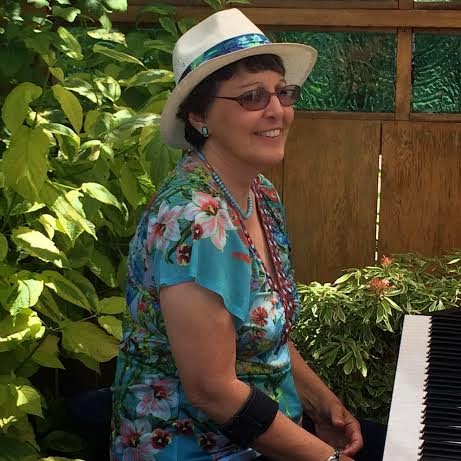
Neskowin is located a few miles north of Lincoln City, just into Tillamook County. My garden in the Neskowin Village snuggled in the midst of several cottages with their own spectacular gardens. As I alternated between keyboard and guitars, visitors admired the custom-made glass fence panels, the downspouts shaped like fish and turtles and the glorious array of sea air-loving plants. I disrupted the array a bit with all my gear, but at least, as you can see, I dressed in the floral theme.

You might wonder about the black armband. I wasn’t mourning anything. I’ve been suffering with an elbow problem called medial epicondylitis or golfter’s elbow for over a year now. It’s a repetitive stress thing exacerbated by playing the piano. Physical therapy has made it considerably less painful, but it’s still there and probably always will be. The brace helps, but I’m thinking the braces ought to come in colors to match our clothes. I’m going to work on that. 

Playing at the tour is always wonderful because I get to see so many great people, and so many people get to hear me. Also I get to play whatever I want. But there are challenges, too. The guitar-playing guy across the street, who knew every song the Beatles ever recorded, was distractingly loud. People frequently interrupted my music to ask questions like “Is this your garden?” and “What is the name of that plant?” There were cameras everywhere, some of them snapping pictures of me. This year, I saw quite a few people taking pictures with their iPads, too. But in the end, it’s a fun day, and it raises a lot of money for our local homeless shelter.

I came away with grooves in my fret fingers and a rasp in my throat, but ask me again if I’ll do the garden tour next year.

Probably.

Blooming on the Oregon Coast

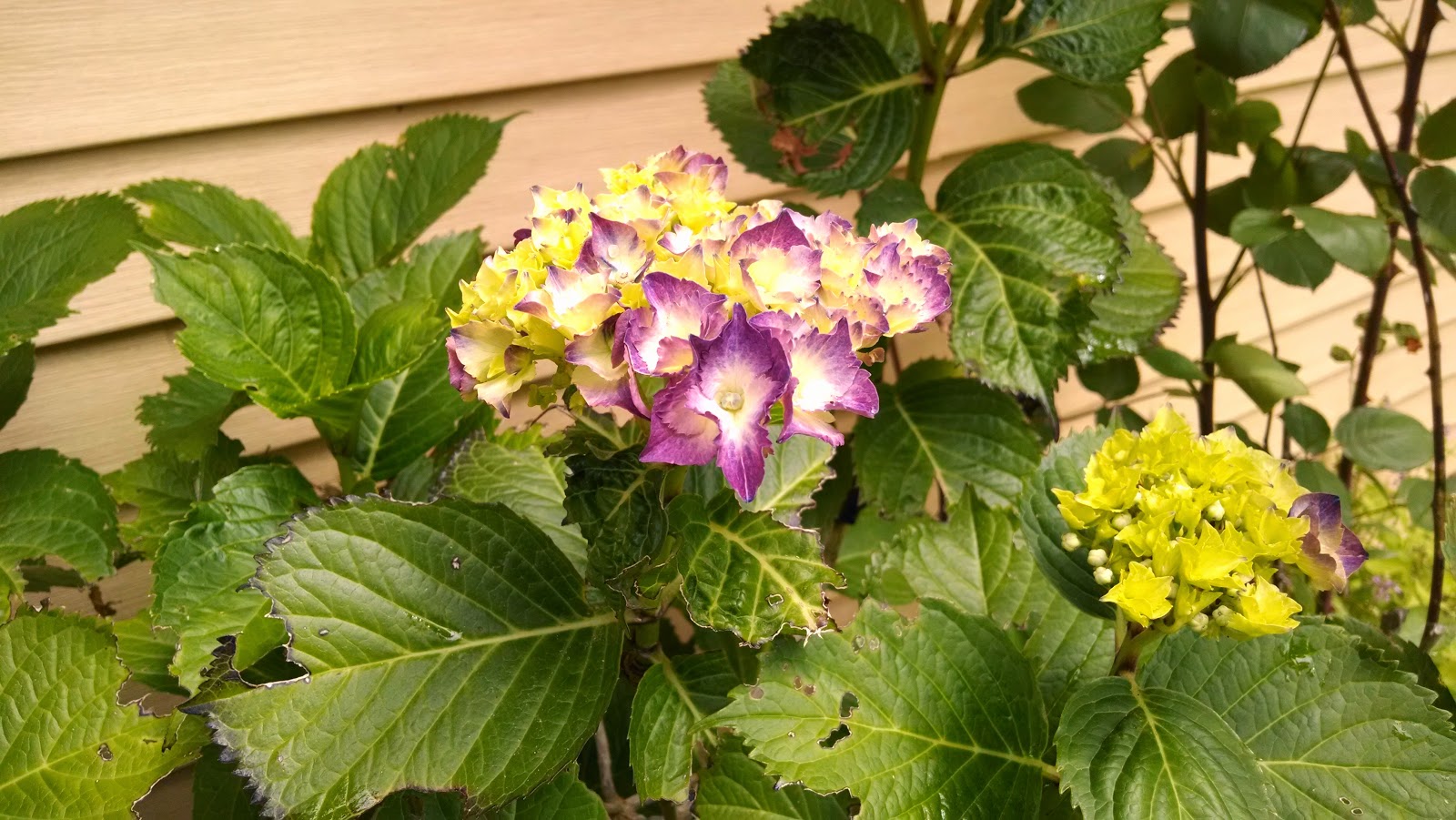
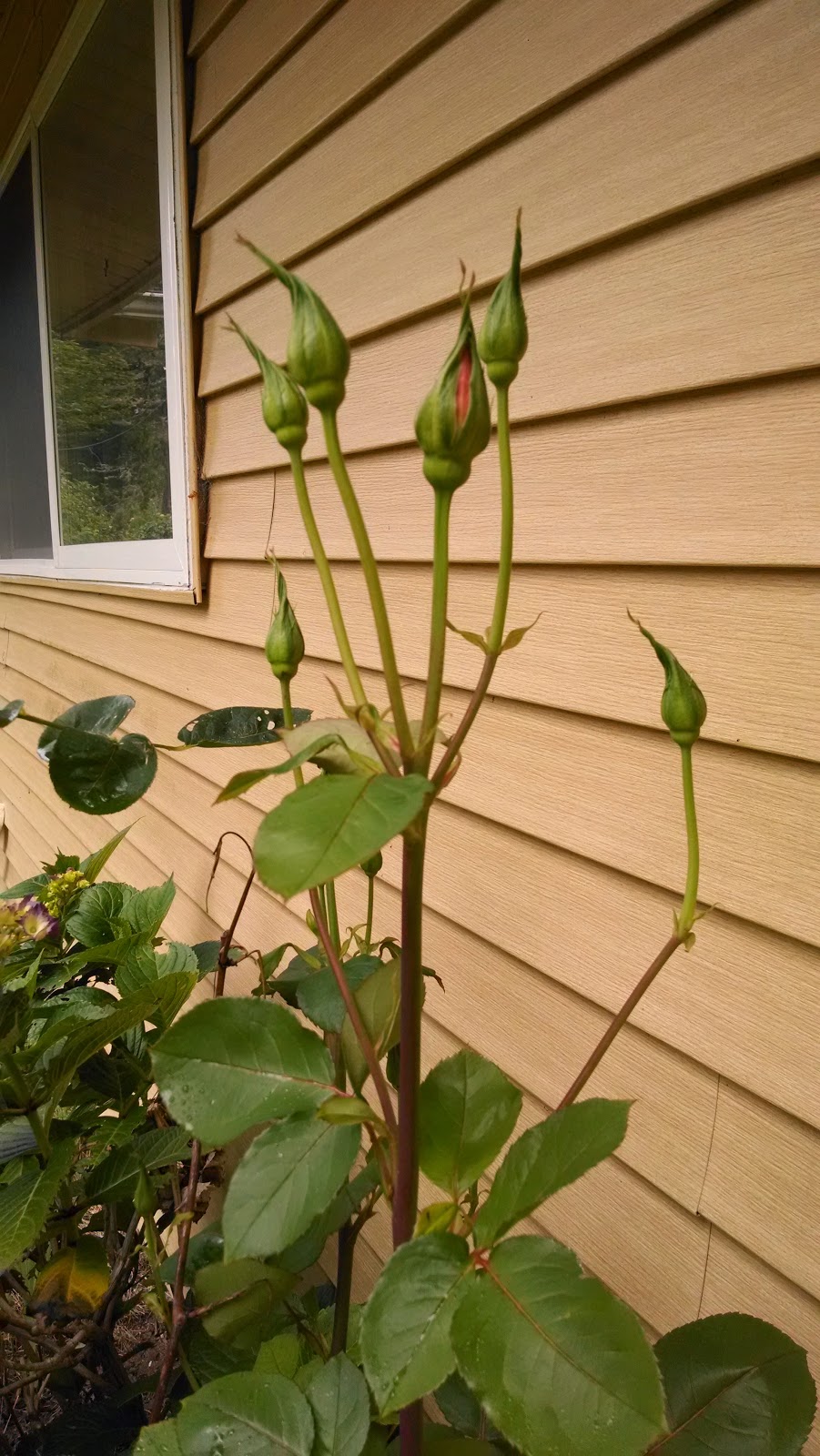
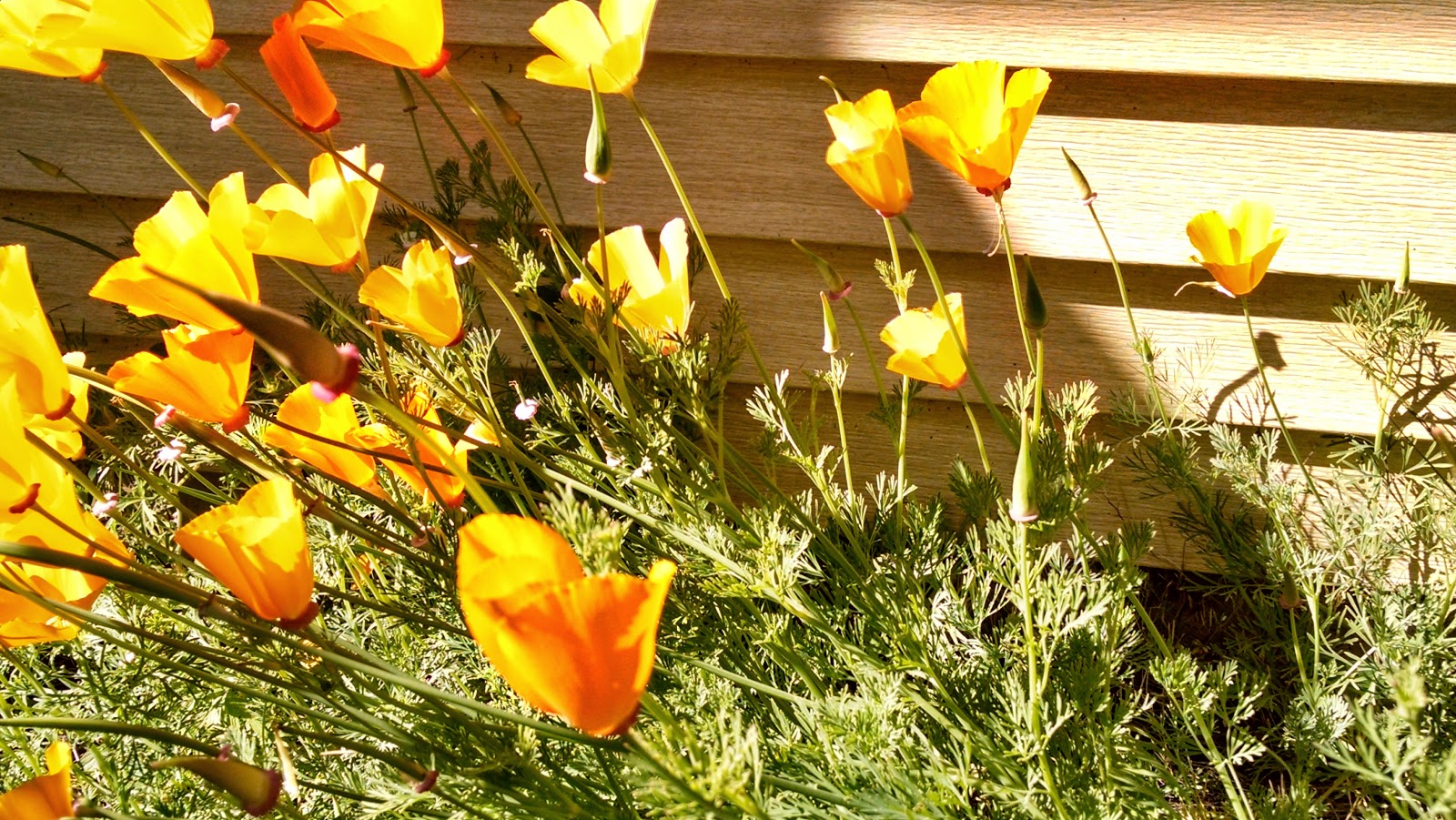
Crazy busy and at a loss for words, I offer you a spring haiku and some of the pictures I couldn’t help taking over the last week.

Oregon Coast spring
sun that makes the flowers bloom
soft refreshing rain

Loving the music, missing my barbershopper


See that picture? There’s something missing: Fred. My husband sang with the Coastal Aires barbershop chorus for seven years. He had a rich bass voice, and he loved to sing. I have mostly avoided the group’s concerts the last few years because they bring back so many memories. I can still feel Fred resting his hands on my shoulders as I fastened his bow tie. I can hear him practicing his “bum bum bum bum’s.” And, as I watched the chorus yesterday, I could still see Fred standing in the back row to the right of his buddy Roy, the white-bearded guy who looks like Santa Claus.
When Fred got too sick to sing with the Coastal Aires, we still attended their concerts. We’d sit in our favorite back row seats at the Newport Performing Arts Center, and Fred would sing along with every song. Alzheimer’s made it hard for him to deal with sheet music, schedules or knowing where to stand, but it never took away the music.
I’ve been missing my guy a lot lately. My life is good. I know he’s been dead for three years and out of the house for five, but I often think about what it would be like if Fred were here. Sometimes I feel a pain that runs from my chest down to my guts. It will never show up on an x-ray, but it’s there.  For those who have not lost a loved one, God has blessed you. Those who have know that it doesn’t matter how many years pass; you’re still going to miss them.
The concert brought back other memories, too. Joining the men was a women’s group called Women of Note. The eight women do mostly a capella (unaccompanied) harmony. I was an original member when we were called Octet Plus. Now the only remaining original member is the director, Mary Lee Scoville. The current group of women sang so beautifully I wanted to join their fan club and buy their CD. I remember what it was like feeling our voices merging so perfectly that the high, medium and low notes formed a perfect braid of sound that resonated through the building. There’s nothing like human voices singing together.
It was a musical day. I sang with the choir at church, attended the barbershop concert, scooted to our South Beach jam session for two hours of folk, country and whatever, ate a quick dinner and settled in for the Tony Awards on TV. A good day, but I wish Fred had been there to share it. I hope he heard the music from wherever he is. The Coastal Aires sounded great, especially the basses.