We Survive January’s Storms and Carry On

No shame in wearing the cone of shame

It’s the last day of January. The holidays are already a fuzzy memory. What did I do for Christmas? New Years? Um . . .  

So far, 2022, despite the mellifluous sound of its numbers, has been a rotten SOB. 

  • Storms, storms, storms, with wind damage, roads collapsing, landslides and a lot of wet feet and wiping off the soggy dog. See earlier post.
  • Much worse storms elsewhere in the country causing destruction from which it may take years to recover. 
  • Insane Covid numbers and some people still refusing to get vaccinated. 
  • My brother-in-law died. My friend’s sister died. My sister-in-law’s uncle died of Covid after that branch of the family’s  Christmas celebration sent him and two others to the hospital. The others are okay now. 
  • Eight writing submissions have been rejected. (But two were accepted, so maybe that’s okay).
  • A tumor on my dog’s hip was diagnosed as cancer and then not and then maybe. After a month of blood and ooze from the ugliest-looking bump ever–think blood sausage–it was surgically removed. Her heart nearly stopped under the anesthesia, but the doctor was able to bring her back to a safe pulse rate. Now she has a huge, oozy incision with drains and smaller cuts around it. She has been wearing the big collar, aka cone of shame, for over a month and will continue for at least two more weeks. We are $3,000 into this now, but she’s worth it. Annie will be 14 on Feb. 16. That’s 98 in dog years.
  • My hot tub cover slipped while I was closing it one icy night and clobbered me in the head, giving me a headache and a two-inch cut from my hairline to my nose that just missed my eye. This led me into all kinds of dark thoughts about the danger of living alone. 
  • My annual doctor visit resulted in another pill to take and referrals to three different specialists. None of it is life-threatening, but it is all annoying and takes away from my writing time. Getting older is a drag, but there are still so many great things to do that I am not ready for the alternative.

So January has sucked, BUT there are good things. 

  • The cut on my forehead is healed and fading away. I did NOT get badly hurt by the hot tub cover. Since that incident, I have taken steps to make the cover much safer to deal with.
  • Post-surgery, Annie and I may finally see the end of this oozy mess and get rid of the cone of shame.
  • I have not gotten Covid. So far. With all my shots, if I do get it, I believe it won’t be too bad.
  • My new air fryer arrived on Thursday and I’m having fun trying new things in it. It’s pretty slick. I welcome your recipes and suggestions.
  • I am making great progress on my new novel, the sequel to Up Beaver Creek. Dare I confess that I love this book? I think you will, too. 
  • The bulbs are sprouting in my garden, which means spring is coming. 
  • I have wonderful friends, in-person and online. Annie does, too. She has more Facebook fans than I do, with over 100 reactions to my post about her surgery. 
  • A new episode of “The Gilded Age” will appear on HBOmax tonight. 
  • The tsunami that drifted over from Tonga Jan. 15 did not damage the Oregon Coast.
  • I’m still here, writing by the fireplace, dog at my side, guitar and piano nearby, forest out the window. Two hummingbirds just hovered at the window. God is good. 

Enough of me and mine. How has January been for you? 

Processing…
Success! You're on the list.

Genealogy Search Yields Another Author in My Family Tree

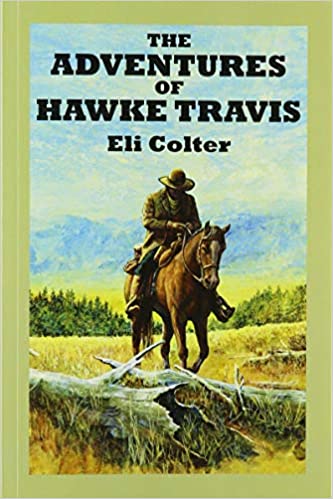
I have always believed I was the only writer in the Fagalde family. I was wrong! Looking for a missing in-law led me to Genealogybank.com, which led me to discover May Eliza Frost, aka Mrs. Glenn Fagalde, who wrote pulp fiction under the name Eli Colter. And she wrote it in Oregon! Our names have both appeared in the Oregonian!

In a clip from the society pages of the March 29, 1936 Oregonian, the columnist writes about a gathering of authors that included Mrs. Fagalde. “Eli Colter (Mrs. Glenn Fagalde) is just as individual a personality as her many novels. Although she is known for her western stories of characteristic flavor, she has also distinguished herself in the writing field of the supernatural. The titles alone of her novels intrigue all ages from 8 to 80. Bad Men’s Trail, The Adventures of Hawke Travis, and Outlaw Blood are typical examples of this unique woman writer doing westerns with a swagger.”

Back in the olden days, many women writers felt the need to take male pen names in order to get published and respected. I imagine readers would have trouble believing Wild West and supernatural stories written by a woman named May Eliza. It’s such a sweet name. But Eli’s characters are anything but sweet. 

It’s fascinating to realize she was spinning her tales in the years when my dad was young, reading those old hardcover westerns with blue or green covers. He might even have read something by Eli Colter, with no idea she was married to one of the Oregon Fagaldes. 

I just finished reading The Adventures of Hawke Travis, originally published in 1931. This is a real Wild West tale. Hawke Travis is a roaming gunman and gambler who doesn’t mind breaking the law for a good cause or killing a man who deserves it, but he will never double-cross his friends or kill for no reason. If the law ever catches up with him, he’ll probably hang, but he has a gift for slipping away just in the nick of time. Hawke claims to have been a teacher, a lawyer and a few other things, changing like a chameleon to fit in whatever place he wanders into, but beware those black eyes and the Colt 44 he keeps tucked in his waistband. Is the story realistic? No. But it’s pure pleasure to read. The old-time language trips off the tongue. It feels as if the narrator is sitting right next to you telling the tale. And if they appropriate Spanish words–calling each other “hombre” and such–and use “that’s mighty white of you” as a compliment, well, we have to consider the era in which the stories were written and let it go. At least the few women we encounter in Hawke’s adventures are feisty and damned good shots. 

When I first read about Colter’s books, I thought they would be difficult to find. But Amazon.com has them. So do various other booksellers, thanks to Colter’s estate and publishers keeping the books in print. I may have to read some more. This is very exciting to me, even if the Fagalde name isn’t mentioned in conjunction with her work. 

In addition to westerns, Colter wrote stories of the supernatural for pulp magazines like Weird Tales. Black Mask Magazine, and Strange Stories. Through the miracle of the Internet, I downloaded “The Last Horror.” Shiver. Look out, Ray Bradbury. 

In a bio of Colter at the Weird Tales website, the writer says Colter’s tales in Strange Stories alternated with those of an author named Don Alviso. Both sets of stories came from the same mailing address because Don Alviso was actually Glenn Fagalde, her husband. Alviso was my great-great-great grandmother’s maiden name. 

The couple eventually left Oregon for Azusa, California, where their household became the center of a writer’s colony. Glenn Fagalde died in 1957, and “Eli” lived on to 1984. By then, I was writing my own stories in San Jose. 

Times have changed. I feel no need to write under a man’s name, although I like the sound of “Sam Lick” or how about “Slick Lick.” Very macho. How about Dona Fagalde? At most writers’ gatherings now, live or on Zoom, most of the participants are women. But I’m proud of May Eliza. She had spunk and could spin a damned good yarn. 

You know what else? In her younger days, she played the piano and pipe organ in movie houses to make her living. We have the piano in common, too. 

We tend these days to think everything that happened before the turn of the current century is too old to pay attention to, but there’s gold in them thar old books. 

Read any good old books lately?

Processing…
Success! You're on the list.

Why Would Writers Compete for the Most Rejections?

“I’m up to 60 rejections for my writing so far this year,” I said.

“Oh my God! I couldn’t take it. All that rejection.”

“I know. It’s crazy.”

But true. As my friend Cheryl and I sat on her back deck watching Annie nose around the garden and steer clear of the cat giving her stink eye from a chair by the door, I tried to spin my usual story about how I’m selling a project. Like any product, a lot of people will choose not to buy it, but eventually someone will come along who wants exactly that item. Look how many people pass by the handmade earrings at the Farmer’s Market. The earrings are beautiful, but they’re expensive and they aren’t looking for earrings. They want fresh strawberries. Think of my essays and poems as earrings.

But Cheryl was stuck on 60 rejections in six months.

She didn’t ask how many acceptances I’d had. Three.

That was in July. I haven’t told her that I finished 2021 with 98 rejections and a few more acceptances.

I belong to a group of writers who try every year for at least 100 rejections. In poetry, that means for a group of poems, not for each individual poem. In order to get that many, you need to submit a lot, and that’s the point. If you don’t put your work out there, it will never get published.

Cheryl, who lives in the woods down the road from me, is not a writer. She’s a reader and a fan of my books. My dog loves her because she keeps a big jar of treats in the garage.

When you look at it from her point of view, it does sound awful. Nobody tells the plumber after he’s fixed the sink: “Well, I’ll see if I like it and then maybe I’ll pay you.” No. You hire the plumber. They do the job. You pay them. Like the plumber, we’ve done the work. Time to publish and pay!

But that’s not how it goes.

My father, an electrician, had trouble understanding this too. For him, work was only real if you went to a job site, worked for eight hours, and got paid every Friday. After a few years, you were promoted to foreman and bossed other people around. Eventually you maybe even owned your own company. But this business of sending in writing and getting it rejected? That’s not a job. That’s not work. That’s a waste of time.

My parents were proud of the things I got published, but they didn’t understand the process.

I make every submission believing that this essay, poem, or book manuscript will be accepted, that it is a perfect fit. I study the market, follow the guidelines, and meet the deadline. More often than not, a few weeks or months later, I receive an email saying thanks but no thanks. They wanted strawberries, not earrings. Or they love earrings, but they have too many earrings right now. That does not mean my earrings aren’t lovely.

“How do you stand it?” Cheryl asked.

“Well, I have been doing it a long time.”

So long. Since high school. Since the days of typewriters, since rejection slips arrived by mail, along with your wrinkled, coffee-stained manuscript.

But there have been acceptances, triumphs even. Publishers have said yes to my books, articles, essays, short stories and poems. They have included my writing in their anthologies and nominated it for prizes. Readers thank me and tell me how much my words mean to them. That’s far better than eight hours on a construction site or under a sink.

When an editor says yes, I still shriek so loudly the neighbors probably wonder if I’m all right. In 2022, I have already had three rejections. Why bother? Because when they say yes, it’s better than sex.

Writers understand. Anyone can grow strawberries, but some of us are meant to make earrings.

Brevity blog editor Allison K. Williams recently published a good piece on rejections. Read it here.

Processing…
Success! You're on the list.

2022 Comes Roaring in Like a Hurricane

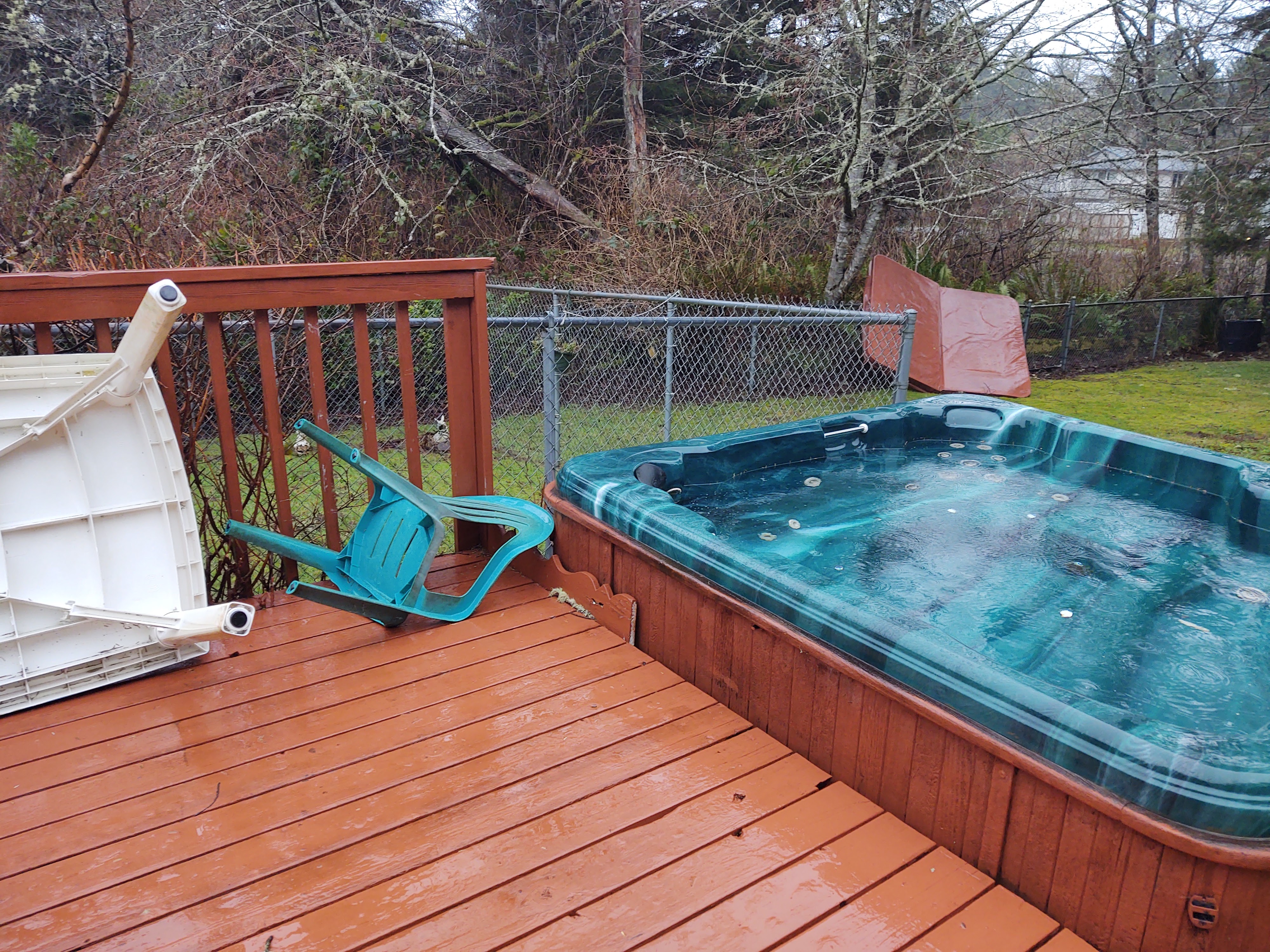
I lay awake in bed last night listening to the wind push, pull, and tear at everything in its path. It had already toppled the garbage and compost bins, upended the chair and table on the deck and torn the hot tub cover half off. I had gone outside in my nightgown and new slippers trying to fasten it back down, but the wind had no respect for skinny leather straps. I looked around at the writhing trees and said, “God, it’s in your hands now.” 

Just getting comfortable under the covers, I heard another bang. From the window, I could see the exposed lights of the control panel on the spa. I decided there was nothing I could do alone in the dark. I was just a small thing, an ant in a big world gone out of control. I could only tuck myself into my blankets and clean sheets and hope for the best. I thought of the people in Kentucky whose houses were demolished by tornadoes, the people in Colorado who lost their homes to fire, and the folks in New Orleans whose homes were flooded out by Hurricane Katrina. This wasn’t as bad as that, was it?

I felt like the little pig who built his house out of wood, easy for the Big Bad Wolf to huff and puff and blow it down. Go away, Big Bad Wolf!

I woke up at 5 a.m. and switched the radio on to hear the news. Nothing but hissing. Apparently the wind took out the local NPR station. I flexed my arthritic hands and feet. Time to get up and assess the damage. 

The dog was asleep on the couch, the plastic on the protective cone around her neck shining in the Christmas tree lights. There are times when it’s handy that she can’t hear. I opened the door and went out into the wind and rain. The hot tub cover was completely off. In the dark, I couldn’t see where it was. It’s heavy. I will need help to get it back on. But it was nothing for the wind. I could see no other destruction, but it was dark and would be dark for another two hours. I went back in, poured my juice and turned on my computer. 

I thought a lot last night about wind. What is it? It’s just air. We can’t see wind; we can only see its effects, the moving branches, the swinging wind chimes, the shingles torn off the roof, the hot tub cover thrown across the lawn. What is wind? What makes wind? 

I found a great article from the National Geographic Society. It’s designed for junior high and high school students, but I’m still struggling to understand it. “Wind,” it says, “is the movement of air caused by the uneven heating of the Earth by the sun.” Okay . . . 

Then there’s this: “Differences in atmospheric pressure generate winds. At the Equator, the sun warms the water and land more than it does the rest of the globe. Warm equatorial air rises higher into the atmosphere and migrates toward the poles. This is a low-pressure system. At the same time, cooler, denser air moves over Earth’s surface toward the Equator to replace the heated air. This is a high-pressure system. Winds generally blow from high-pressure areas to low-pressure areas.”

Now they’ve lost me. But it’s a swell article with details about things like prevailing winds, the Coriolis effect, jet streams, storm fronts (no storm backs?), and nor’easters. What do you call what we had last night? I’m going to wait for the news to come back on to explain it to my poet brain. I just know it blew hella strong and knocked stuff over. Come daylight, I’ll assess the damage. At least, my house seems to be still standing, and the deaf dog slept through it all. 

Dawn: Aha.The hot tub cover blew all the way up against the fence. Even the dog is impressed. No reception on the country music radio station either, but newslincolncounty.com tells of power lines down, streets blocked by trees, and a general mess caused by last night’s southerly wind. 

They say March comes in like a lion and goes out like a lamb. It looks like 2022 has come in like Godzilla, and we don’t know what’s next. 

Remember last week’s playful post about how the weather is a never-ending show? Well, we had more than 12 inches of rain in December, we had serious snow last week, and now we’ve got wind. I hope that was the grand finale.Time for all the actors to bow, remove their makeup and go home. 

Stay safe wherever you are. May 2022 treat you well.

How are you faring in the winter weather? Your comments are welcome.   

Processing…
Success! You're on the list.