It’s Hand to Branch Combat with the wild berries


Yesterday after playing piano for two Masses and after a fattening lunch at Georgie’s, I battled the growth in my yard, especially the berry vines. Anyone who lives in rural western Oregon knows the berries that grow wild here—salmonberries, thimbleberries, blackberries, huckleberries—are a blessing and a curse. They offer delicious fruit, but they pop up everywhere, and the vines are vicious, with thorns that grab at you like claws and don’t let go.
I live in the forest. The pines, berry vines, sword ferns, ivy and no-name weeds would take over if I let them. The forest would close in and smother the house and me and Annie along with it. So I spent my Sunday afternoon in hand to branch combat. I cut for hours, soaked with sweat and scratched with thorns, but loving the feel of my muscles working, growing strong. I don’t need a gym. I get plenty of bending, stretching and lifting working in the yard.
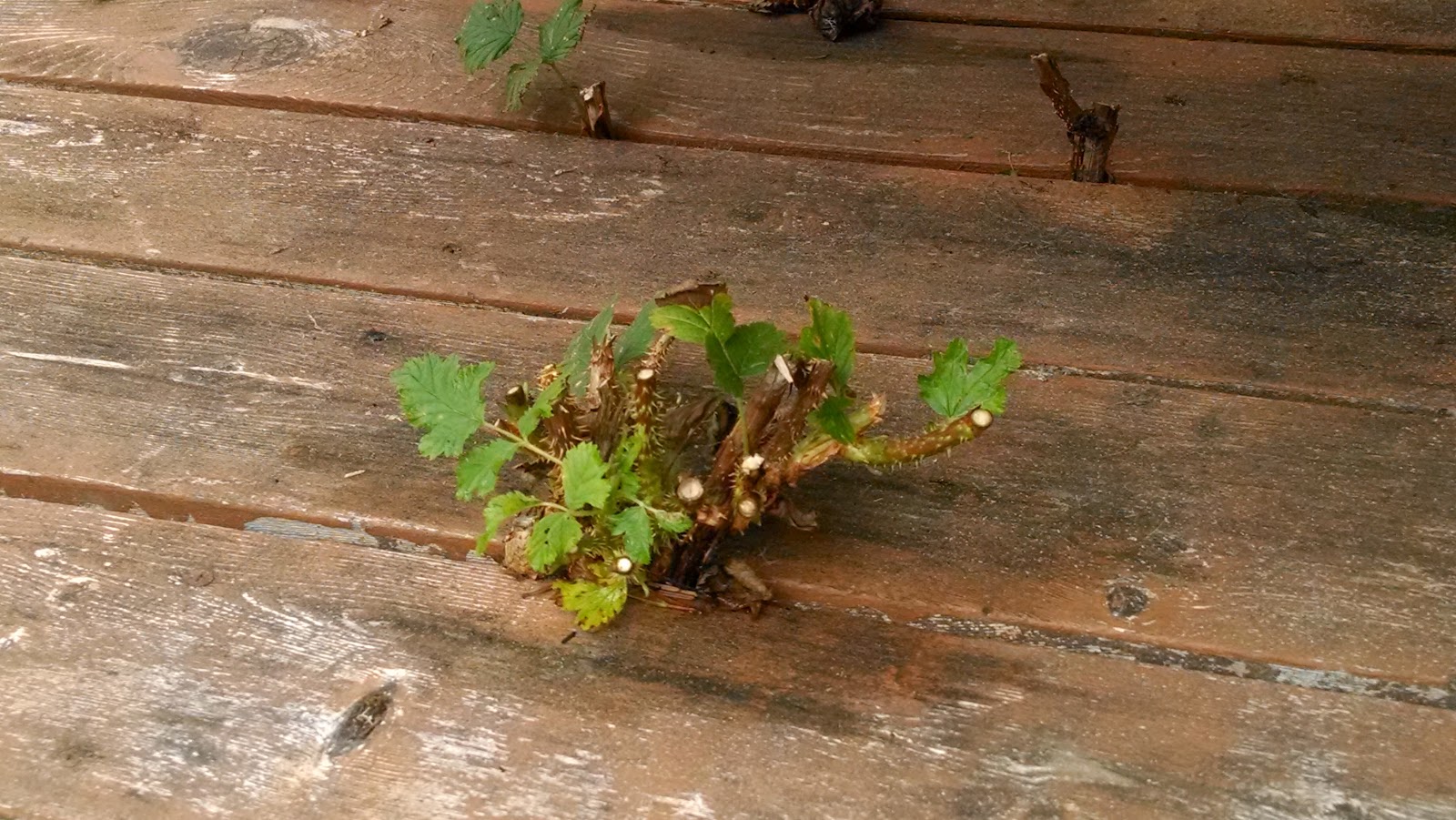
Cutting between the dog pen and the fence, it rained branches that piled up along my feet while Annie dashed around grabbing sticks to chew on. I cut everything sticking out or hanging over—as high as I could reach. I filled my squeaky yellow wheelbarrow over and over, but there was always more to cut, poking out of the fence, through the hedge, or sticking up through the boards of my deck. The berries are even choking the life out of my beloved blue hydrangea. It’s like a monster movie where you can’t get away from the monster. But I attacked wherever I could. And now, if anybody has a truck, I need a trip to the dump.
The forest plants and I are living creatures fighting for the same space. I will never win, but as long as I never stop, I will not be defeated.
Today, mosquito-bitten, sore, and mysteriously two pounds heavier, I look out at my clear path and neatly trimmed vines and feel power pulsing through my suntanned body. I have loppers, and I’m not afraid to use them.

A poem from our daily walk: this time the forest won


Annie and I walk most days up a gravel road through an area that used to be all coastal forest. It lies in the airport flight path and was once planned to be a large recreational complex with a golf course, houses and other buildings, but they were never built. Over the years, we have watched big machines rip out the trees and leave sections nearly bare, but the plants always grow back. The rabbits, deer, cougars and snakes return. However, a couple of the old bulldozers remain. I don’t understand this waste of machinery that just sits there and rots, but they are here, slowly falling apart as the forest reclaims its land. Today I share this picture and poem with you. 
Captured
Long ago the bulldozers came,
jaws ripping down the pines and Sitka spruce,
merciless tires smashing through
blackberry vines, cow parsnip and buttercups,
leaving a graveyard of sun-bleached trunks
among which the deer could find no food.
Now the hard-hat men work somewhere else,
but they left their big machine behind.
The grass has grown so thick only a rabbit
could run to the rusting steel hulk
to sniff at its cracking leather seat,
its gears, its knobs, a forgotten glove.
Scotch broom surrounds it like a fence,
seed pods rattling against the rails.
Thorny vines wrap around its rotting tires.
Crows perch on the top and shit
while a single purple foxglove plant
dances in front of the deadly jaws.
Copyright 2014 Sue Fagalde Lick (Please don’t republish this anywhere, including online, without my permission)

A coastal county fair in the rain

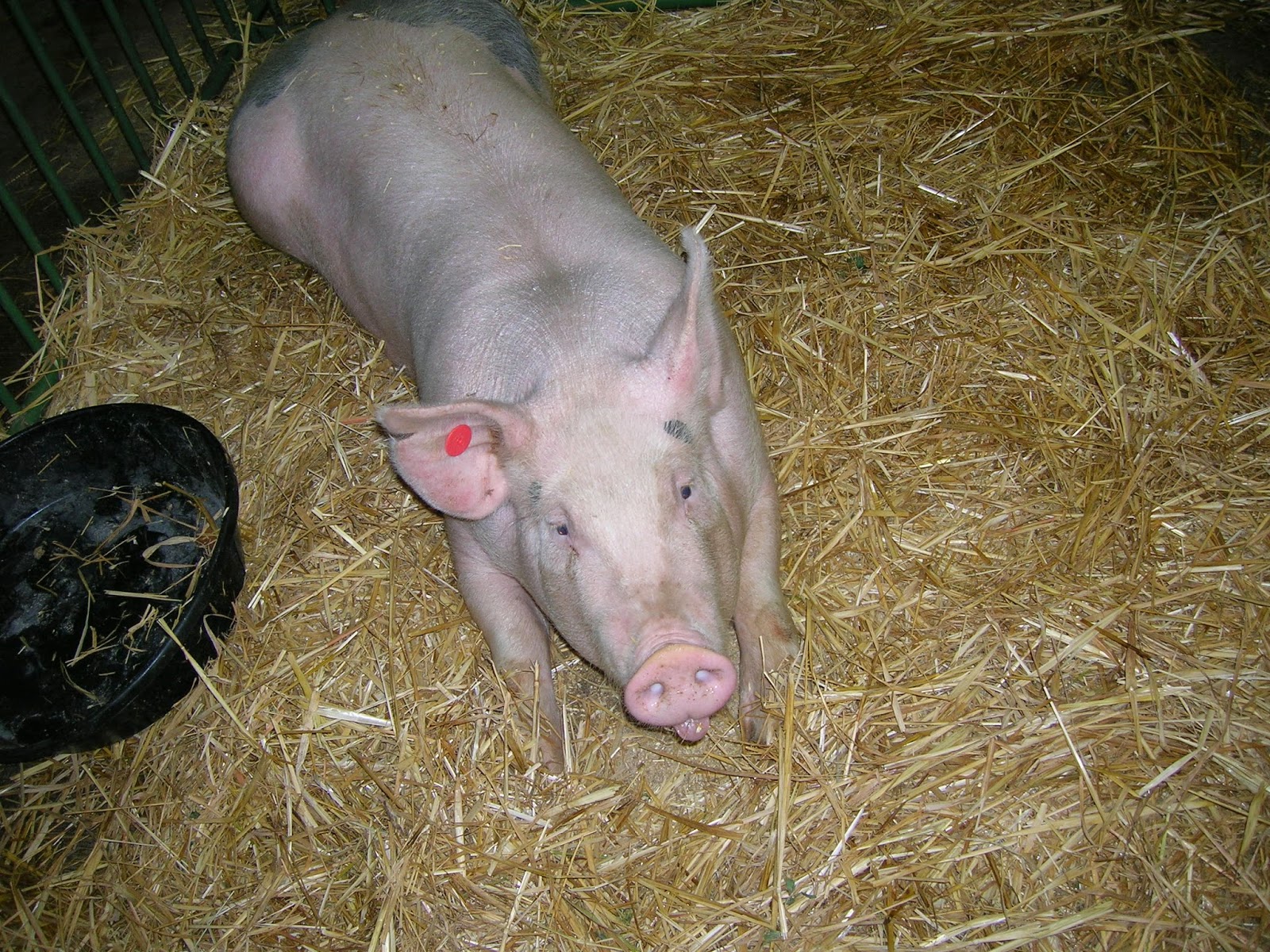
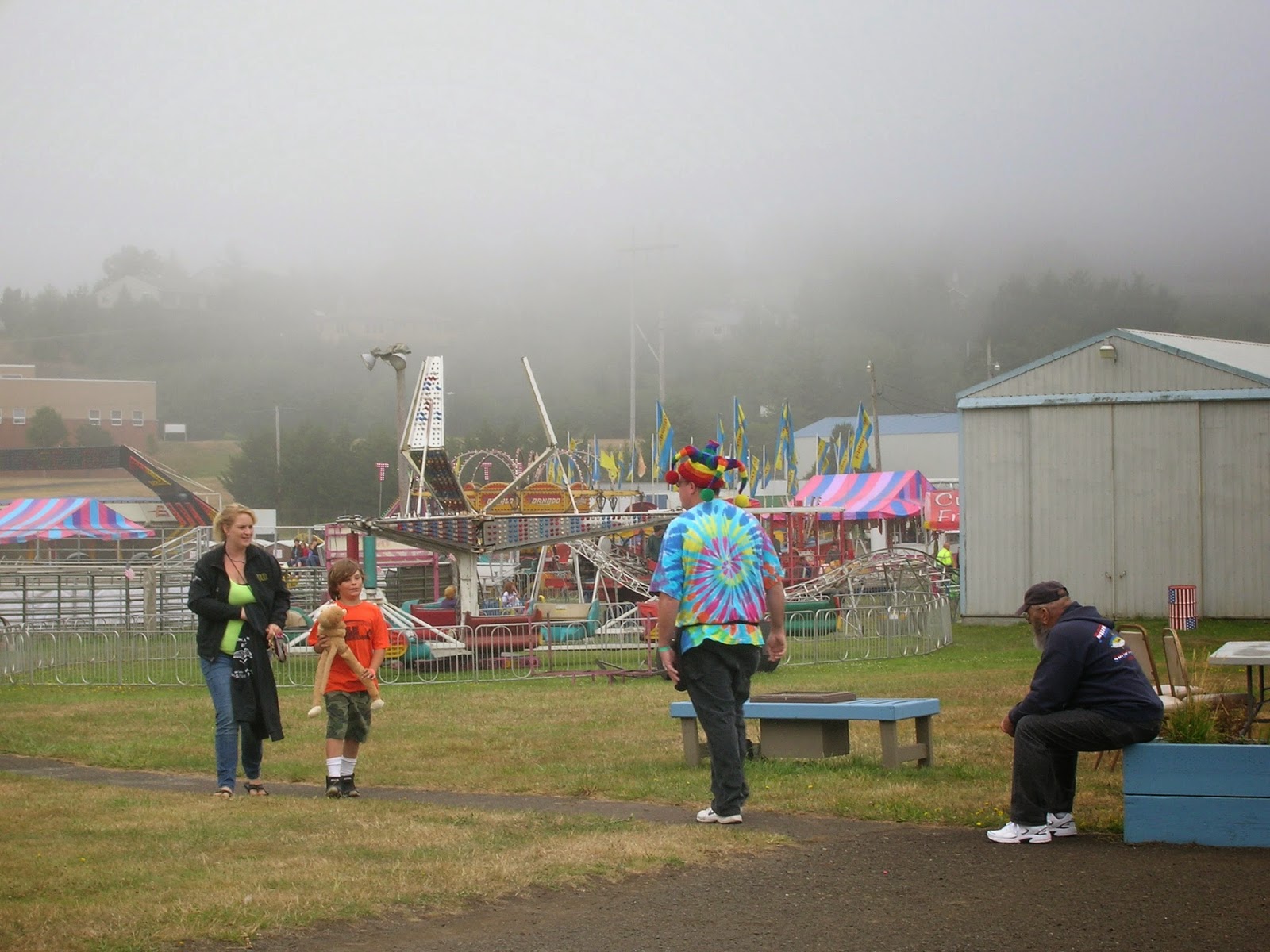
A Sunday afternoon in July. The sky is gray, and it’s raining on the last day of the Lincoln County Fair. I see people walking around in their hoodies, a guy in the grandstand singing and playing guitar, not a soul in the audience. Everything is half empty and tired-looking: ponies waiting for somebody to ride them; carnival rides, half running, one little boy in the lady bug cars; pigs, cows and sheep in the animal barn, unaware that they’re future food; chickens, goats, and rabbits, a duck swimming in a plastic pool; back exhibit hall almost empty, a few knit and crocheted items and one case of baked breads and pies. The main hall echoes with a guy giving violin demos as people wander past booths selling jewelry and kitchen knives or advertising local causes, and stare at the snakes and lizards in the reptile exhibit. Outside, a few people line up to buy elephant ears and sausage dogs. There’s nothing happening in the rodeo area. Best action is at the Pick of the Litter thrift store where I scored some 50-cent CDS, $1 picture frames and a piano book. Like the buildings it occupies, the county fair is tired and falling apart, but it keeps going.


Coastal Fourth: Halibut, elk and la de da


Ah, Fourth of July on the Oregon Coast.

We started with the La De Da parade in Yachats. It’s a parade unlike any other. No marching bands, no floats, just ordinary folks in their most outrageous get-ups marching in a big circle from the Commons to the park that overlooks the waves crashing off the rocks and around the bend and down the street overlooking the bay. You’ve got your umbrella drill team twirling umbrellas in unison, your tree huggers decked out in ivy crowns, your folks from the pizza place dressed like giant pepperoni slices, your dogs in patriotic sweaters, George and Martha Washington taking a stroll, a rock and roll band playing blow-up plastic guitars, and the local ambulance and fire truck drivers rumbling through, honking their horns. The onlookers are as colorful as the marchers. In a half hour, it’s over and folks are gathering to eat barbecue and homemade pie.

I brought two young friends, Ashley, who just moved down here from Alaska, and her friend Matt, who lives in Davis, California. This was their first introduction to Yachats. They were appropriately delighted with both the parade and the sunny but not too hot weather.
For lunch, we joined the noisy crowd at the Drift Inn. As we ate and talked, this guy came in, shouting, “Fresh halibut!” He carried a gigantic dripping fish over his shoulder as he walked between the tables where tourists ate nachos and clam chowder. They put down their forks and spoons and applauded. He brought in two more halibut. I wonder where he put them in the small kitchen at the back. It would be like trying to fit a Buick into a Barbie garage.
After lunch, my guests headed north while Annie and I took our usual walk, then relaxed with a bit of the “Sex and City” marathon happening on TV. Still to come were the Newport fireworks.
Most years I decide I’m not going to go. Too crowded, too late, I don’t need it. But then I start hearing the popping of the aerial displays. I can’t see anything because of the trees that surround my house. I can’t stand it. I get in my car and drive until I can see some of the fireworks from some illegal parking spot on a hill. This year I decided to go see them on purpose.
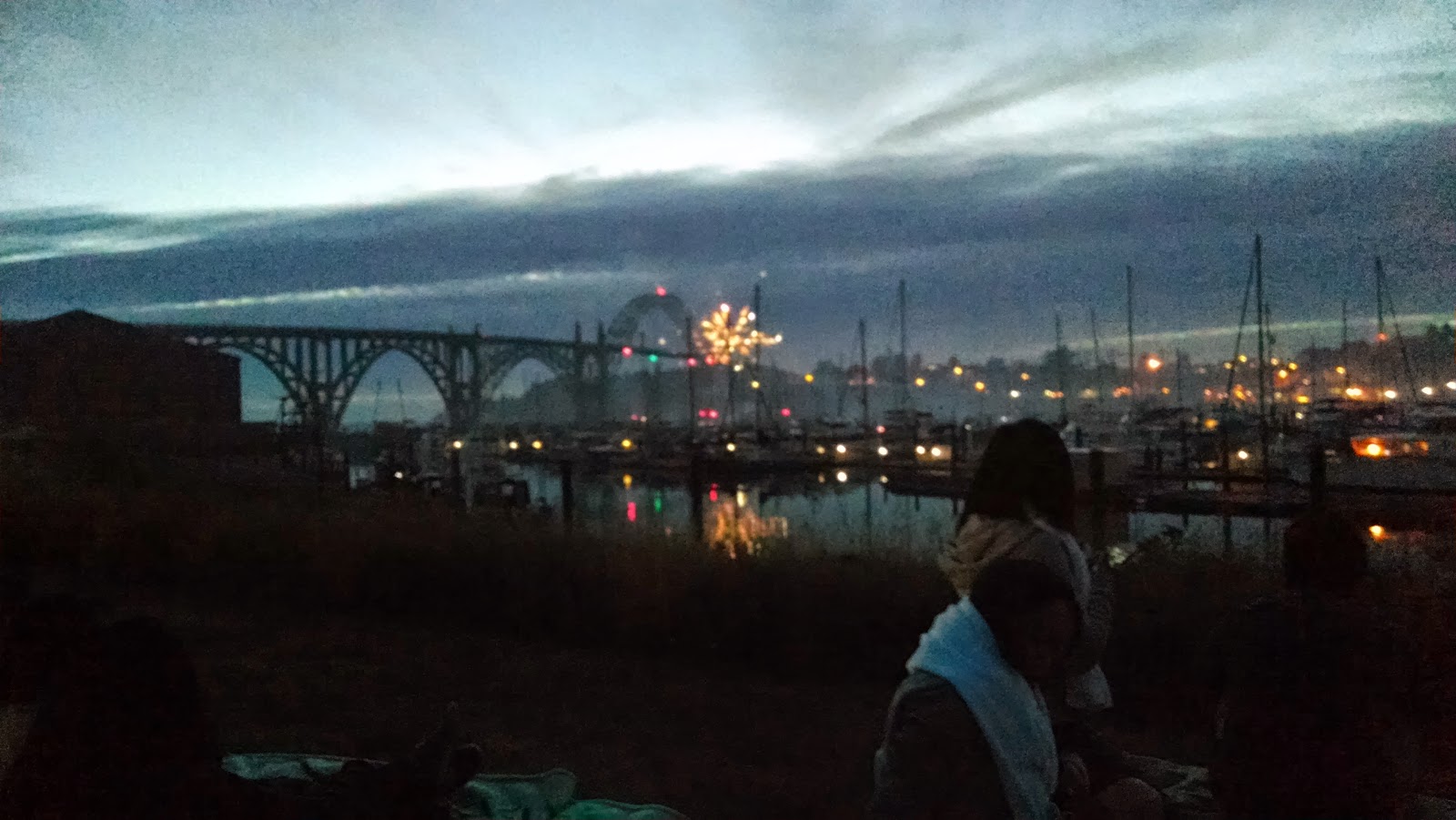
By 9:00, it seemed everyone in Newport and a few thousands tourists had gathered on both sides of Yaquina bay with their folding chairs, their glow-in-the-dark necklaces and their boxes of do-it-yourself fireworks. In every direction, Roman candles shot up into the air, little kids swirled sparklers, and big kids lit up things that went boom. The smoke grew thick like fog. The air over the bridge and over the hills lit up with starbursts of color. Dogs barked, kids screamed, and mosquitoes went crazy with so many people to bite.
The official fireworks started at 10:00, lit from a barge in the middle of Yaquina Bay. All around me, people raised their Smart Phones and iPads, trying to take pictures. Me too, until I realized I could either take pictures or actually see the fireworks. Pop, bang, ooh, wow, ahh. I’ve seen bigger displays, coordinated with patriotic music, but this one was good and the company was great.
Then came the applause and the traffic jam, but nothing like I remember back in San Jose when it might take two hours to get home. When I drove into my neighborhood in the woods at 10:45, my headlights picked up a young male elk standing in the street. As I paused, he ambled over to the neighbor’s yard and calmly stared at me as I drove to my house at the end of the block.
And people wonder why I moved to Oregon.

Blessings for the Old and New at Sacred Heart

Last Friday night, Sacred Heart Church, where I work and worship, celebrated its 125th anniversary. When Catholics started holding Masses here in 1889, Newport, Oregon was a rustic fishing village with muddy streets, horses instead of cars, and open space where stores and condos sit now.

The original church, a tiny box of a building on Olive Street, disintegrated over time, with so many holes in the roof that parishioners tried to get to Mass early so they could find seats that weren’t wet from the area’s persistent rain. That church is long gone. The church building I know was built in 1952, the year I was born, at 10th Street and the Coast Highway. Brick on the outside, wood on the inside, it has weathered well, although sometimes the building cracks and snaps, and the scarred wooden pews creak no matter how hard you try to stay still.
New religious education building
Things change over time. A hall, chapel and vestibule have been added to the original church building, and the construction continues. On Friday night, after a celebratory Mass and dinner, we blessed a brand new religious education building and said goodbye to the falling-down edifice known as the Ministry House.
The new building is state of the art, light, tight, smelling of new carpet and fresh paint. We paid for it with pledge drives, car washes, dinners, and can and bottle collections, along with money from the church budget and the archdiocese. It took a little less than three years from idea to dedication.
Old Ministry House

We’ve been watching the construction for months. Finally our religious education director Sandy Cramer unlocked the doors and we crowded in, admiring the three upstairs rooms and the big room downstairs. Father Brian sprinkled holy water all around to bless the new building. We sang, we prayed, and we listened to the stories of the new building and the old one we could see out the window.

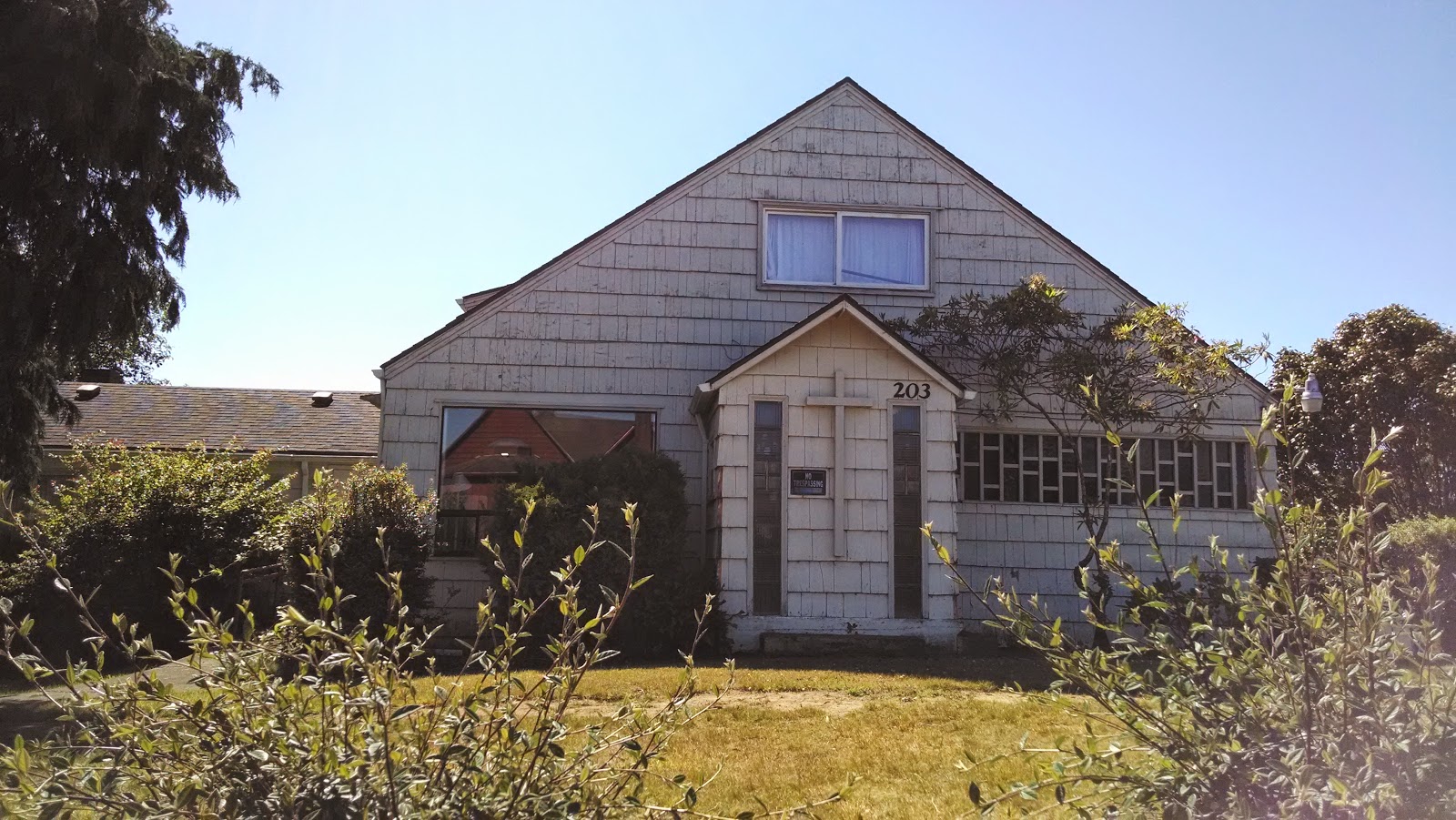
The Ministry House goes back to the early 20th century. It first served as a convent for several groups of nuns. It has been the Knights of Columbus headquarters, a homeless shelter, a retreat house, and a home for children’s religious education classes. Parishioners remember doing lessons with the nuns, playing flashlight tag in the spooky old rooms, singing songs and saying prayers. The Knights remember solemn meetings and raucous poker games.  But like the old church with the leaky roof, the Ministry House can no longer be used. Polluted with mold, mildew and asbestos, it has become so rickety it’s no longer safe. The plan is to salvage as much as possible, then let the folks from the fire station next door burn it down for practice.
We were invited to take a final walk through the old building. The lights were off. The mildew stench made it hard to breathe. Much of the furniture is gone. Yet it felt so homey. The stained glass, the comfortable couches, the bunk beds, and the old-fashioned kitchen reverberated with a century of prayers and laughter, study and meals shared while Jesus looked down from the crucifix. Saying goodbye was bittersweet, but buildings don’t last forever, and the new place will soon fill up with new memories.
Meanwhile, it’s the people who really make up a parish, and they will go on together into the next 125 years. This is my Oregon family, and I’m grateful for every one. God bless Sacred Heart.