
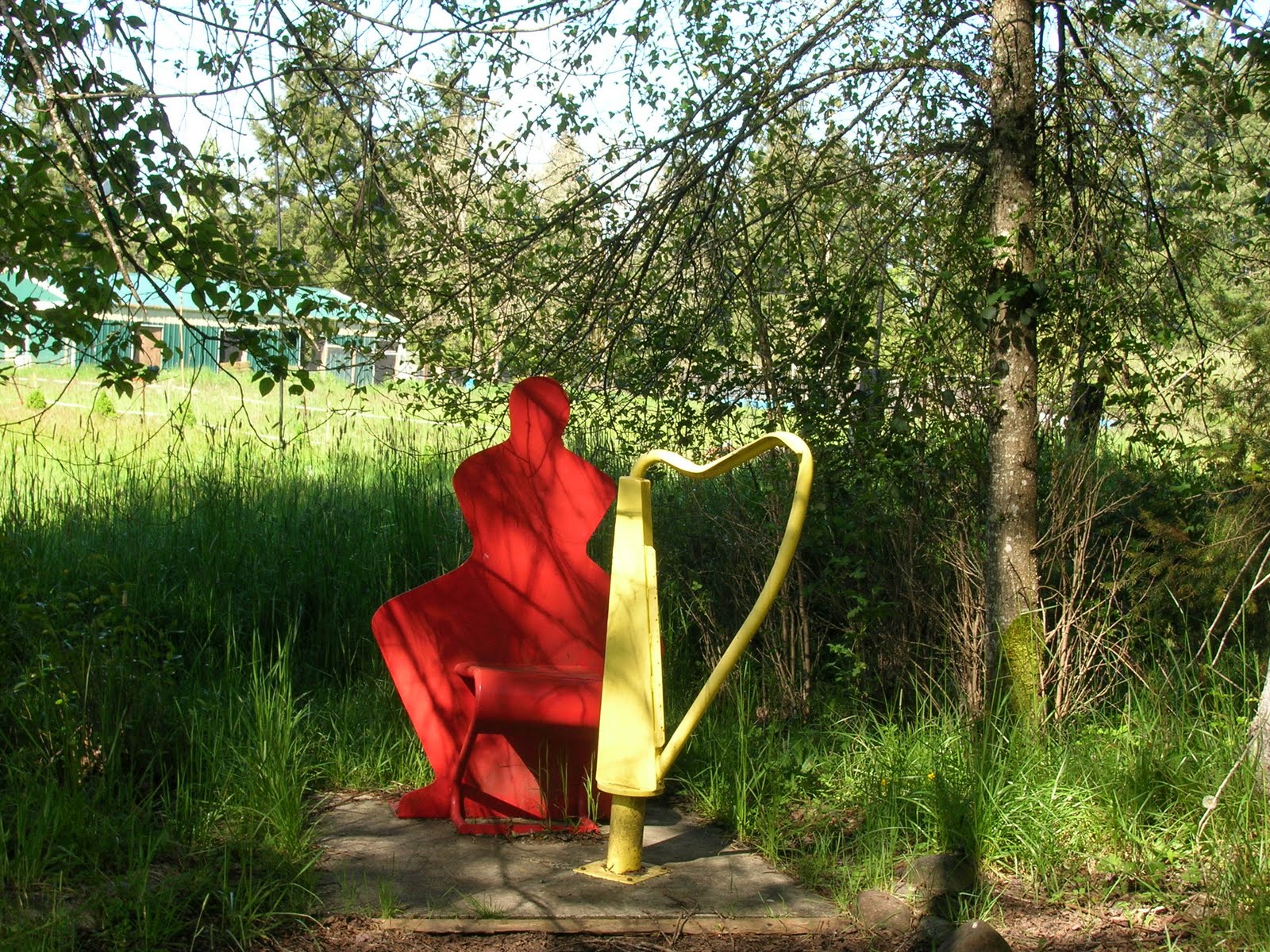
 Giant iron and steel sculptures along the road lured me into a fairyland of natural and manmade art where real birds perched in a stainless steel tree made of butterflies. I walked through a giant green portal that boomed as the wind blew through it and came upon the three little pigs’ houses, giant bugs made of metal scraps, a hand two stories high and a croquet set big enough for a giant.
As I wandered through the Monarch Sculpture Park, located 10 miles south of Olympia, Washington, roosters crowing vied with the bongs and clangs of gongs and musical instruments made of sheets of metal and pipes placed along the grassy paths. I wanted to look everywhere at once.
Beyond a fantasy garden filled with sculptured flowers in wild colors, plastic streamers waved from the trees in the Sacred Grove. I opened a mailbox to find pens and streamers to write my own message to hang with the others.
 Opened in 1998, Monarch Sculpture Park has grown to more than 100 stone, metal, wood, ceramic and glass sculptures spread over 80 acres of forest, creeks, ponds and grasslands. The site also includes an indoor gallery and offers art workshops, retreats and residencies.
Founder and director Myrna Orsini says the object is to provide an art adventure for everyone, based on the idea that creative expression has no boundaries. Visitors of all ages can see, touch and play with inspiring, quirky and crazy works by famous artists as well as those just starting out.
The outdoor art is open to the public year-round from dawn to dusk. The gallery is open by appointment. This year’s indoor exhibit, “Censored,” features art that might be rejected by other galleries because of its political or sexual nature.
Throughout the year, residents live and work at Monarch, adding their art to the exhibit and sharing their skills with the local community through arts presentations and workshops.
Orsini, who created many of the sculptures in the park, said she was inspired by art centers in Europe where artists could create art and display their work in outdoor exhibits. She relies on donations, residency fees and volunteers to operate the park. These days, she says, she’s struggling to keep the park open and may be closing this fall, so go soon if you want to see it.
Most of the paths are accessible but they do ramble through mud and tall grass. My feet got wet, but it was worth having soggy socks. As Orsini says, the park is a bit out of the way, but when people find it, they fall in love and keep coming back.
Monarch is located at 8431 Waldrick Road SE, Tenino, WA 98589, (360) 264-2408, http://www.monarchartcenter.org.

 Unleashed in Oregon